Join WhatsApp Channel


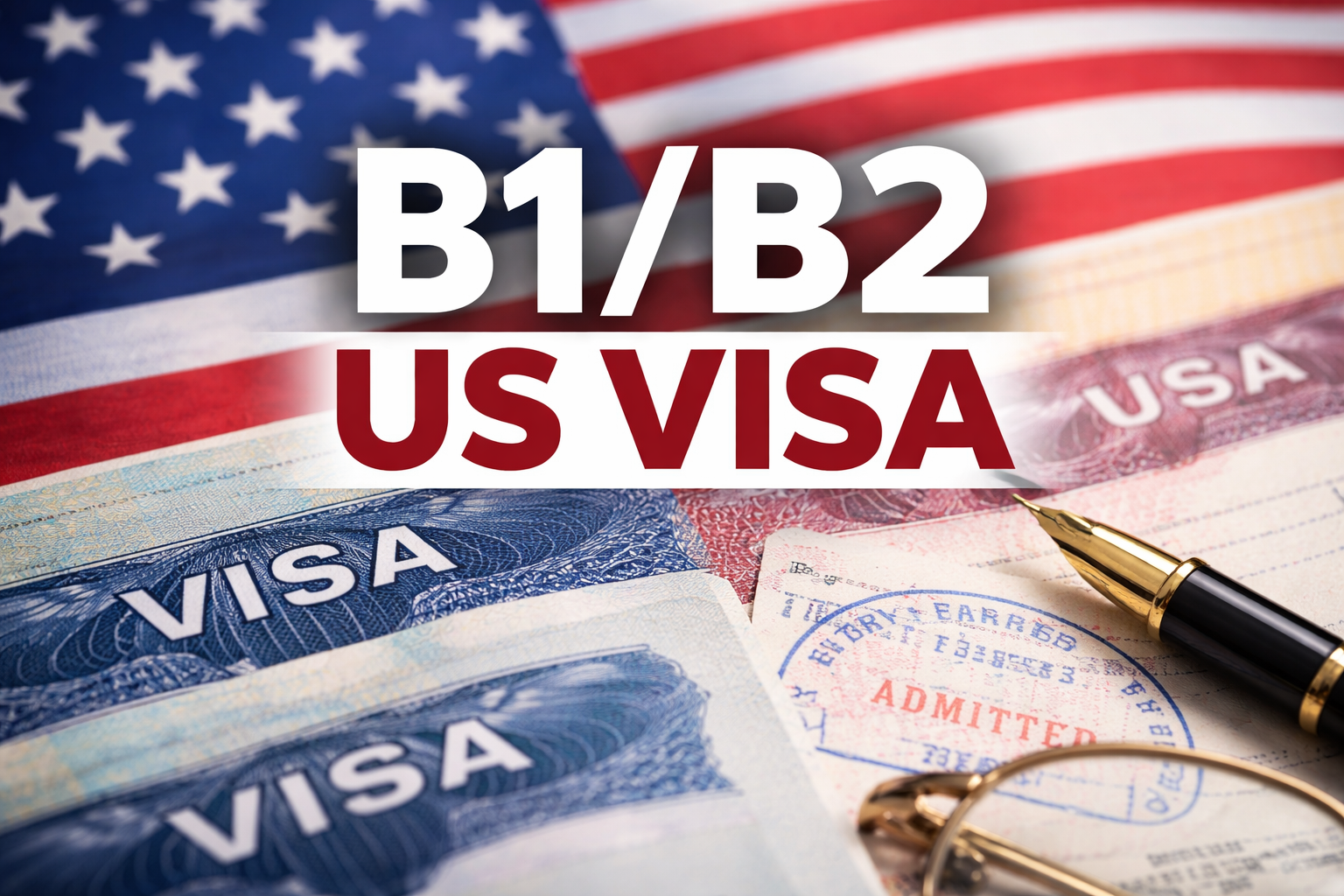
The U.S. Department of State has announced that South Asian countries, including Bangladesh and Nepal, will be added to the list of nations whose citizens must post refundable bonds of up to $15,000 to obtain nonimmigrant B-1/B-2 visas to enter the United States, effective January 21, 2026. Bhutan is already subject to the requirement, which took effect on January 1.
According to the State Department website, “Visitor visas are nonimmigrant visas for persons who want to enter the United States temporarily for business (B-1 visa), for tourism (B-2 visa), or for a combination of both purposes (B-1/B-2 visa).”
In addition to Bangladesh, Nepal, and Bhutan from South Asia, countries from Africa, Latin America, and the Pacific have also been included, bringing the total number of nations subject to the visa bond requirement to 38.
The countries newly covered by the bond requirement as of January 21 are Algeria, Angola, Antigua and Barbuda, Bangladesh, Benin, Burundi, Cape Verde, Cuba, Djibouti, Dominica, Fiji, Gabon, Ivory Coast, Kyrgyzstan, Nepal, Nigeria, Senegal, Tajikistan, Togo, Tonga, Tuvalu, Uganda, Vanuatu, Venezuela, and Zimbabwe.
They join Bhutan, Botswana, the Central African Republic, the Gambia, Guinea, Guinea-Bissau, Malawi, Mauritania, Namibia, Sao Tome and Principe, Tanzania, Turkmenistan, and Zambia, which are already on the list.
According to the State Department website, any citizen or national traveling on a passport issued by one of these countries, and otherwise eligible for a B-1/B-2 visa, must post a bond of $5,000, $10,000, or $15,000.
“The amount is determined at the time of the visa interview,” the website stated. “The applicant must also submit a Department of Homeland Security Form I-352. Applicants must agree to the terms of the bond through the Department of the Treasury’s online payment platform Pay.gov. This requirement applies regardless of place of application.”
Applicants are instructed to submit Form I-352 only after being directed to do so by a consular officer. They will receive a direct link to make the payment through Pay.gov and are advised not to use third-party websites. The U.S. government will not be responsible for any payments made outside its official systems.
“A bond does not guarantee visa issuance,” the website noted. “If someone pays fees without a consular officer’s direction, the fees will not be returned.”
As a condition of the bond, visa holders who have posted a bond must enter and exit the United States through designated ports of entry. “Not doing this might lead to a denied entry or a departure that is not properly recorded,” the State Department said. “The earliest date a visa holder who posted a visa bond may enter or exit at each port of entry is in parentheses.”
The currently designated ports of entry include:
- Boston Logan International Airport (BOS) (August 20, 2025)
- John F. Kennedy International Airport (JFK) (August 20, 2025)
- Washington Dulles International Airport (IAD) (August 20, 2025)
- Newark Liberty International Airport (EWR) (January 1, 2026)
- Hartsfield-Jackson Atlanta International Airport (ATL) (January 1, 2026)
- Chicago O’Hare International Airport (ORD) (January 1, 2026)
- Los Angeles International Airport (LAX) (January 1, 2026)
- Toronto Pearson International Airport (YYZ) (January 1, 2026)
- Montréal-Pierre Elliott Trudeau International Airport (YUL) (January 1, 2026)
Additional ports of entry may be added on a rolling basis.
Visa bond terms are outlined on Department of Homeland Security Form I-352 and on Travel.State.Gov. The State Department noted that the bond will be canceled and the funds automatically returned under the following circumstances:
- The Department of Homeland Security records the visa holder’s departure from the United States on or before the authorized stay expires
- The visa holder does not travel to the United States before the visa expires
- The visa holder applies for admission at a U.S. port of entry and is denied
Cases in which a visa holder may have violated bond terms will be referred by the Department of Homeland Security to U.S. Citizenship and Immigration Services for review. These include, but are not limited to, situations in which DHS records show the individual departed after the authorized period of stay, remained in the United States beyond the permitted date without leaving, or applied to adjust status out of nonimmigrant classification, including by claiming asylum.
Related posts:
 Air Disasters-4: Adanis, IndiGo Rule Indian Aviation as Government Agencies Get Elbowed Out
 New $250 Visa Integrity Fee to Increase U.S. Travel Costs for Foreign Nationals and Employers
 Fuel Cutoff to Both Engines Seconds Apart May Have Caused Air India Flight 171 Crash in Ahmedabad: AAIB Preliminary Report
 Washington Dulles International Airport in Virginia Receives $40 Million for its New 14-gate Terminal