 Join WhatsApp Channel


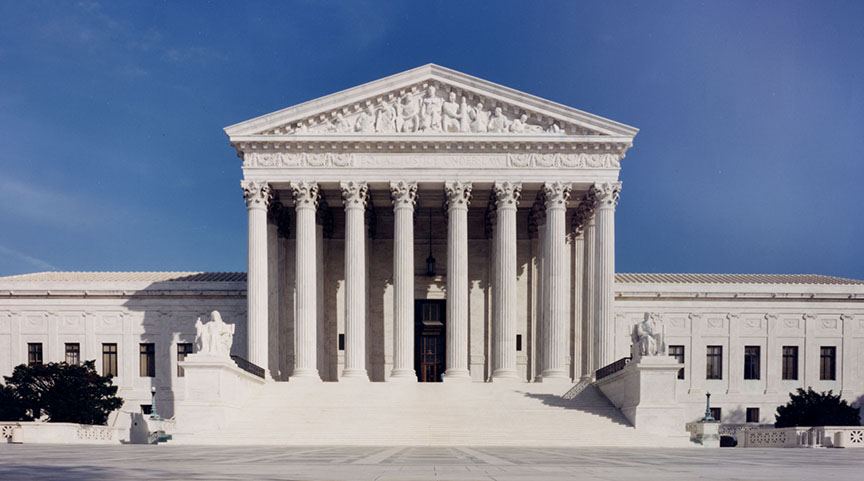
The U.S. Supreme Court will on November 5, 2025, hear one of the most consequential trade cases in decades — Learning Resources, Inc. v. Donald J. Trump — a legal showdown that could redefine how far a president can go in using emergency powers to shape America’s trade policy.
At stake is the future of President Donald Trump’s sweeping “Liberation Day” tariffs, which have rattled global markets, redrawn supply chains, and strained U.S. relations with allies and trading partners alike. The Court’s verdict could either cement or dismantle Trump’s economic agenda — and with it, the balance of power between the White House and Congress in matters of trade.
The Case at the Core of Trump’s Trade War
The dispute dates back to April 2, 2025, when President Trump declared America’s persistent trade deficit a “national emergency” under the International Emergency Economic Powers Act (IEEPA), a law passed in 1977 to give presidents authority to restrict financial dealings with hostile foreign powers. Using that statute, Trump imposed a flat 10 per cent tariff on nearly all imports, later raising duties up to 50 per cent on selected nations, including China, Mexico, and Vietnam.
The White House justified the tariffs as necessary to “restore economic sovereignty” and “protect critical industries” hollowed out by decades of offshoring. Trump argued that the trade deficit — which topped $950 billion in 2024 — threatened U.S. manufacturing and national security.
Critics, however, called the move unprecedented and unconstitutional. They pointed out that the IEEPA was never meant to be a tool for managing trade policy or imposing general tariffs. Instead, it was designed to deal with emergencies involving hostile nations, terrorism, or sanctions — not to rewrite tariff schedules. Despite the outcry, the Trump administration proceeded, collecting an estimated $100 billion in new customs revenue in less than a year.
Lower Courts Rejected Trump’s Tariff Powers
The legality of Trump’s action has already been tested — and rejected — by three separate courts.
The U.S. District Court for the Northern District of Illinois ruled in April 2025 that the president overstepped his authority by using IEEPA for general tariff measures. The U.S. Court of International Trade (CIT) reaffirmed that judgment in June, saying that the law “does not authorize the president to levy duties” and that Trump’s actions violated the Constitution’s separation of powers. The Federal Circuit Court of Appeals upheld that decision in August, warning that Congress had never delegated such sweeping power to the executive branch.
Yet, the stakes were too high for the administration to concede. On August 23, 2025, the Supreme Court agreed to hear the government’s appeal, setting the stage for a constitutional clash over who controls U.S. trade policy — the President or Congress.
Two Questions That Could Redefine Trade Law
The justices will focus on two core issues. First is jurisdiction: whether the case belongs before a regular federal court or the specialized Court of International Trade. The plaintiffs — a coalition of small importers led by Learning Resources, Inc. — say their challenge arises from IEEPA itself, not trade statutes, and therefore should be heard in a federal district court. The government insists it properly belongs in the trade court, since tariffs are involved.
The second — and far weightier — question concerns presidential power. Does IEEPA actually grant the president the authority to impose tariffs at all? The plaintiffs argue it does not. They cite the “major questions doctrine,” a legal principle that requires clear congressional authorization for actions of vast economic and political significance. Allowing a president to declare an “economic emergency” and unilaterally rewrite tariff laws, they warn, would “collapse the constitutional boundary” between legislative and executive powers.
Trump’s lawyers counter that IEEPA’s broad language permits the president to “regulate importation and exportation” in the national interest. They argue that global trade deficits constitute an emergency that “imperils America’s economic independence,” giving the president room to act decisively without waiting for Congress.
Global Markets Brace for the Verdict
Beyond Washington’s legal drama, the case has sent ripples through global markets. Trump’s tariffs have altered global trade flows, pushed up import costs, and forced companies to relocate production. A ruling upholding his use of emergency powers could embolden future presidents to bypass Congress entirely on trade — effectively turning the White House into a one-person trade authority.
Conversely, a decision striking down Trump’s tariffs would immediately invalidate the “Liberation Day” duties and force the administration to dismantle the tariff regime. That could unwind recent trade deals struck under duress with the European Union, Japan, South Korea, and the UK — all of which negotiated concessions in response to the tariffs.
India Watching Closely
For India, the outcome carries high stakes. New Delhi has been negotiating a trade package with Washington for months, and Trump’s tariff leverage has shaped the tone and speed of talks. A ruling that limits presidential power could give India and other partners more certainty — and a stronger negotiating hand.
“India’s trade negotiators have been operating under the shadow of Trump’s emergency tariffs,” said Ajay Srivastava of the Global Trade Research Initiative (GTRI). “If the Court rules that such powers were misused, it could restore predictability and bring negotiations back to a more rules-based framework. That would be positive not only for India but for the entire global trading system.”
A Defining Test of Power and Precedent
Whichever way the Court rules, the consequences will be historic. A victory for Trump would vastly expand presidential control over trade, allowing future administrations to wield tariffs as instruments of foreign and domestic policy. A defeat would reaffirm Congress’s primacy in setting tariffs and reassert constitutional limits on executive power.
As the justices prepare to hear arguments on November 5, Washington’s political class, global markets, and world capitals are watching closely. The case, at its heart, is not just about tariffs or trade deficits — it is about the reach of presidential authority itself.
For now, the world waits to see whether the Supreme Court will pull back Trump’s tariff sledgehammer — or hand future presidents an even bigger one.
Related posts:
 Global Traders See Flicker of Hope as Trump’s Tariffs Head to Supreme Court
 Lawmakers Khanna and Beyer Renew Effort to Reform Supreme Court with 18-Year Term Limits Bill
 India Reassesses Trade Strategy as U.S. Tariff Ruling Alters Negotiation Dynamics
 President Trump Calls U.S.-India Trade Ties “One-Sided,” Defends Tariffs Amid Court Ruling
