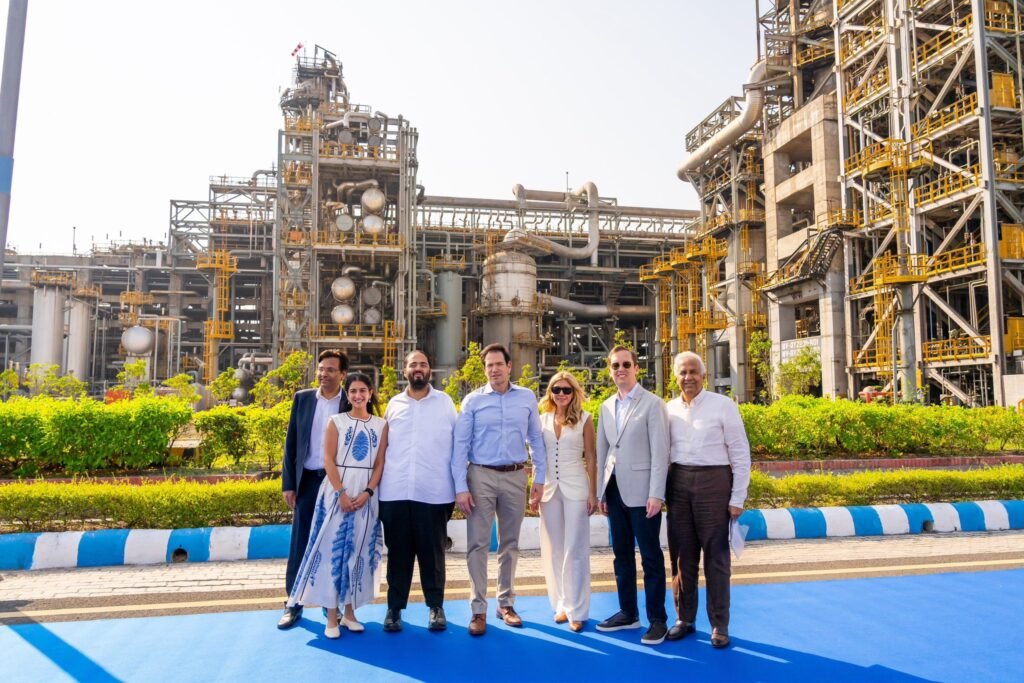
US Secretary of State Marco Rubio’s visit to Reliance Industries’ Jamnagar refinery on October 21 put India’s refining muscle at the center of a growing energy contest, with Washington seeking more outlets for Western Hemisphere crude and New Delhi weighing commercial opportunities against pressure to cut Russian oil purchases.
The stakes go beyond crude. India offers American energy producers a vast market and world-class refining capacity; the United States offers supplies, investment and technology. But turning that overlap into a lasting partnership will require competitive prices and reliable terms, not political pressure on India to redirect its energy trade.
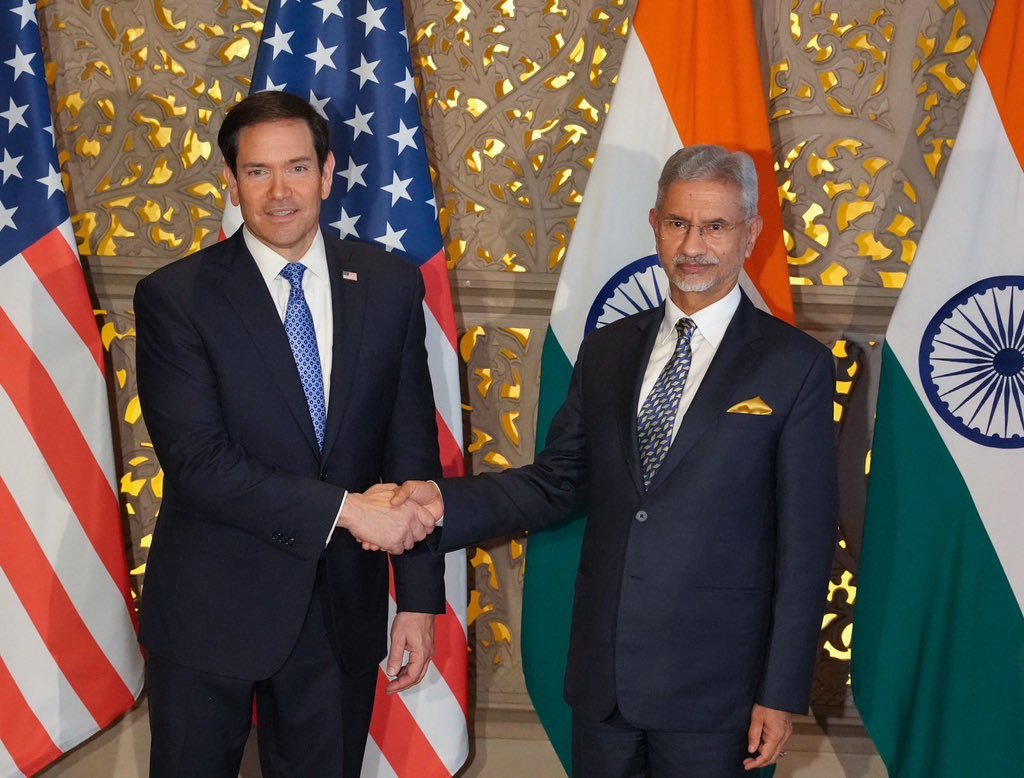
Rubio, who met External Affairs Minister S. Jaishankar and leading Indian business executives in Mumbai, called India a refining “superpower” and highlighted its ability to process heavy Venezuelan crude. Jamnagar, the world’s largest single-site refining complex, is central to that pitch: its two refineries can process about 1.4 million barrels of crude a day, including grades that many facilities cannot handle efficiently.
For Washington, the attraction is clear. More Venezuelan crude processed in India could expand the market for Western Hemisphere oil and increase the supply of refined products to global markets. For India, additional sources can strengthen supply security—provided the price, quality and refining economics make sense.
Advertisement
The two countries’ interests overlap, but they are not interchangeable. Washington wants to expand American energy exports and reduce Russia’s oil revenues. India wants affordable supplies and the flexibility to buy from whichever producers offer the best terms. Rubio’s visit will be judged by whether the two sides can bridge that gap.
GTRI urges caution on Venezuelan oil
The Global Trade Research Initiative (GTRI), led by founder Ajay Srivastava, says India must separate three decisions: buying more Venezuelan crude, investing in Venezuela’s oil industry and reducing Russian supplies. Each carries different costs and risks.
India has already increased its Venezuelan purchases. It imported about $3.59 billion worth of the crude between April and August 2026, with Reliance accounting for 74.3 percent, according to figures cited in the GTRI assessment. That concentration helps explain Washington’s focus on the Jamnagar operator.
Venezuelan oil can be cheaper at the wellhead, but processing it is not cheap. India paid an average of $612 per metric ton for Venezuelan crude during the five-month period, compared with $821 for higher-quality Saudi Arabian crude, GTRI said. The discount must be weighed against handling, transportation and refining costs, as well as the value of the fuels produced.
Venezuela’s predominantly extra-heavy crude requires specialized infrastructure and processing. Reliance is better equipped than many refiners to handle such grades, but technical capability alone does not guarantee a profitable deal.
Former Hindustan Petroleum Corporation Ltd. Chairman and Managing Director M.K. Surana has also stressed that refinery compatibility determines how much Venezuelan crude individual facilities can process. Diversification makes sense when the oil fits the refinery and the economics work.
The risks rise sharply if Washington wants Indian companies to invest in Venezuelan production rather than simply buy available supplies. Purchasing crude is a transaction that can be adjusted as prices change; rebuilding oilfields requires long-term capital and exposes investors to political, regulatory and sanctions risks.
India has experienced those risks before. US sanctions disrupted ONGC Videsh’s Venezuelan investments, impeded operations and left Indian companies facing difficulties recovering earnings. GTRI argues that any fresh investment must account for the possibility of another policy reversal in Washington.
The question is not whether India should buy Venezuelan oil. It is whether additional purchases or investments offer returns commensurate with the risks—and whether the terms protect Indian companies if US policy changes.
Russian oil remains the fault line
The Venezuelan push comes as Washington presses India to reduce purchases of Russian crude, which became a major source of discounted supplies after Russia invaded Ukraine in 2022.
India’s Russian oil imports have already declined. Figures cited by GTRI show purchases falling from $7.3 billion in July to $5.4 billion in August 2026, while Russia’s share of Indian crude imports dropped from 51 percent to 45 percent. Imports from Venezuela and the United States increased over the same period.
That shift suggests diversification is under way. It also raises a question: what further concessions does Washington expect, and what will India gain in return?
Srivastava has questioned the consistency of US policy, pointing to American arrangements involving Russian diesel supplies while Washington urges other countries to reduce purchases of Russian energy. The contrast, he argues, warrants an explanation.
For India, the arithmetic is unforgiving. The country imported about 89 percent of the crude it consumed in the 2025-26 financial year, according to figures cited in the material underpinning the visit. Higher import costs can feed into inflation, transport expenses, manufacturing costs and the current account.
Replacing Russian oil with more expensive alternatives could therefore undermine the very economic interest energy policy is meant to protect. Venezuelan crude may be an attractive addition, but no single supplier can eliminate exposure to geopolitical shocks.
The test for Washington is whether it can offer supplies and investment on terms that compete commercially, rather than expect Indian refiners to make politically driven choices.
Reliance offers a two-way deal
Reliance’s proposed investment in a new refinery in Brownsville, Texas, gives the relationship a reciprocal dimension. If completed, the project would put an Indian conglomerate into a major new US refining venture, potentially supporting American production and employment while giving Reliance a presence closer to Western Hemisphere crude supplies.
US Ambassador to India Sergio Gor, who accompanied Rubio to Jamnagar, said the US share of India’s LPG imports had risen from less than 10 percent to 67 percent over the preceding year, making the United States India’s largest LPG supplier. He also highlighted Reliance’s planned US refinery investment as an opportunity to expand American energy production and create jobs.
These links could extend across crude, liquefied petroleum gas, liquefied natural gas, petrochemicals and refining technology. They would give both countries commercial reasons to preserve stable relations even when disagreements arise over tariffs or foreign policy.
But investment must stand on its own economics. Reliance will have to weigh financing, feedstock access, operating costs and future demand in Texas, just as it evaluates the returns from Venezuelan crude. Diplomatic attention cannot guarantee commercial success.
Rubio’s meetings with Adani Group Chairman Gautam Adani and Tata Sons Chairman N. Chandrasekaran in Mumbai also reflected Washington’s interest in Indian groups active in infrastructure, manufacturing, energy and technology. The outreach comes as both governments seek to resolve remaining differences over a bilateral trade agreement.
Energy can help build momentum, but tying oil purchases too closely to trade concessions risks making each dispute harder to manage. American producers should win Indian business through price, reliability and contractual terms—not diplomatic pressure.
Clean energy widens the opportunity
Rubio’s Jamnagar itinerary also included Reliance’s planned green-energy manufacturing complex, which is designed to house facilities for solar modules, battery storage, green hydrogen electrolyzers, fuel cells and power electronics.
The juxtaposition matters. India will remain dependent on imported fossil fuels for years, but domestic manufacturing, renewable power and energy storage can gradually reduce that exposure. US cooperation in technology and investment could help accelerate the transition, provided access is commercially viable.
A partnership built around refining alone would leave much of that opportunity untapped. Joint investment in manufacturing, storage and energy infrastructure could create longer-term economic links than simply shifting crude purchases from one producer to another.
Rubio’s visit has put Jamnagar at the center of energy diplomacy because India’s refining capacity gives it leverage in global markets. The challenge is to turn that leverage into tangible gains: cheaper and more reliable supplies, new investment, wider technology access and stronger protection against disruptions.
For Washington, a durable partnership means accepting that India’s energy choices will reflect its own economic needs. For New Delhi, it means welcoming American supplies and investment without surrendering the ability to work with other producers.
The opportunity is not to make India choose one energy partner over another, but to make a wider range of partnerships commercially worthwhile. If both governments can do that, energy can strengthen the relationship without becoming another front in their trade and geopolitical disputes.