Join WhatsApp Channel


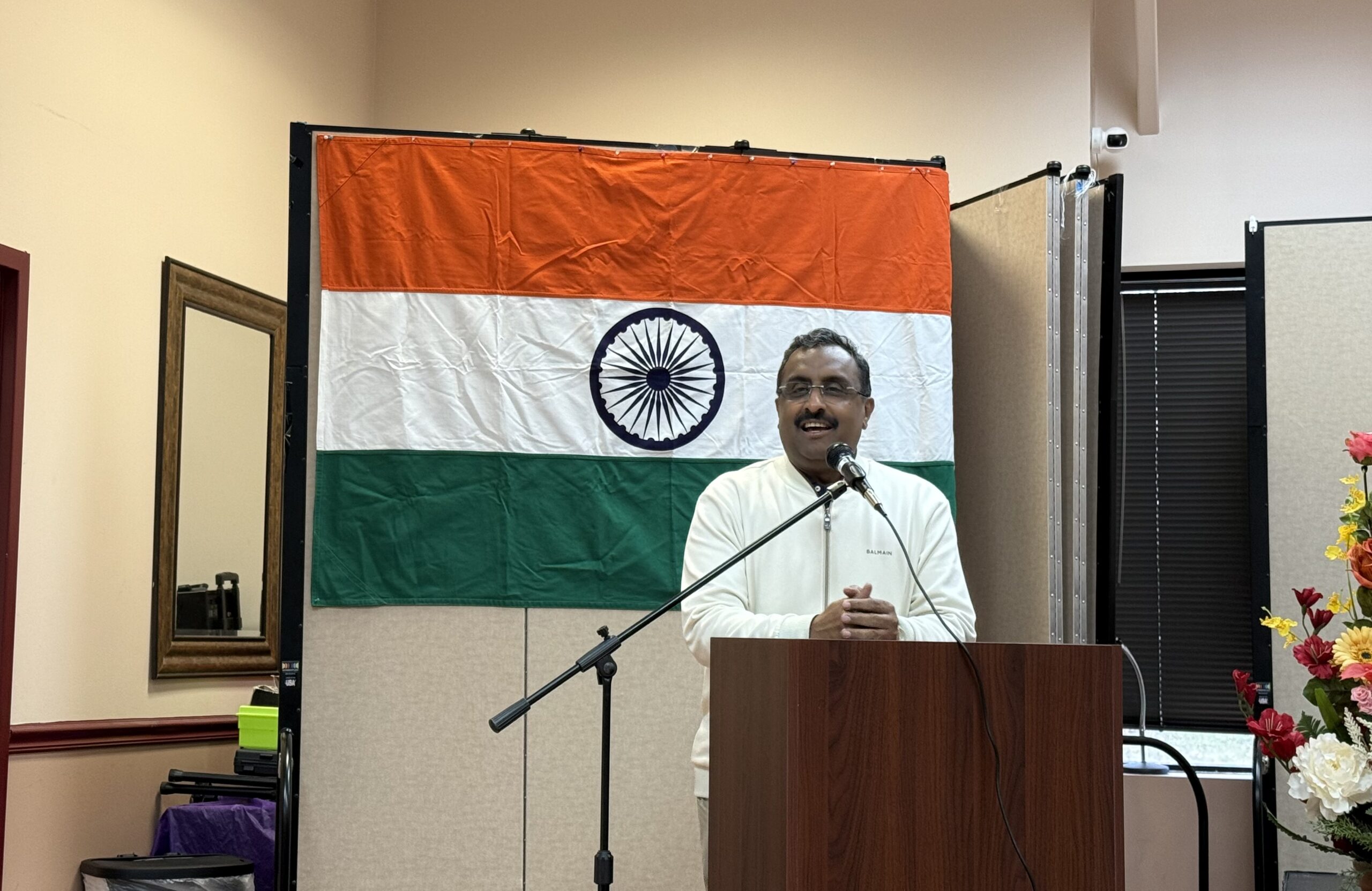
Ram Madhav, president of the India Foundation, a New Delhi–based policy think tank, and an executive member of the Rashtriya Swayamsevak Sangh (RSS), said trade and tariff negotiations between India and the United States often became “complicated” when economic issues were conflated with geopolitics.
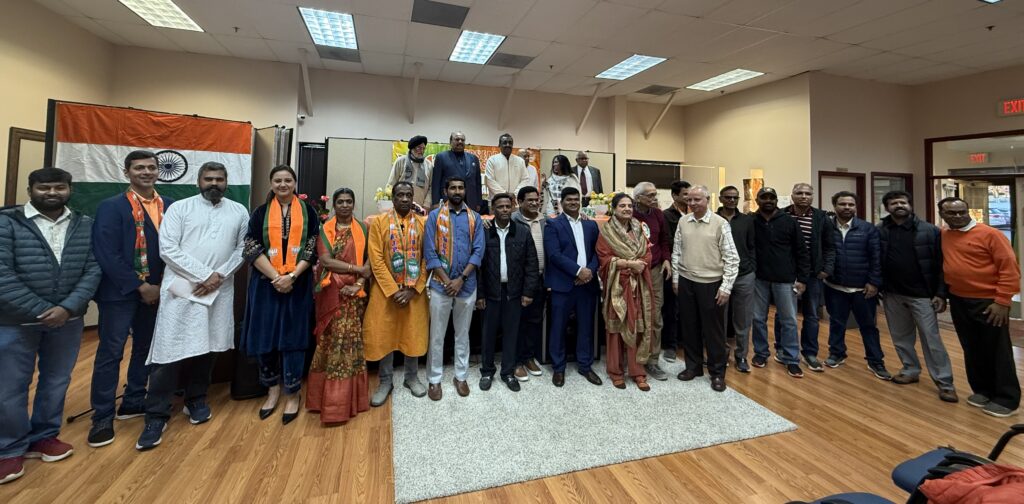
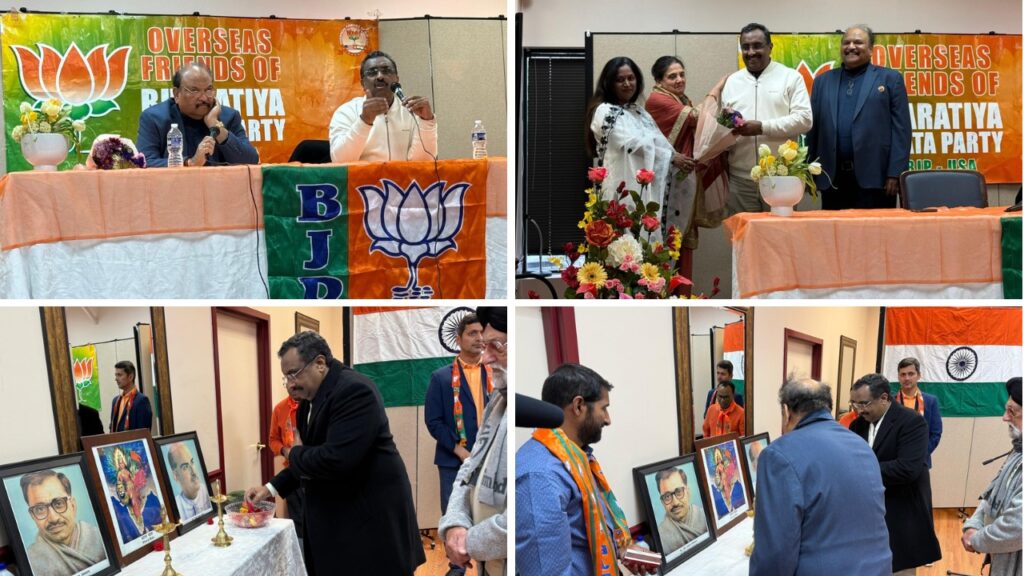
“When [discussing] trade with India, if Pakistan gets mixed up, then it becomes a complicated issue,” Madhav said while speaking at an event hosted by the Overseas Friends of BJP (OFBJP-USA) on January 11, 2026, in India International School in Chantilly, Virginia. “We politely told that one should not mix up geopolitics with trade.”
He noted that India was able to convey this position effectively to the United States, and that such conflation no longer occurs. Trade negotiations are now handled separately, he said, adding that occasional statements related to India and Pakistan should be seen as standalone remarks.
“The trade part is more or less over. We are very close to a deal,” Madhav said, adding that the final decision rests with the White House. “We are in favor of early closure of the trade deal. It is important for India…”
Emphasizing India’s openness to dialogue, he said, “I must tell you that India is not hesitant to negotiate,” pointing out that commerce ministries from both countries have been engaged in talks for the past nine months.
Referring to Commerce Secretary Howard Lutnick’s comment that the trade resolution is “just one phone call away,” Madhav stressed that “India takes matters too seriously.”
“Policies cannot be a phone call away. Policies have to be seriously negotiated across the table,” he said, adding that phone calls are meant for greetings and birthday wishes.
Madhav also addressed remarks linking India with Pakistan in the context of U.S. diplomacy. He said President Donald Trump sought to connect various issues, including the India–Pakistan conflict, and wanted India to “acknowledge” that his “intervention” led to a resolution.
“There was ‘no intervention’ from President Trump,” Madhav said, while noting that there was “some intervention” from the American side, including Vice President JD Vance and Secretary of State Marco Rubio, but only in the form of “suggestion” to India.
On India–Pakistan relations, Madhav reiterated India’s long-standing position. “We have a clear-cut policy that it will only be a bilateral issue. We may fight with each other, but we will resolve it bilaterally,” he said, adding that there is “no role” for any third country in the matter.
Madhav recalled expectations that under a second Trump administration, India–U.S. relations would advance further. However, he said developments did not unfold as anticipated, while noting that similar challenges have emerged in U.S. relations with other countries as well.
He described President Donald Trump as having his “own style” and “own way” of dealing with countries.
According to Madhav, India values its relationship with the United States, which has been built steadily over the past two decades. He recalled former Prime Minister Atal Bihari Vajpayee’s remarks at the Atlantic Council in 2000 that “India and US are natural allies.”
“That is how we try to build this relationship. It has grown into a very natural relationship. And the Indian community has been a very important element in this relationship,” he said.
Commending India’s present leadership, Madhav said, “We have a government with a strong leadership, a leadership that keeps India’s interest as paramount, a leadership that believes in delivery of goods to people. People in the country repose enormous faith in this leadership.”
He cautioned that trade frictions between India and the United States are also influencing geopolitics in South Asia. Ideally, he said, both countries should be aligned on Bangladesh-related issues, but that is currently not the case.
Madhav described Bangladesh as going through a difficult phase, noting that periods of instability often lead to attacks on minorities, particularly the Hindu minority. He expressed hope that an elected government would take charge soon, enabling engagement and normalization of relations.
“As neighbors, India and Bangladesh are destined to sail together,” he said.
Turning to Sri Lanka, Madhav said the Janatha Vimukthi Peramuna (JVP) was once strongly anti-India. “But once in power, we are able to engage with them today. We have fairly good relations with the Sri Lankan government,” he said. He added that Nepal is also facing instability, but said those challenges would be addressed once an elected government is in place.
Madhav described India’s neighborhood as its “strength,” emphasizing that all neighboring countries are sovereign nations with which India shares “a very strong cultural and civilizational bond.” He cited Prime Minister Narendra Modi’s slogan, “Neighborhood First and Together We Grow,” calling it relevant even today.
He acknowledged that challenges persist in the region from time to time. In South Asia, he said, India remains the only consistently successful democracy with a proven record of stable, peaceful, and transparent democratic practices, while other countries have struggled to achieve long-term democratic stability.
Madhav also highlighted what he described as India’s “assertive” foreign policy stance, recalling pressure at the United Nations to support resolutions on Ukraine and Gaza. “At the United Nations, how much pressure was put on us to support this resolution on Ukraine, this resolution on Gaza. We said nothing doing. We go by what is our understanding of the situation,” he said.
“We took a firm stand. When we took that firm stand, you will be surprised to know 40 countries followed us,” he said, adding that Saudi Arabia, the UAE, Indonesia, and Malaysia were among them.
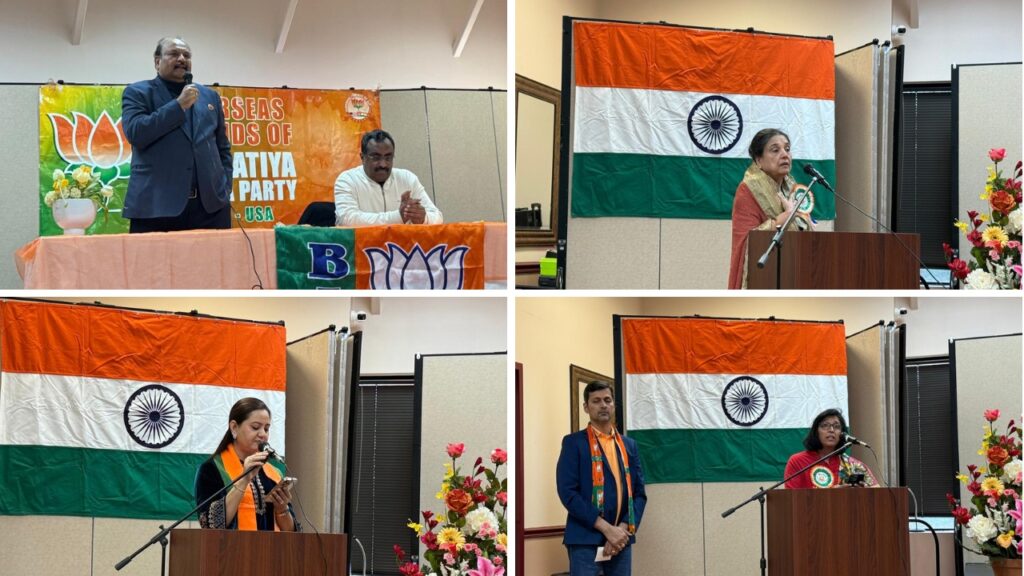
President of OFBJP-USA, Adapa Prasad, said Madhav has been well known to the Indian diaspora for the past three decades. Highlighting the diaspora’s role, he noted that Indian Americans are among the highest income groups in the United States.
Indira Kumar, a founding member of the India International School and Spiritual Center, welcomed Madhav and called for protecting Hinduism and following Sanatana Dharma. “We need ambassadors to talk about our mission, what we’re doing, and how do we take this tradition and culture to the next generation,” she said.
“India International School, also our spiritual center, stands today as a beacon of learning Sanatana values, celebrating a glorious journey of four decades of excellence. For 40 remarkable years, the institution has been shaping young minds, nurturing character and building futures with unwavering dedication,” said Su Puttagunta, an entrepreneur from Virginia and a volunteer at the School.
Meetu Ahlawat of OFBJP introduced Ram Madhav and welcomed him to the stage.
Related posts:
 Pakistan’s Ambassador to the U.S. Calls for “Meaningful” Dialogue with India; Highlights Economic Diplomacy and Investment Opportunities
 “There’s No Deal Until There’s a Deal,” Says Trump After Meeting Putin at the US-Russia Alaska Summit
 President Trump Hosts Pakistan Army Chief Amid South Asia Tensions; PM Modi Rejects Mediation, Clarifies India’s Position
 US-India Experts and Community Leaders Welcome PM Modi’s U.S. Visit, Highlight Key Strategic Issues