 Join WhatsApp Channel

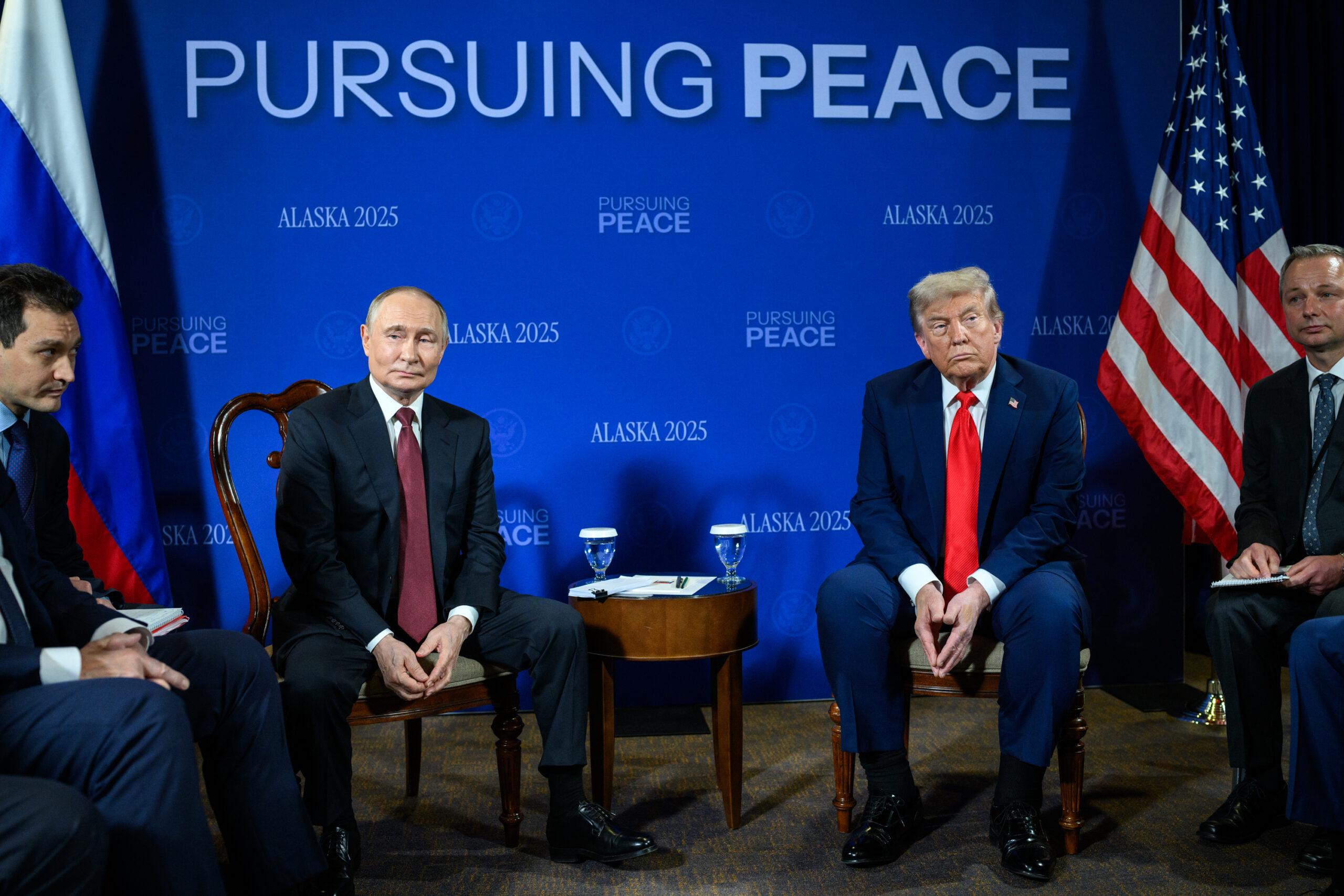
Even before the expiration of the New START Treaty on February 5, there were problems aplenty, starting with the thinking that perhaps the international order was slowly slipping into anarchy, with few indications of how or what the new scheme of things would be like. But the gradual collapse of a nuclear weapons treaty has suddenly exposed the international system to different problems, all of them disturbingly linked, with no limits on nuclear arsenals and the prospect of a new destabilizing or debilitating arms race triggering the frightening consequences of a nano-second miscalculation.
It was precisely the possibility of erring that made the two Cold War adversaries painstakingly push through two Strategic Arms Limitation and Strategic Arms Reduction treaties that had lived through difficult periods in spite of perceived deficiencies. The New START that was inked—dismissed as deeply flawed by the Trump administration—by President Barack Obama capped deployed warheads at 1,550 each for the United States and Russia. Without the treaty, both countries could have increased their numbers from the existing stockpiles, approximately put at 4,300 for Russia and 3,700 for the United States. Explained in simple terms, a deployed warhead is the payload, and a nuclear weapon is seen as the complete delivery package including the delivery vehicle.
President Donald Trump had his reasons for walking away from the Treaty. Heading this list was Russian non-compliance, including stopping inspections as well as data exchange. Washington also argued that existing constraints did not address China’s rapid nuclear expansion. Without verification, the New START was seen as a “Zombie Treaty,” and hence a newer comprehensive accord was needed. The United States’ keen interest in having China aboard on any new Treaty is not shared by Beijing. The Foreign Ministry spokesman expressed the view that the expiration of the Treaty was “regrettable,” which would negatively impact the international nuclear order, going on to reject the “false narrative” on China’s arsenal as something masking Washington’s own responsibilities and seeking nuclear supremacy.
The argument has been made in China that it needs nuclear forces at a “minimum necessary level”—its arsenal put at around 600 warheads—and that Washington and Moscow would have to significantly reduce their stockpiles before any Beijing participation in disarmament talks. Further, there is a contention that arms control has been a ploy of superpowers to limit China’s capabilities while advancing the major powers’ own nuclear programs. Beijing has also been saying that it has conducted far fewer tests than either the United States or Russia and subscribes to a no-first-use policy.
President Trump’s decision to let the arms control treaty expire had more to do with the Russian invasion of Ukraine in February 2022 and Moscow suspending compliance the following year. In the last several months, Moscow has been developing hypersonic missiles with the potential for nuclear payloads and delivery systems that would include the Poseidon underwater drone vehicles, which have been deemed a serious threat to the United States and Europe. The manner in which President Vladimir Putin is escalating attacks on Ukraine, combined with the rhetoric of hawks on using tactical nukes as a way to force Kyiv to end the war, has not been received positively by the Trump White House.
The collapse of the renewed 2012 START Treaty is not merely confined to the next steps Russia and the United States have taken to meet the challenge, including in Europe. While some of the strategies involve the development of exotic missiles, both long- and intermediate-range, European nations have also stepped up to the plate in the development of their own hypersonic missiles as some sort of deterrence against potential Russian aggression. After all, there has been an ongoing fear that Ukraine is merely the start of a full-fledged Moscow plan against Europe and hence a new focus on both conventional and nuclear weapons by way of thwarting any such designs. In fact, analysts are saying that with the Russian deployment of nuclear weapons in Belarus, Europe is already in a high state of nuclear tension.
At least for the time being, the hysteria over the implications of the new START falling apart has not been whipped up among other nuclear and “wannabe nuclear” states. But it does not take a Nobel Laureate to figure this out. While some in the official nuclear grouping may be concerned about the development, especially renewed testing, others will be carefully monitoring the situation. For instance, although Japan is a non-nuclear state committed to the Non-Proliferation Treaty (NPT), the aggressive posturing of China, Russia, and North Korea has sharpened the domestic debate on whether the country should revisit the three non-nuclear principles of not possessing, producing, or permitting nuclear weapons.
Some will argue that Iran, which has always been looking for an excuse, will flag resumed nuclear testing by the big powers to justify its own pursuit. And what about Taiwan, which is nervously watching China—a temptation to restart a program that it was forced to abandon a few decades ago? And at what price? Getting away from an established treaty is easier than restarting a framework that had been formulated over decades. Now that talk of a one-year extension has been junked, the hope will be on the declared, the undeclared, and the aspirants not to run amok seeing an opportunity that is clearly not in the best interests of humanity.
Disclaimer: The opinions and views expressed in this article/column are those of the author(s) and do not necessarily reflect the views or positions of South Asian Herald.
Related posts:
 Putin’s Delhi Gambit: How a High-Stakes Visit Could Redraw India’s Geopolitical Map
 Opinion: A New Dangerous Race in The Making
 India Reaffirms Commitment to Combating Illicit Small Arms Trade at United Nations Security Council
 Putin Lands in New Delhi as India Reasserts Strategic Autonomy Amid Global Pressure
