Join WhatsApp Channel


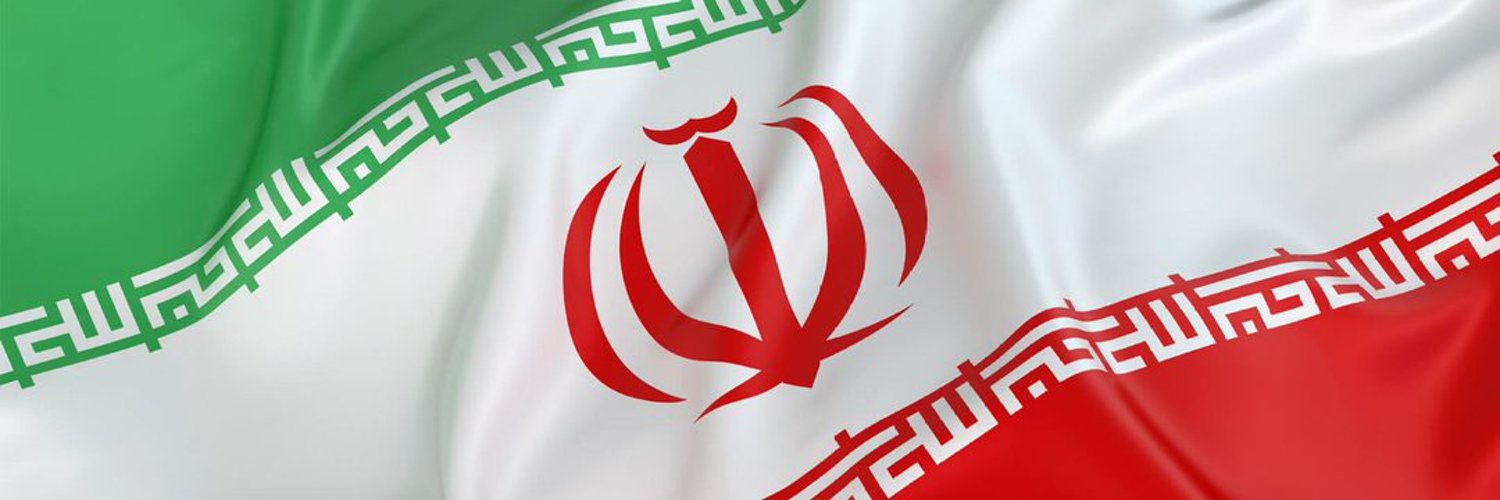
It is a foreign policy scenario that is totally different from what the Trump administration has been witnessing in the last four months. It has nothing to do with chasing drug boats and shadow tanker fleets in the Pacific Ocean or the Straits of Hormuz. Washington is seeing a nation in turmoil with no option seemingly an easy one.
It is said that some 2000 people have been killed in internal protests in Iran over the last two weeks. The numbers may not be exact, but the environment seems to be more or less on the situation the Iranians have seen before especially in the tumultuous situation leading to the fall of the Shah of Iran in 1979, the flight of the Monarch and the coming to power of the clerics led by the Ayatollah Ruhollah Khomeini.
It would be safe to assume that no bureaucrat of the President Jimmy Carter era is still wandering around the corridors of power in the establishment to give a first-hand comparison of then and now. The coming to power of the Shah of Iran was itself artificially engineered in 1953/54 by the British and American intelligence services—the CIA and the MI 5— and what followed for the next two decades plus was a different sort of experience not just for Iran but for the immediate neighborhood and global power politics played out by the United States and the then Soviet Union. Academics and analysts see the Soviet invasion of Afghanistan and the resulting mess for about a decade itself a direct result of the fall of the Shah.
What is being pointed out now is that the Iranians are taking to the streets and only partly because of restrictions in freedom under the clerics. The violence, the argument goes, is directly related to the worsening economic situation; the clamor to pay more attention to the economic imperatives rather than shifting attention to the Gaza, Lebanon and the headaches by way of sanctions that come along.
In 1979 the clerics showed themselves as the alternative; today, the unrest thus far has yet to highlight a rallying force or some kind of an opposition face. Naturally that brings about the vague call on protestors to “carry on” their struggle and occupy as many institutions as possible as President Donald Trump has put out; and at the same time assuring those protesting that help is on the way.
It is only natural for any administration to say that a President is examining all options including the use of force as to rule anything out would be unwise, to say the least. But President Trump must be quite aware of the limitations of military force for the situation is quite different now than in the recent use of long-range B1 bunker busters taking aim at the Iranian nuclear program.
In the present context Washington can go around looking to take out military and security installations targeting protestors or substantially weaken the infrastructure and indirectly giving a boost to the anti-government forces. For a repressive regime that has cut off access to the outside world, Washington is perhaps looking at ways to link-up Iran or use high-tech jamming equipment to curtail essential services, especially to the security forces.
In spite of all the rant from some extreme quarters, the Trump administration has been careful on the use of force or “landing” troops as a way of achieving objectives. For one thing Washington is aware that Iran is not a rag-tag banana republic to be scared out of its wits at the first sight of a military chopper; and for another, the United States has vast military assets in the Middle East that can be retaliated against, either by Teheran or by its manifold proxies.
Further in the absence of an identifiable opposition, there is little Washington can do in a tangible fashion. The son of the late Shah Reza Palhavi has been saying from exile that he is ready to rally the cause. But there is little to suggest that his call has found traction either within Iran or in the Trump administration.
As the top national security team goes about fine tuning the American response, President Trump has taken the first economic shot: to slap a 25 percent tariff on any country doing business with Teheran. And this will naturally bring attention on Russia, China and Brazil, to extent on India which has vastly curtailed its oil business with Iran in the recent past. Still, it would leave many disappointed that the President has not done “enough” or that the protestors have been left high and dry.
The Republican President is already under fire for his adventure into Venezuela and the “snatching” of President Nicolas Maduro and his wife; now there is the need to be extra careful on Iran and not get into a run-in with Congress over the War Powers Act. Even hardline Republicans are not calling for the use of force in settling the goings on in the streets of Iran. In fact, the Make America Great Again (MAGA) base is questioning whatever happened to the “America First” candidate of November 2024.
Disclaimer: The opinions and views expressed in this article/column are those of the author(s) and do not necessarily reflect the views or positions of South Asian Herald.