 Join WhatsApp Channel


It is not as though the Board of Peace (BOP) is in tatters or on the verge of collapse except that many nations who have been invited to join the prestigious “organization” have relevant questions or reservations.
The international body that was talked about frequently during the course of the Gaza nightmare just a few months ago was supposed to deal with not only bringing about peace to that small strip of land, but more importantly in the massive economic reconstruction challenge that lay ahead. And few were amused about any real estate-type condominium developments overlooking the Mediterranean.
President Donald Trump is said to have issued some 60 invitations to nations to join the BOP; but at the launch in Davos were only 11 countries represented by heads of state or government — Argentina, Armenia, Azerbaijan, Bulgaria, Hungary, Indonesia, Kazakhstan, Kosovo, Pakistan, Paraguay, and Uzbekistan; senior officials of eight — Bahrain, Jordan, Morocco, Qatar, Saudi Arabia, Turkey, UAE and Mongolia were on hand for the ceremony for a total of 19.
What stood out in this BOP signing was that aside from the United States there were no other Permanent Members of the United Nations Security Council or for that matter no other member of the Group of Seven. India which had been formally invited is yet to make up its mind; and no official was present at the signing ceremony. And taking exception to its Prime Minister’s speech at the World Economic Forum, the invitation to Canada has been withdrawn.
The issue with this Board of Peace is not because of President Trump anointing himself as its perpetual Chairperson. Some of it has to do with the Charter which few seem to have been privy to and one that apparently has no mention of Gaza per se. Rather it is a Charter that states that the Board will promote stability and enduring peace in conflict areas and in the allusion that the BOP could take on other Global crisis after Gaza. Or as President Trump himself put it, “I think we can spread out to other things as we succeed with Gaza… We can do numerous other things. Once this board is completely formed, we can do pretty much whatever we want to do.”
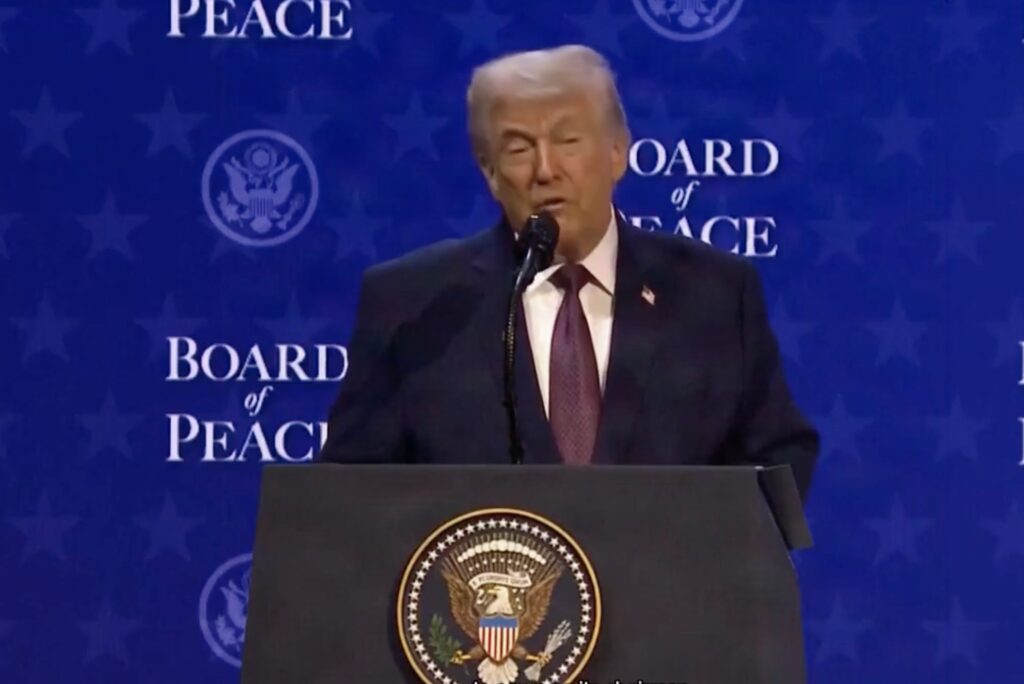
And this precisely where differences have come about. Although not many are heaping praise on the United Nations for the work it has done in the last eight decades, few are ready to jettison this international framework that has been established for conflict resolution and a semblance of global governance to a parallel organisation like the BOP. For instance, the foreign minister of France has maintained that his country would say “no to creating an organisation as it has been presented, which would replace the United Nations.” Further, the entry fee of US$ 1 billion for a three year term is seen in some quarters as draining money away from the United Nations.
Also eyebrows have been raised at the stipulation that President Trump can be at the helm of affairs as Chairman even after leaving the Presidency “until he resigns it” with a future President choosing to appoint or designate an American Representative to the Board. Or as Anton Trojanoyski put in The New York Times, “In the proposed charter of the “Board of Peace” that the United States sent to national capitals in recent weeks, one man has the power to veto decisions, approve the agenda, invite members, dissolve the board entirely and designate his own successor.” But there are other functional problems of the BOP going beyond President Trump and a future Washington participation in any change of guard at the White House.
The composition of the membership in the BOP has itself come under strong criticism from Israel aside from its own misgivings on the nature and scope of the Charter. And one member that has merited particular attention is Pakistan. The government of Prime Minister Benjamin Netanyahu has made it known that it will not allow Islamabad to play a role neither in the transition of Gaza nor in any peacekeeping forces envisaged.
“Any country that supported terror is not welcome… and that includes Pakistan,” Israel’s Minister of Economy, Nir Barkat has been quoted in Davos. On peacekeeping forces, the Minister said, “We will not accept the Qataris, the Turks… and that includes Pakistan… They’ve been very supportive of the jihadi organisation in Gaza, and we will not trust them having boots on the ground.”
Israel does not need any tutoring from India on either Pakistan or the dangers of terrorism, cross border terrorism and state sponsored terrorism for the views of the international community are for all to see. Tel Aviv also does not have a short memory on where Islamabad has been all along in the politics of the Middle East, not just pertaining to the Palestinians but on Iran as well.
In fact during heightened hostilities in June 2025 a top member of Iran’s National Security Council and a senior officer in the Islamic Revolutionary Guard Corps stunned the region and the world by saying “Pakistan has assured us that if Israel uses a nuclear bomb on Iran, they will attack Israel with a nuclear bomb.” Pakistan’s Defence Minister quickly refuted this as fake news.
Prime Minister Shehbaz Sharif is being taken to task for his “morally incorrect” decision to join the BOP and the opposition has demanded “full transparency and inclusive consultation” on issues of such international significance with the Pakistan Tehreek-e-Insaf even demanding on a national referendum on the subject. Outside of the political spectrum observers have not failed to take note of Sharif’s anxious moves to please President Trump with promises of oil and rare earths and a singing along with the bitcoin crowd.
For a country that is in economic tatters and ruin and running around for money from nations and international organisations, how did Prime Minister Sharif find funds for the US$ 1 billion membership fee for the Board of Peace? It is unlikely that President Trump with sharp business credentials would have had a “join now pay later” scheme.
Disclaimer: The opinions and views expressed in this article/column are those of the author(s) and do not necessarily reflect the views or positions of South Asian Herald.
Related posts:
 The Pardon Gambit: Netanyahu’s Precarious Endgame
 U.N. Backs Trump’s Gaza Plan, Marking an Unusual Convergence After Years of Mutual Distrust
 Opinion: Waiting for Peace to Return
 ‘We see it in citizens across the world peacefully choosing their future — from Ghana to India to South Korea’ says President Joe Biden during his UNGA Address
