Join WhatsApp Channel


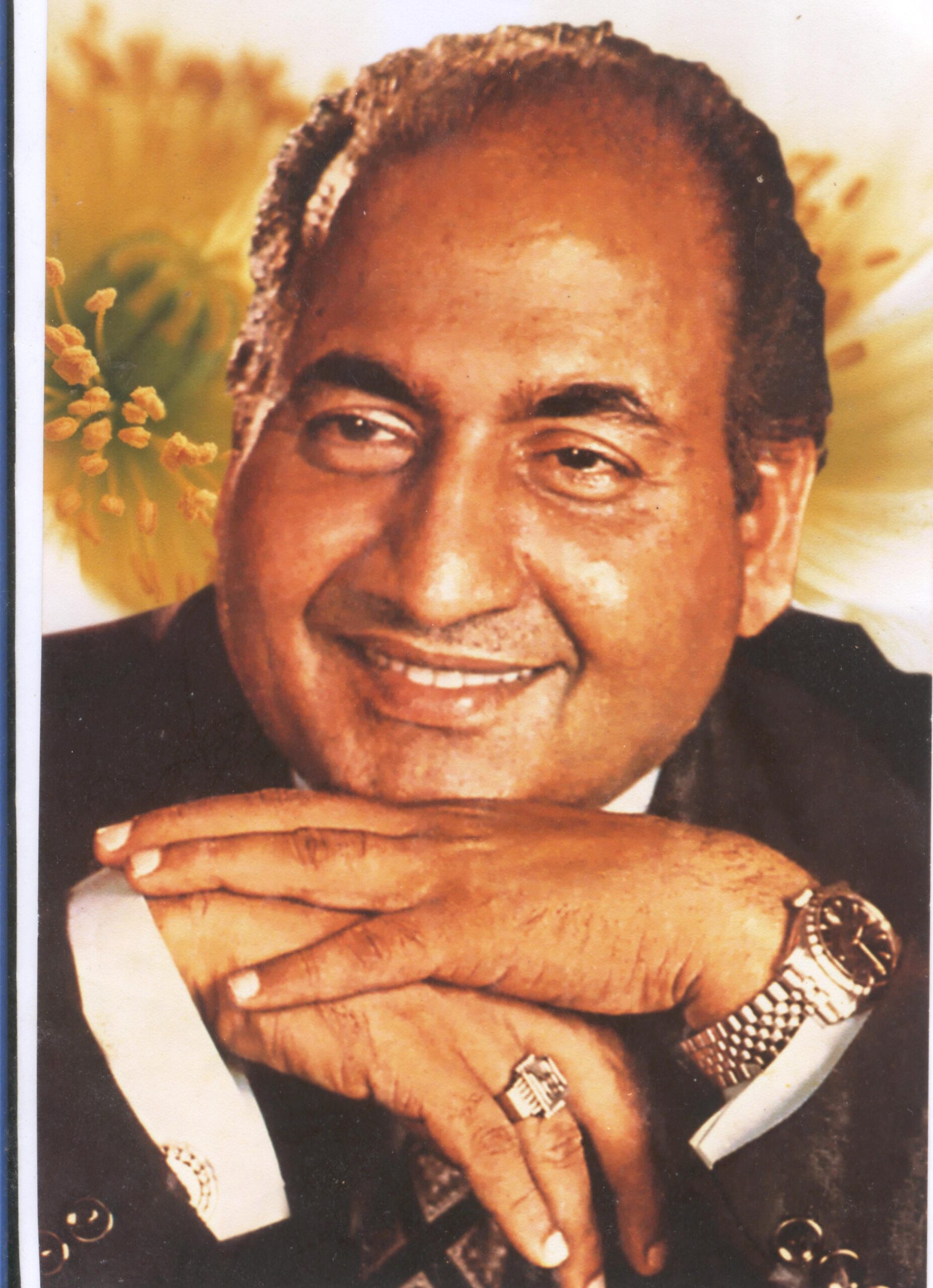
Today, the youngest-at-heart playback singer of Hindi cinema would have been 101 years old. But barely a few minutes, if at all, must be passing even today without a Mohammed Rafi song is not played on radio, home music systems, digitally or on stage somewhere. The evergreen voice from the ‘40s, who ruled alive for over 30 years, continues his spell over us even today.
Padma Shri Mohammed Rafi (and few deserve a posthumous Dadasaheb Phalke honor more) has never lost his relevance even in the contemporary scenario being made by all of today’s hotshot composers.
Mohammed Rafi has always had two kinds of followers – those who emulated him in technical and creative aspects, and those who were his naqals. The first group comprises of the late Mahendra Kapoor (“MaineRafi-saab se gandaa bandhwaayaa hai!” Kapoor told me once, gandaa being the official symbol of a disciple), Udit Narayan (“I always tried to follow his gentle yet forceful style of singing with a saaf-suthra (clean) diction!”) and Sonu Nigam, whose drawing room is adorned with a huge portrait of the singer he considers his guru. Sukhwinder Singh and Roopkumar Rathod have been other singers who have clearly followed the Rafi path.
The other kind of followers were those who mimicked Rafi’s voice also, rather than just follow his ‘vocal throw’ and way of singing. When Rafi passed away in 1980, he was right there at the top. And music directors led by the then-Number One composers Laxmikant-Pyarelal missed him so much that the Rafi-clones who arrived—Shabbir Kumar and later Mohammed Aziz, became their favorite singers, though Anwar, who had come in Rafi’s lifetime, soon lost ground because of reported unprofessional behavior.
So powerful was Rafi’s memory in people’s minds and in the psyche of the industry that Aziz (the most skilled singer among the clones) even became busier than Kishore, who was still alive! LP’s clear No.1 status made even names like newcomer Anu Malik (a Shankar-Jaikishan and Rafi fan) as well as even Bappi Lahiri and Rajesh Roshan use the Rafi-mimics a lot. Later, especially after Kishore’s death in 1987, senior composers lie Kalyanji-Anandji and R.D. Burman tried to use Aziz too. At his peak, Aziz even recorded with legends like Chitragupta, Ravi, Naushad, O.P. Nayyar, Shankar (-Jaikishan) and Khayyam in their various attempts to revive their careers!
When the ‘90s began, Aziz was still on top, and more Rafi clones tried to come in – like Mangal Singh (Kaali teri choti hai / Bahaar Aane Tak), Vipin Sachdeva (Sanam Bewafa), Debashish Dasgupta (Dil Hai Ke Manta Nahin) and some more. But after Aashiqui and the onslaught of Nadeem-Shravan, much like after Aradhana, the musical trend shifted for a short while towards the Kishore Kumar-style, now represented by Kumar Sanu and also by Abhijeet, Vinod Rathod and later Babul Supriyo. In fact, poor Amit Kumar (Kishore’s son and like his father a great Rafi lover) never made it to the top because he never imitated his father but had his own style!
However, Udit Narayan, who has made his first impact in the 1988-1990 phase with Qayamat Se Qayamat Tak and Dil, zoomed past Sanu by 1995, proving once again that the Rafi style was supreme, and that anything other than Rafi was acceptable only as a temporary change! The Udit reign lasted till the early millennium when he was overtaken by Sonu Nigam. Sonu was earlier made to sing in Rafi’s style (Accha sila diya from Bewafa Sanam, Sandesen aate hain from Border and others), but with Yeh dil diwana from Pardes, he broke through with his own style. But when he had first arrived, Sonu had first made an impact in the market with cover versions of Rafi’s hits on T-Series.
A very pertinent observation is that right till the late ‘90s, any new aspiring singer was asked “Aap kya gaate ho (What do you sing), Rafi, Mukesh ya Kishore?” by composers, filmmakers and music barons, despite the fact that original singers like Udit, Sukhwinder Singh and Hariharan were already leading singers!
Another very interesting finding is that throughout the 1990s, thanks to Sanu and Abhijeet on one side and Aziz, Udit and Sonu on the others, songs were clearly demarcated as either the Rafi type of tracks or the Kishore kind of numbers. But today, when so many original voices are there, we get to see so many songs that could be called a mix of these singers’ styles, like the Kites song mentioned above.
The moral of the story is: Rafi is relevant even today. His era continues, he will remain an institution that singers will follow even as he continues to rule our hearts and touch our souls. And Pritam, Vishal-Shekhar, Amit Trivedi and Sachin-Jigar have all agreed on that!