Join WhatsApp Channel


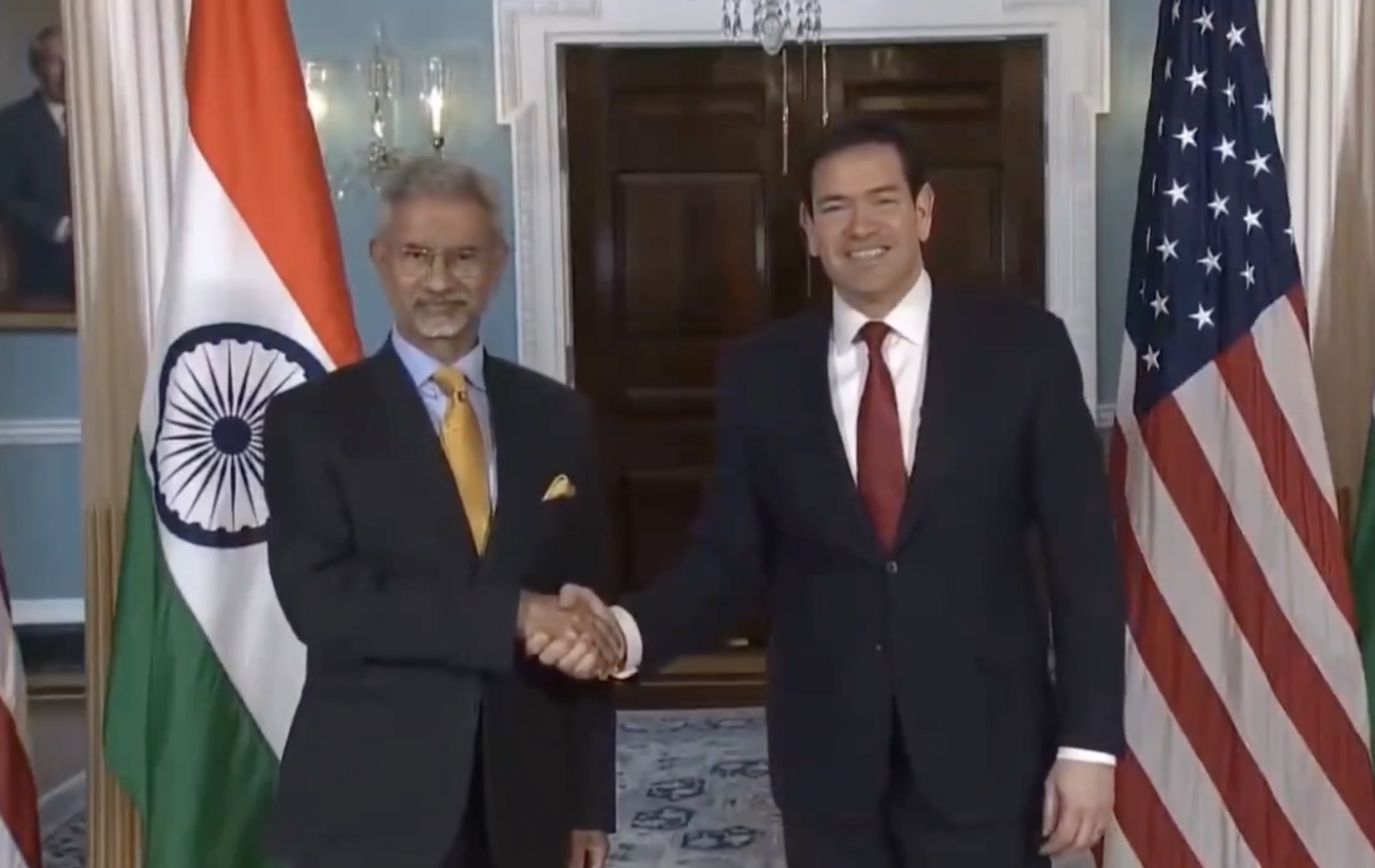
India’s External Affairs Minister S Jaishankar met United States Secretary of State Marco Rubio on Tuesday ahead of the Critical Minerals Ministerial scheduled for February 4 in Washington D.C.
The two leaders discussed steps to formalise bilateral cooperation on critical minerals. Talks covered exploration, mining and processing seen as key to clean energy, advanced technology and supply chain security, as India and the United States look to cut reliance on China.
The meeting was part of Jaishankar’s three-day visit to the United States. It came a day after India, and the United States announced a trade deal. Under the agreement, Washington has agreed to lower tariffs on Indian goods to 18 percent. The deal follows months of strain after the Trump Administration imposed a punitive 25 percent tariff linked to India’s purchases of Russian oil.
In a statement, the US State Department said Secretary Rubio and Minister Jaishankar welcomed the trade deal reached between President Donald Trump and Prime Minister Narendra Modi. The statement said both sides stressed the importance of the two democracies working together to create new economic opportunities and strengthen energy security.
The two leaders also reaffirmed their commitment to expand cooperation through the Quad. They said a stable and prosperous Indo Pacific region remains central to shared interests.
In a post on X, Secretary Rubio said he met Minister Jaishankar to discuss cooperation on critical minerals exploration. He said both sides want to unlock new economic opportunities. He also welcomed the India US trade deal.
Minister Jaishankar said the talks covered a wide range of issues. These included trade, energy, nuclear cooperation, defence, critical minerals and technology. He said both sides agreed to hold early meetings under different mechanisms to move forward the strategic partnership.
According to the statement by the State Department, delegations from more than 50 countries are expected at the first Critical Minerals Ministerial. US Vice President JD Vance and Secretary of State Rubio are expected to deliver opening remarks. Special Assistant to the President of the United States and Senior Director for Global Supply Chains David Copley will also address the gathering.
The ministerial builds on a series of US efforts to counter China’s dominance in critical minerals and rare earth supply chains. These include the Pax Silica Declaration announced in December 2025 and a recent executive order directing the Commerce and Treasury departments to use trade tools to address national security risks linked to mineral dependence.
India is not part of the Pax Silica initiative launched in December 2025. Pax Silica is the Department of State’s flagship program on AI and supply chain security, advancing new economic security consensus among allies and trusted partners. It includes traditional US allies and countries like Qatar and the UAE.
However, New Delhi was invited to a high-level discussion held on January 12 and hosted by US Treasury Secretary Scott Bessent. The meeting brought together finance ministers from G7 nations along with the European Union. India, Australia, South Korea, and Mexico were also invited to take part. India was represented by Union Minister for Railways, Information and Broadcasting, and Electronics and Information Technology Ashwini Vaishnaw.
India’s inclusion in the Trump administrations critical minerals plan is a boost for New Delhi. India remains heavily dependent on China for critical minerals used in technology, defense, and renewable energy sectors. Over the past one year, the Modi government has announced several schemes to reduce this dependence.
In the Union Budget presented on February 1, the government announced plans to set up dedicated rare earth corridors. The move signals a shift beyond securing raw materials. It is seen as a strategic pivot toward domestic processing, separation, magnet manufacturing, and downstream capabilities of rare earth magnets.
Related posts:
 External Affairs Minister Jaishankar to Visit U.S. for Critical Minerals Ministerial
 Secretary Marco Rubio Welcomes Quad Foreign Ministers in DC for High-Level Diplomatic Talks
 Landmark Critical Minerals Framework and AUKUS Commitments Anchor Albanese’s Visit to Washington
 Canada Looks to Deepen Energy and Critical Minerals Partnership with India After Ministerial Visit