 Join WhatsApp Channel


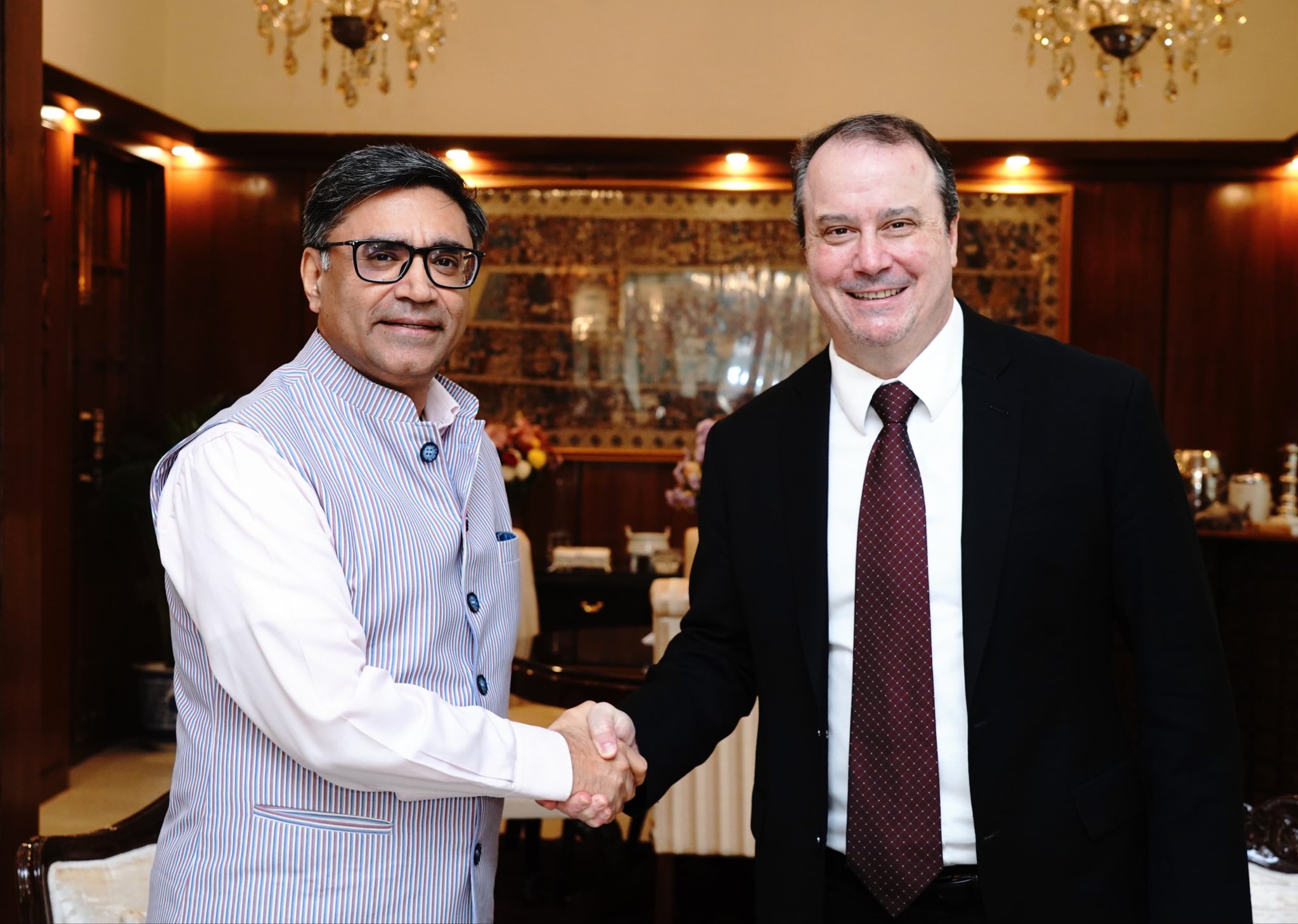
The coming week will test India’s trade diplomacy more sharply than officials may admit. With Deputy U.S. Ambassador for Trade Rick Switzer landing in New Delhi on December 10–11 for high-level meetings, the government is once again making the familiar promise of “progress” toward a Bilateral Trade Agreement (BTA).
But behind the upbeat soundbites lies a harder truth: India’s trade and investment negotiations—with Washington, Brussels and several other partners—have been stalling for reasons that go beyond tariffs or market access. They are being slowed by years of treaty uncertainty, protectionist impulses on both sides, and the aftershocks of India’s own decision to rip up most of its investment treaties a decade ago.
The Ministry of External Affairs described Switzer’s trip as a “familiarization visit,” but it is anything but routine. It comes at a moment when both sides are struggling to stitch together even a limited first-phase pact. Commerce Secretary Sunil Agarwal recently said he was “hopeful” of concluding it this calendar year, but that confidence has been shaken repeatedly as U.S. policy shifts, tariff escalations and legacy irritants keep resurfacing. India insists it wants a “fair and balanced” deal; the U.S. says the same. Yet the timeline keeps slipping.
The delays have as much to do with Washington’s anxieties as New Delhi’s caution. U.S. tariff actions—first imposed at 25% in 2021 and later doubled—were framed around India’s imports of discounted Russian oil and what Washington called “unfair” disadvantages for American exporters. India retaliated in parts, but both sides have preferred not to escalate too far. Still, these tit-for-tat moves have left a residue of mistrust that trade negotiators are struggling to scrub away. Even the current BTA talks, which were meant to be narrow, phased and politically manageable, are now mired in caveats.
India argues the tariffs were politically motivated, but Washington sees them as bargaining leverage. The result is a negotiation cycle where each round resets to zero.
Switzer’s visit comes at a time when India is simultaneously trying to accelerate its trade talks with the European Union. Commerce Minister Piyush Goyal held a two-day dialogue with EU Commissioner for Trade Maroš Šefčovič on December 8–9, following an intensive week of technical negotiations in New Delhi. Both sides publicly reaffirmed their political will to conclude a “fair, balanced and ambitious” FTA. But privately, officials concede the sticking points remain substantial—ranging from rules of origin and tariff schedules to services mobility and sustainable development benchmarks.
The India-EU FTA has been stuck for nearly a decade; the India-U.S. BTA has been under discussion in various avatars for almost as long. Both partners voice urgency; neither is able to deliver closure.
India’s difficulty in closing trade agreements is not just about tariffs or domestic sensitivities. It is increasingly about credibility—specifically, whether India’s trade partners trust its investment environment enough to embed market access with enforceable protections. This is where past decisions are casting long shadows over present negotiations.
India’s decision between 2013 and 2019 to terminate 44 bilateral investment treaties still affects negotiations today, even though officials rarely acknowledge it publicly. A detailed policy paper by the Research and Information System for Developing Countries (RIS) notes that foreign direct investment from treaty-terminated countries fell by more than 30%, with investors rerouting capital through jurisdictions such as Singapore and Mauritius simply because those treaties offered better protection. While India’s total FDI inflows remain respectable—over $50 billion in the first nine months of FY25—the composition is concerning. Too much capital enters through treaty-friendly hubs; too little arrives directly from major partners negotiating FTAs.
Trade partners know this, and they quietly worry that India’s investment rules remain unpredictable, its arbitration framework underdeveloped and its legal remedies too slow to satisfy institutional investors. The 2016 Model BIT, with its narrow protections and a five-year domestic litigation requirement before arbitration, is widely seen as a deterrent. India wanted to reduce its exposure to arbitration claims after the Vodafone, Cairn Energy and White Industries cases; instead it signaled to the world that investment disputes could become drawn-out ordeals.
This hesitation is now seeping into trade negotiations. Washington and Brussels both prefer FTAs that integrate investment protection. India prefers to delink the two, arguing that investment chapters should be cooperation-based, not enforceable. The result: each side is negotiating a different idea of an agreement. Investors watch this disconnect closely.
The delays therefore reflect a deeper mismatch in expectations. The U.S. wants stronger commitments on digital trade, intellectual property and predictable tariff regimes. India wants regulatory space, data sovereignty and policy flexibility. The EU wants sustainability provisions, labor protections and transparent rulemaking. India agrees in principle but balks at binding enforcement. When everyone wants a deal—but everyone wants a different deal—the outcome is familiar: one more “productive round,” another “positive meeting,” and still no agreement.
Meanwhile, the bilateral trade relationship with the U.S. is too large, too politically sensitive and too exposed to sectoral lobbies to be managed indefinitely through stopgap arrangements. Bilateral trade touched $191 billion last year; both sides ambitiously hope to push this to $500 billion by 2030. Without a structural agreement, that target is aspirational at best.
India’s negotiating challenge is compounded by its own growing list of FTAs. With 14 FTAs already signed and six PTAs in place, New Delhi is trying simultaneously to close FTAs with the EU, U.K., Canada, the Gulf Cooperation Council, and now the U.S. These overlapping timelines place enormous strain on negotiating capacity—and create mismatched commitments across agreements, complicating bargaining positions.
What India needs now is strategic clarity. First, it must recognize that investment protection is not a concession to foreign governments—it is a confidence-building measure for investors. The RIS study makes it clear that investors respond to credible legal frameworks. If India wants to be a $5 trillion economy anchored in manufacturing and high-value services, it cannot keep signaling that foreign investors must accept higher uncertainty because the state wants maximal regulatory control.
Second, India needs a consistent template for global negotiations. A patchwork of over-defensive investment clauses, tariff sensitivities and unpredictable rulemaking erodes India’s leverage against partners with stronger negotiating bandwidth. The “fair and balanced” mantra must be backed by reforms—modernizing the BIT template, clarifying dispute resolution, and restoring limited most-favored-nation and fair-and-equitable-treatment provisions.
Third, geopolitical alignment must translate into economic alignment. India and the U.S. talk frequently about shared democratic values, Indo-Pacific security cooperation and supply-chain partnerships. But trade negotiations remain bogged down in legacy disputes and tariff anxieties. For all the symbolism of high-level visits, the real breakthroughs will happen only when both sides are willing to compromise on issues that have long been parked under the carpet.
And finally, India must accept that credibility is cumulative. Delays in one negotiation affect momentum in others. When talks with the U.S. stall, Brussels becomes cautious; when the EU raises sustainability benchmarks, Washington becomes defensive. Investors interpret the delays as structural rather than incidental.
Rick Switzer’s visit may help warm the diplomatic temperature, but it will not magically unlock a deal. India needs to decide whether it wants to remain caught in a loop of optimistic statements and missed timelines—or whether it is ready to recalibrate its investment and trade policy to match the scale of its global economic ambitions.
For now, the talks continue. The optimism continues. The delays continue. And India’s trade diplomacy remains, as ever, a work in progress—full of potential, short on delivery, and increasingly shaped by past decisions that still weigh heavily on the present.
Related posts:
 Beyond Tariffs: U.S.-India Trade Talks Test New Delhi’s Strategic Trade Vision
 India Faces High-Stakes Trade Test as U.S.-EU Pact Reshapes Global Tariff Landscape
 India to US: No Trade Deal Under Duress, Economic Autonomy Non-Negotiable
 India Reassesses Trade Strategy as U.S. Tariff Ruling Alters Negotiation Dynamics
