Join WhatsApp Channel


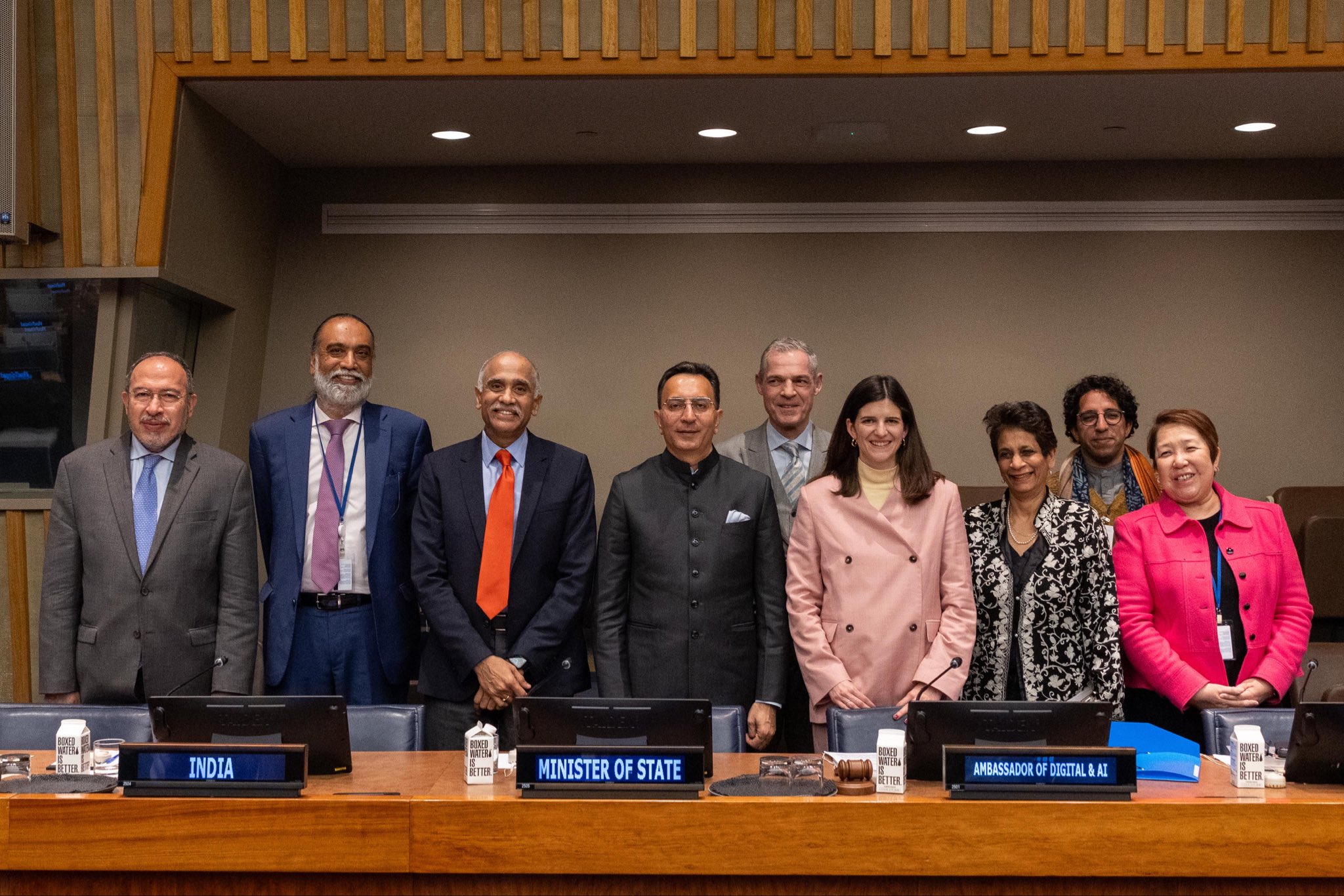
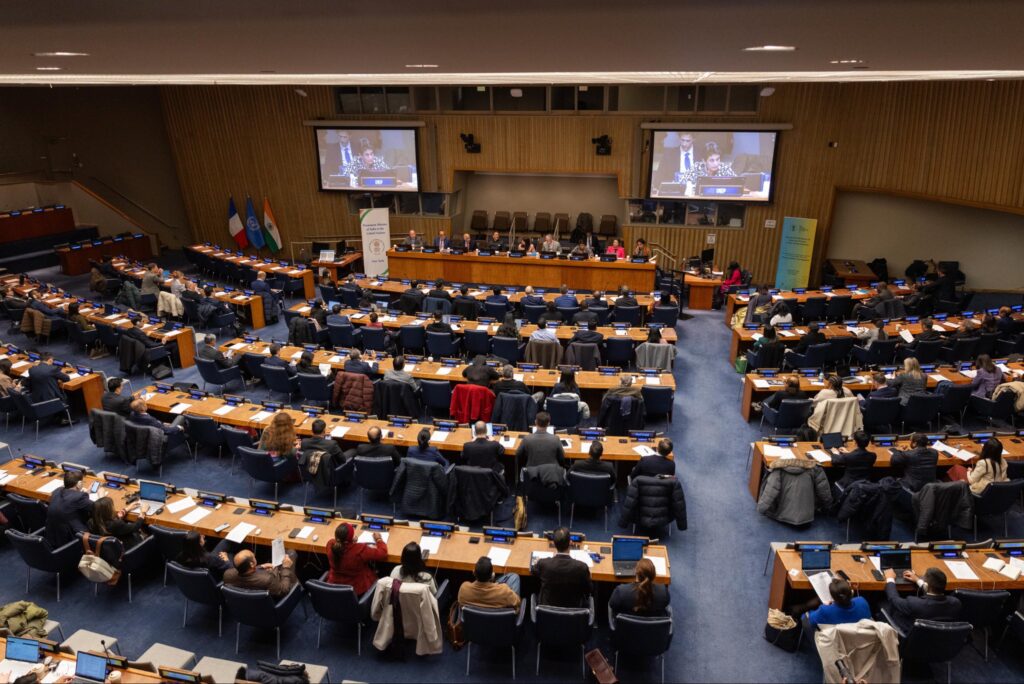
The Permanent Missions of India and France to the United Nations jointly organized an event titled “From Action to Impact – A Curtain Raiser to the AI Impact Summit” on December 16, 2025, at United Nations Headquarters in New York, setting the stage for the upcoming AI Impact Summit scheduled to be held in New Delhi from February 19-20, 2026.
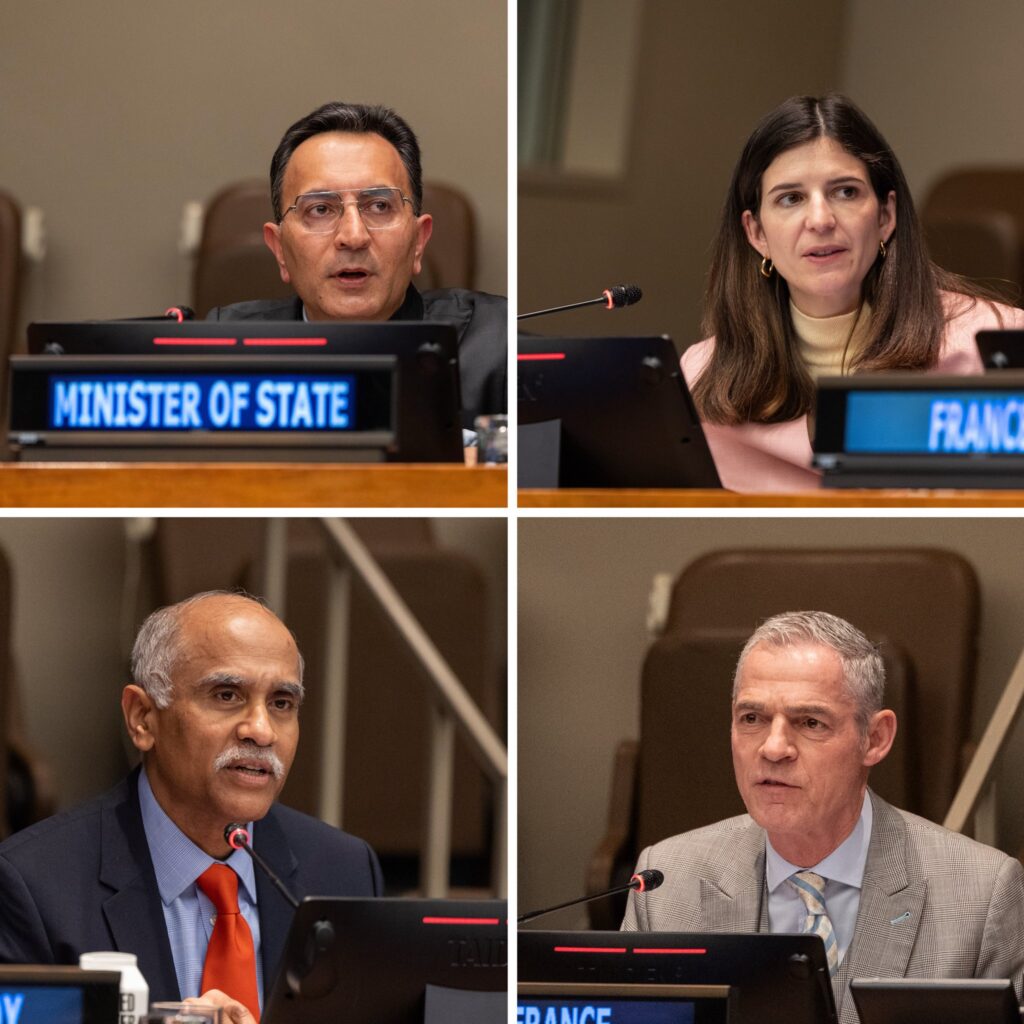
Announcing the Summit, India’s Union Minister of State for Commerce and Industry and Electronics and Information Technology, Jitin Prasada, underscored that the New Delhi gathering would focus on translating “vision into execution.” He said the Summit aims to move beyond discussions and declarations toward measurable outcomes that directly benefit people and societies.
Minister Prasada noted that in recent years, global recognition has grown rapidly that artificial intelligence is no longer a “speculative technology.” Instead, it is already “shaping economies, labor markets, and even relationship” between citizens and the state. With this realization, he said, has come a shared understanding that democratizing the benefits of AI requires “deliberate interventions” and “collective action.”
Tracing the evolution of global AI discussions, Prasada reflected on the journey of international summits, beginning at Bletchley Park, where governments came together around a common concern: the systemic risks posed by advanced AI systems. That meeting, he said, was a necessary starting point, as it helped establish trust among governments and acknowledge that uncoordinated national approaches were no longer sufficient.
The conversation expanded further in Seoul, he recalled, where issues of “ethics, inclusion and responsible deployment” took center stage. According to Prasada, these discussions helped widen the global lens beyond risk mitigation to include broader societal and developmental considerations.
The AI Action Summit in Paris marked what he described as a “decisive point” in this progression. Unlike earlier meetings, the Paris Summit focused not only on what principles should “guide AI,” but on how to “operationalize them.” Prasada said the Summit stood out for both its “processes and outcomes,” with five core themes that explored the unique dimensions of artificial intelligence. These discussions culminated in a declaration recognizing that responsible AI must be “human centric, inclusive and development oriented.”
Building on this foundation, Prasada outlined the framework of the India AI Impact Summit 2026. He presented the three guiding Sutras of the Summit: “People, Planet and Progress.”
These principles, he said, will be operationalized through seven thematic working groups, known as Chakras. The Chakras include Human Capital; Inclusion for Social Empowerment; Safe and Trusted AI; Resilience; Innovation and Efficiency; Science; Democratizing AI Resources; and AI for Economic Growth and Social Good.
Inviting governments, industry leaders, researchers, civil society organizations, and international institutions to participate, Prasada emphasized that the success of the Summit should be measured by the “lives it improves rather than by the number of declarations it produces.”
Referring to Prime Minister Narendra Modi’s observation that “AI is writing the code for humanity in this century,” Prasada stressed that the Prime Minister has consistently highlighted universal access to AI, particularly for the Global South, as a central priority. He added that the Prime Minister has also observed that technology changes the nature of work rather than eliminating it, underscoring the importance of inclusive “access, skilling and reskilling,” and practical measures that translate policy commitments into real-world impact.
Ambassador for AI and Digital for the Government of the French Republic, Clara Chappaz, said the AI Impact Summit in India would be a key moment for moving from “action to impact.” She noted that the New Delhi Summit, with its large and diverse group of stakeholders and wide-ranging agenda, would provide a “unique platform for disseminating these solutions.”
Chappaz said France is already working closely with India to prepare for the Summit, including through its co-chairmanship of a working group focused on “resilience, innovation and efficiency.” She also pointed to certified events being hosted by both countries and said that many additional engagements would be held in France, covering topics such as cooperation between India, France, and countries across the African continent.
Under-Secretary-General and the United Nations Secretary-General’s Envoy on Technology, Amandeep Singh Gill, said, “We are working closely with the Indian Government to ensure a successful AI impact summit that builds on the achievements of Bletchley Park, Seoul, and Paris.” He shared that UN Secretary-General António Guterres would attend the Summit on behalf of the UN system.
Gill said the United Nations is committed to translating the theme of moving from “action to impact into reality,” adding that promoting AI for humanity and creating global spaces for dialogue on how AI is governed have been central to the Secretary-General’s agenda.
Referring to the Secretary-General’s roadmap for digital cooperation, Gill highlighted concerns about the lack of “representation and inclusiveness” in global AI discussions, where developing countries are often absent or underrepresented in the most prominent forums. In the roadmap, he noted, the Secretary-General has also called for the establishment of a high-level body on Global Cooperation on Artificial Intelligence.
United Nations Assistant Secretary-General and Regional Director for Asia and the Pacific at the United Nations Development Programme, Kanni Wignaraja, said the Paris AI Summit demonstrated a commitment to narrowing digital divides, upholding human rights, and advancing ethical, safe, and transparent AI standards. However, she cautioned that significant headwinds remain, which could leave many countries and communities behind in accessing the full and fair benefits of AI advances.
Wignaraja referred to UNDP’s recent flagship report, “Next Great Divergence: Why AI Might Widen Inequalities Between Countries,” which she launched in Seoul and Bangkok. The report shows that while 1.2 billion people globally have used AI tools this year, adoption in low-income countries stands at just 5 percent. This disparity is particularly pronounced in Asia and the Pacific, where uptake varies sharply between advanced and developing economies.
India’s Permanent Representative to the United Nations, Ambassador P. Harish, reflected on the trajectory of global AI engagement, noting, “we have been through three summits, and we are heading to the fourth,” and questioning “what is it that we are exactly looking at.” He recalled Prime Minister Modi’s address at the Paris AI Summit, where the Prime Minister emphasized that governance is not only about “managing and mitigating risks,” but also about recognizing and maximizing the “upside.”
Ambassador Harish said the Prime Minister highlighted the upside for governments and companies, but most importantly, the upside for ordinary citizens, reinforcing the need for people-centered AI governance.
Jérôme Bonnafont, Permanent Representative of the French Republic to the United Nations; Tawfik Jelassi, Assistant Director-General for Communication and Information at UNESCO; Nur Sulyna Abdullah, Chief of Strategic Planning and Membership and Special Advisor to the Secretary-General of the International Telecommunication Union; Yacine Jernite, Head of Machine Learning and Society at Hugging Face, Inc.; and other distinguished speakers also spoke at the event.
Related posts:
 India Condemns Pahalgam Terror Attacks, Showcases Digital Public Infrastructure Leadership at United Nations
 France Stuns Australia 8-3 as Day 3 of Junior Men’s Hockey World Cup Delivers High-Scoring Thrillers
 G7 Summit 2025 Ends with Renewed Alliances, Sharp Divides, and a Surprise Exit by President Trump
 United Nations@80: Legacy, Challenges, and Future Directions