Join WhatsApp Channel


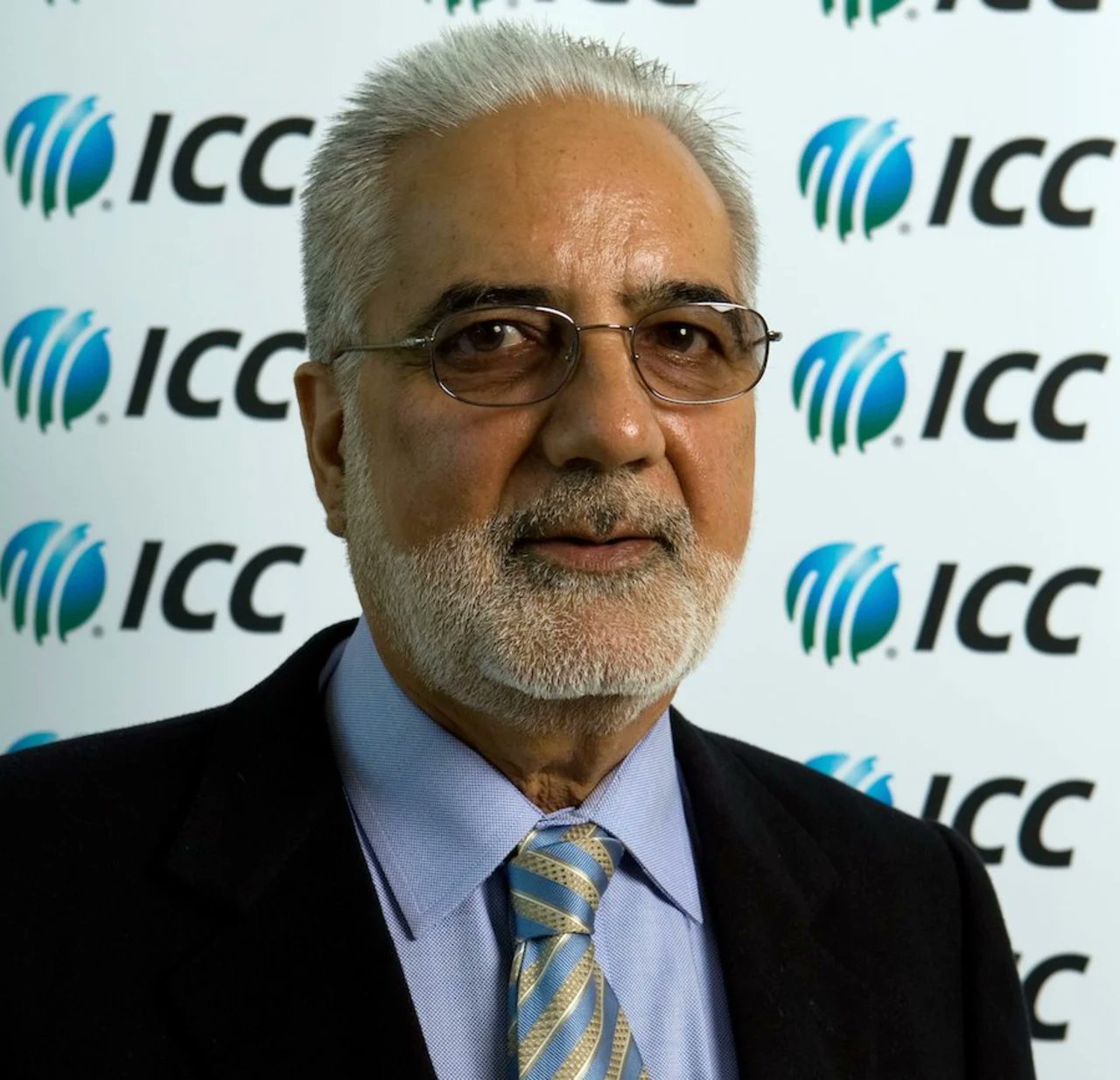
He was not only a doyen of Indian cricket and an administrator par excellence who commanded respect across multiple institutional domains, but also a gentleman, a keen golfer, a wonderful human being, and a trustworthy friend whose foremost passion was sport.
Inderjit Singh Bindra and cricket were inseparable. No history of the modern game would be complete without acknowledging the immense contribution of this rare bureaucrat who served the Punjab Government after joining his parent cadre in 1966. He had a brief stint as an IPS officer before entering the elite service.
A bureaucrat with a difference, Bindra was known for swift decision-making and belonged to a rare band of civil servants who ensured little or no pendency of files at the end of the day. With his passing, Punjab has lost one of its most illustrious sons, an administrator par excellence and a custodian of institutional integrity.
I shared a long association with him. When the Punjab Cricket Association stadium was taking shape, I often accompanied him on his evening inspection-cum-evaluation walks around the complex. He monitored progress meticulously and held regular meetings with both the architect and the construction company. Deadlines were never compromised.
He accepted criticism with grace. As captain of the Chandigarh Golf Club, he once ordered the chopping of green tops from several trees. I wrote a front-page story in The Tribune titled “Killing trees for their sport.” When he called me the next morning, I explained that despite my respect for him, the ecological damage could not be ignored in the public interest. Rather than reacting defensively, he agreed, admitting it was a “wrong decision” and that “chopping off green tops could have been avoided.” He kept that promise thereafter, including during the construction of the PCA Stadium.
A regular at the golf club, his frequent playing partners included Milkha Singh and bureaucrat R S Mann. He was also among the first to use a golf cart on the course.
Best known as a cricket administrator, Bindra transformed a mediocre Punjab team into national Ranji Trophy champions and placed the once-sleepy township of Sahibzada Ajit Singh Nagar, Mohali, firmly on the global map with the PCA Stadium. Punjab’s ability to renovate, upgrade, and modernize its sports infrastructure after the reorganization of the state in 1966 owed much to his astute planning and farsighted vision.
His love for sport extended well beyond cricket. Believing that public sector undertakings had a social responsibility, he conceived and built a hockey team within the public sector. Led by Olympian and now MLA Pargat Singh and coached by international player Sukhvir Singh Grewal, the Punjab Alkalis and Chemicals team won several prestigious tournaments and brought laurels to the state. The initiative aimed to stem the drain of sporting talent from Punjab. However, after Bindra was transferred from the Industries Department, the team was disbanded. Even so, it produced several outstanding players who later joined the Punjab Police.
Bindra belonged to a vanishing category of senior administrators whose authority extended across institutions and whose work transcended the limits of formal portfolios. Few civil servants have transitioned so successfully into sports administration, and fewer still have left such a lasting institutional legacy in both domains.
Paying tribute, retired civil servant KBS Sidhu wrote that Punjab had lost not merely a cricket administrator but a custodian of institutional integrity. India had lost a figure whose strategic vision helped position the nation as a cricketing superpower, while global cricket governance had lost one of its architects.
“Bindra’s death marks the conclusion of an extraordinary institutional career spanning more than four decades, during which he moved seamlessly between the senior echelons of the civil service and cricket administration, bringing to both spheres a rare combination of decisive leadership, legal acumen, and entrepreneurial vision,” Sidhu wrote.
“My memories of Mr. Bindra are still vivid and fresh in my mind. It was he who got the infamous Chaura Bazar of Ludhiana cleared of its encroachments. He refused to bow under any pressure,” recalled Dronacharya hockey coach Baldev Singh of Ludhiana, a Padma Shri awardee this year.
During his civil service career, Bindra held several key positions, including Deputy Commissioner of Ludhiana from 1972 to 1974 and of Patiala from 1975 to 1975, establishing a reputation for swift, legally sound decisions and administrative efficiency.
Following the Rajiv-Longowal Accord in 1985, which proposed transferring administrative control of Chandigarh to Punjab, Bindra’s standing as an administrator par excellence made him the natural choice for Administrator of Chandigarh. The merger, like much of the accord, was later set aside.
Throughout Punjab’s turbulent period between 1982 and 1987, Bindra served as Special Secretary to President Giani Zail Singh. He remained closely attuned to developments in the state during a time marked by extraordinary political and social upheaval. With first-hand exposure to events surrounding Operation Blue Star and the assassination of Prime Minister Indira Gandhi, he played a critical role in maintaining institutional balance and constitutional propriety amid rising tensions and violence.
Cricket remained his enduring passion. Determined to revive the game in Punjab after several stalwarts moved to other centers, Bindra focused on nurturing young talent, correcting institutional weaknesses, and building competitive infrastructure. He initially assembled a core team with M P Pandov and G S Walia.
In 1978, he formally assumed office as president of the Punjab Cricket Association. Punjab’s rapid rise culminated in the 1992–93 Ranji Trophy victory, marking the state’s arrival on the national cricketing stage alongside its traditional dominance in other sports.
Beyond upgrading facilities at Gandhi Park in Amritsar and Burlton Park in Jalandhar, his vision led to the creation of the world-class PCA Stadium in Mohali. In recognition of his service, the stadium was named after him following his retirement from active cricket administration in 2014.
Bindra was also instrumental in marketing sport and transforming cricket’s commercial landscape. He brought major companies into live telecasts and recognized early the revenue potential of satellite television. His tenure as BCCI president from 1993 to 1996 ushered in a period of administrative and financial renewal that made the board the country’s most powerful sports body. He played a key role in bringing the World Cup to South Asia through the 1987 Reliance Cup and later in coordinating the 1996 World Cup hosted jointly by India, Pakistan, and Sri Lanka.
He never sought honors or awards. Commitment and perfection defined him. He was a man of principle who did not compromise and who stood firmly by those he respected and admired.
Related posts:
 Abhinav Bindra Welcomes Lionel Messi’s India Visit, Urges Focus on Grassroots Systems Over Spectacle
 City of Brampton Breaks Ground on Cassie Campbell Field Hockey and Multisport Training Dome
 Surrey-Based Promoter Tejinder Singh Aujla Calls for Legal Framework to Rescue Circle Kabaddi from Crisis
 BC Place in Vancouver to Host Inaugural Canada Super 60 T10 Cricket League