Join WhatsApp Channel


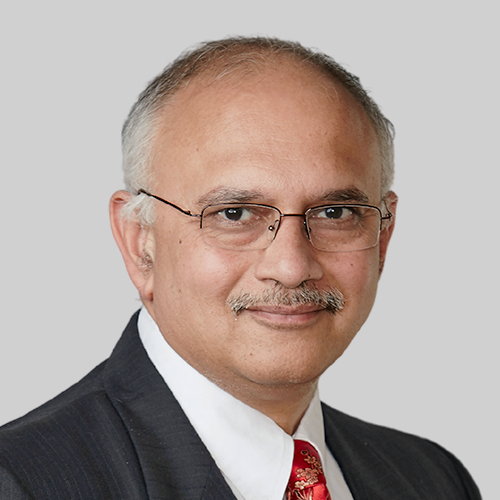
Anand Deshpande is the Founder, Chairman, and Managing Director of Persistent Systems since inception and is responsible for the overall leadership of the Company.
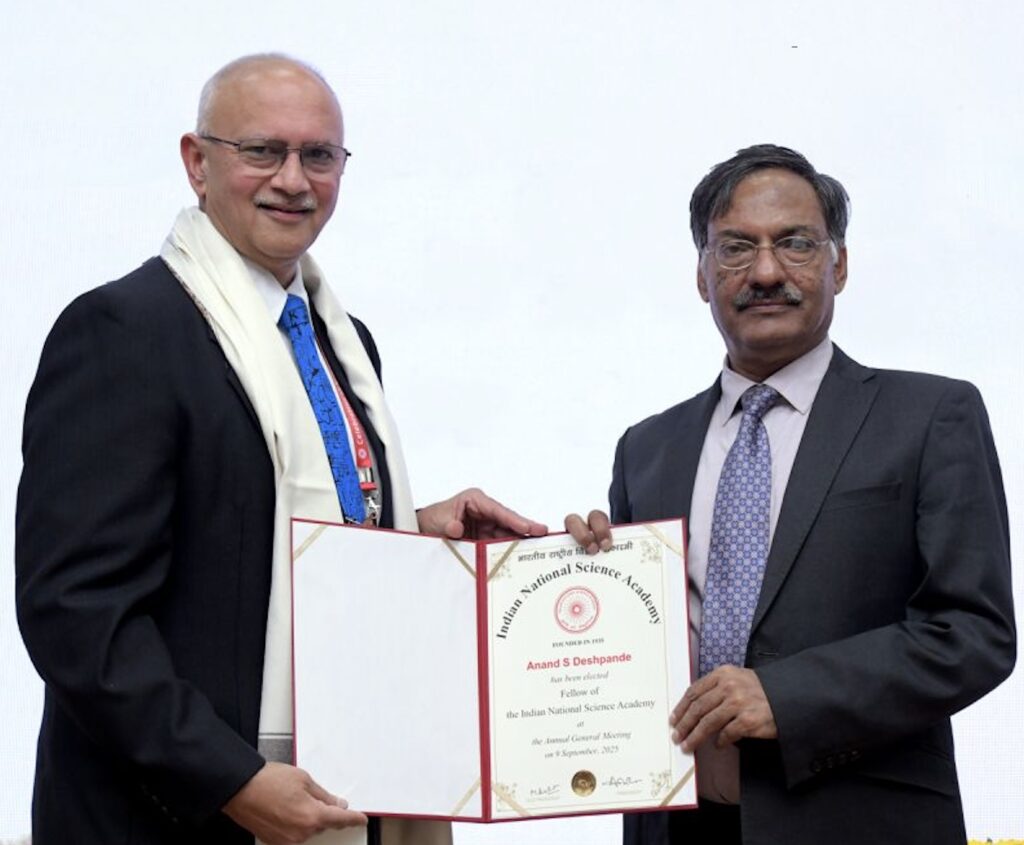
Deshpande holds a Bachelor of Technology (B. Tech.) with Honours in Computer Science and Engineering from the Indian Institute of Technology (IIT), Kharagpur, and an M.S. and a Ph.D. in Computer Science from Indiana University, Bloomington, Indiana, USA. He has been recognized by both his alma maters – as a Distinguished Alumnus in 2012 by IIT Kharagpur and by the School of Informatics of Indiana University with the Career Achievement Award in 2007. He has also been elected as a fellow of INSA and has been listed on the Forbes’ 2025 Billionaires list.
In this wide-ranging conversation with South Asian Herald Deshpande reflects on building Persistent Systems from the early days of India’s software industry and shares his perspectives on leadership, philanthropy, artificial intelligence, the future of work, longevity, and India’s digital journey towards Viksit Bharat 2047.
Building Persistent in the Early Days of Indian Software
When Deshpande founded Persistent Systems in 1990, India’s software industry was still nascent, with limited infrastructure and global visibility. One of the most consequential policy interventions of that era was the Software Technology Parks scheme, led by N. Vittal, then Secretary of the Department of Electronics. Persistent emerged as a direct beneficiary of this vision, becoming the first company established in STP Pune and the first to export software from any STP in the country.
Reflecting on those early years, Deshpande notes that timing and technology focus mattered enormously. “I started Persistent Systems in 1990, when India’s software industry was still in its infancy,” he says, recalling how the STP framework created a launchpad for export-oriented technology companies.
Deshpande’s academic grounding in database systems shaped Persistent’s early trajectory. With a PhD in query processing, the company began by working with customers building databases and data platforms—an emphasis on deep technology that helped distinguish it from pure services players. What remains particularly significant is the longevity of those early relationships. “Many of those early customers continue to work with us even today,” he says.
Over the last three and a half decades, Persistent has continuously evolved as markets and technologies have changed. Yet, Deshpande believes three fundamentals have remained constant. The first is clarity of purpose. “Leadership matters deeply, especially when you are a smaller company,” he observes. “Customers must have a clear reason to choose you.”
Equally central has been the company’s commitment to customer success. Persistent’s growth, he explains, has been built on trust, reputation, and long-term relationships rather than short-term gains. The third pillar is people and culture. “Our people are the reason for our success,” Deshpande says, emphasizing the importance of employee well-being, continuous learning, and a culture that helps individuals find meaning in their work.
Philanthropy Beyond Influence and Legacy
Deshpande views philanthropy as a powerful mechanism for addressing structural gaps in India’s development journey. In a country of India’s scale, private capital, when deployed thoughtfully, can act as catalytic funding with disproportionate impact.
“Philanthropy has enormous potential to be a force for good, particularly in a country like India,” he says. While he acknowledges that some giving may be influenced by brand or legacy considerations, he believes the more important story lies in how philanthropy is strengthening entrepreneurship, skilling, public health, scientific research, and the arts.
Through his work with the deAsra Foundation, Deshpande has focused on nano-entrepreneurs—small enterprises that generate livelihoods and dignity for families. This segment, he notes, is often overlooked despite its powerful multiplier effect on employment and social mobility. “Our work is highly execution-focused,” he explains, pointing to close collaboration with government and ecosystem partners.
From his experience, intent and transparency are decisive. “When philanthropy is mission-driven and grounded in real problem-solving, it becomes an accelerant for national capacity-building rather than merely a vehicle for influence,” he says.
AI, Energy and Biology: The Next Convergence
Looking towards 2026, Deshpande sees artificial intelligence entering a phase of large-scale enterprise adoption. The focus is shifting decisively from pilots to real, measurable outcomes across productivity, customer experience, and decision-making.
“At Persistent, our focus is on moving from experimentation to impact,” he says, noting that AI is increasingly becoming embedded into core enterprise workflows rather than existing at the margins.
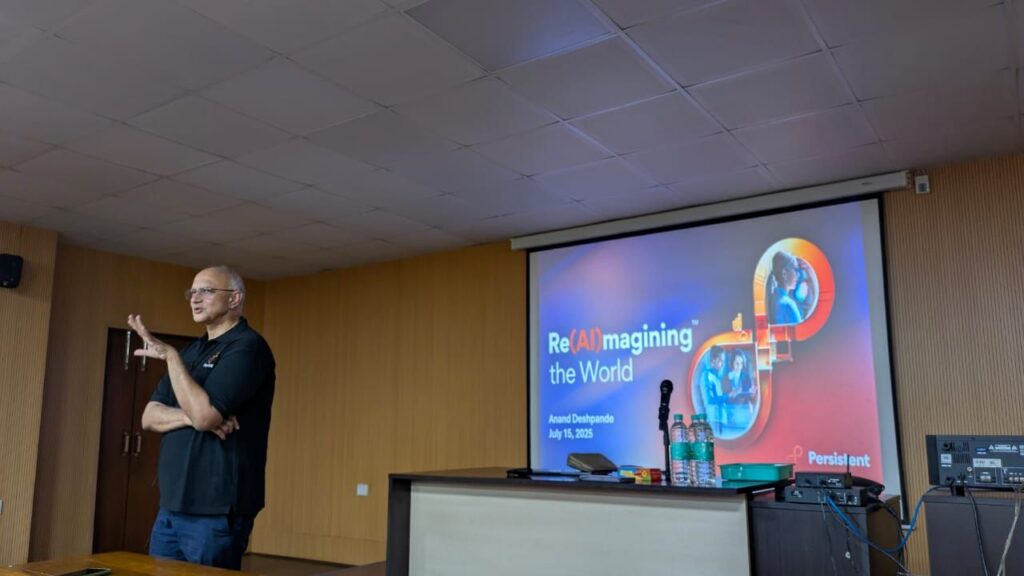
Beyond the near term, Deshpande adopts a longer, ten-year perspective and identifies three interconnected forces that will define the next era of innovation: Energy, Biology, and Intelligence.
“Energy will be central to everything we do—from economic growth and climate resilience to how everyday devices and future systems function,” he explains. Intelligence, through software, data, and AI, will play a critical role in optimizing energy generation, distribution, and consumption across physical infrastructure, intelligent machines, and food systems.
Biology, he believes, is undergoing a profound shift. Advances in genomics, synthetic biology, bio-manufacturing, and AI are transforming biology into an engineering discipline. “Intelligence applied to biology is accelerating drug discovery, improving agricultural productivity, and transforming healthcare,” Deshpande says, adding that India’s biological diversity combined with digital and engineering talent offers a unique advantage.
Intelligence itself is becoming a foundational capability across sectors. As AI systems evolve from tools that assist humans to systems that can reason and act, they will fundamentally reshape how organizations operate, how science is conducted, and how work is organized.
Preparing for a World with Fewer Traditional Jobs
Deshpande believes the future of employment will be defined less by a shortage of work and more by a shortage of conventional jobs. As industries move towards project-based and gig-driven models, work structures are likely to resemble creative industries such as filmmaking, where teams assemble around projects and disband once objectives are met.
“We are moving towards a world where there will be no shortage of work, but a growing shortage of traditional jobs,” he says.
In this environment, Deshpande highlights three skills that will become increasingly important. The first is mindset—the ability to think like a job creator rather than a job seeker. The second is financial literacy, as incomes may be higher but more irregular than in previous generations. The third is sales, a skill he believes is consistently undervalued.
“People who can sell ideas, solutions, and themselves will never be out of work,” he says.
Longevity, Healthspan and Equitable Access
Advances in medical science may allow people to live longer, but Deshpande is clear that longevity without quality of life is not the goal. “Longevity without healthspan is not desirable,” he says.
Encouragingly, healthcare is increasingly shifting towards prevention, early detection, and personalized treatment. Technologies such as wearables, sensors, genomics, biobanks, and AI-driven diagnostics are enabling continuous health monitoring rather than episodic care. One of the most promising frontiers lies in understanding biological age alongside chronological age.
“If we can add productive, healthy years rather than simply extending lifespan, the social and economic benefits will be significant,” Deshpande notes. However, he cautions that public health systems and insurance models must evolve to ensure these advances are accessible and equitable.
Cloud, Data and the Digital Foundations of Viksit Bharat
Cloud computing, data, and digital public infrastructure, Deshpande believes, are foundational to India’s Viksit Bharat 2047 vision. Platforms such as UPI, Aadhaar, FASTag, and GSTN have already demonstrated how technology can deliver efficiency, transparency, and inclusion at scale.
“Cloud makes computing elastic, affordable, and accessible—especially for startups and small enterprises,” he says. Data, when combined responsibly across sectors, enables new solutions in agriculture, healthcare, logistics, fintech, urban systems, and scientific research, with AI amplifying these benefits.
“Strategic investment in cloud, compute, and India-scale datasets will be essential,” Deshpande concludes, “not just for economic growth, but for scientific capability, employment, startup creation, and digital sovereignty.”