Join WhatsApp Channel


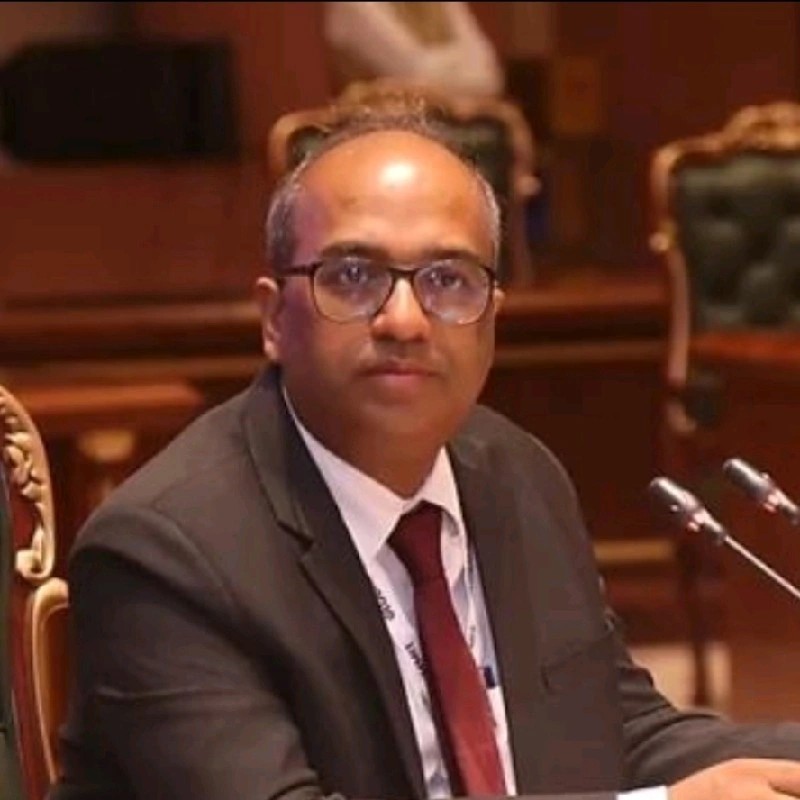
As India prepares to host its upcoming AI Impact Summit 2026 in New Delhi this month, CEO of the IndiaAI Mission, Abhishek Singh, in an exclusive interview with South Asian Herald, outlines the country’s vision for equitable AI, its strategic priorities across the AI value chain, and how partnerships, diaspora strength, and public digital infrastructure are shaping India’s role in the Intelligence Revolution.
Singh, is also the Additional Secretary at Ministry of Electronics and Information Technology (MeitY). His extensive career includes leadership roles as President & CEO of the National e-Governance Division (NeGD), Managing Director & CEO of Digital India Corporation, and CEO of Karmayogi Bharat and MyGov, where he played a pivotal role in driving digital transformation in India from 2019 to 2024.
AI as an Equalizer, Not a Divider
As artificial intelligence accelerates across economies, concerns are mounting that its benefits could remain concentrated among a few nations, languages, and corporations. India’s position, however, is unambiguous.
“India’s core philosophy is simple,” Singh says. “AI must not become a force that deepens global inequality; it must be the great equalizer.”
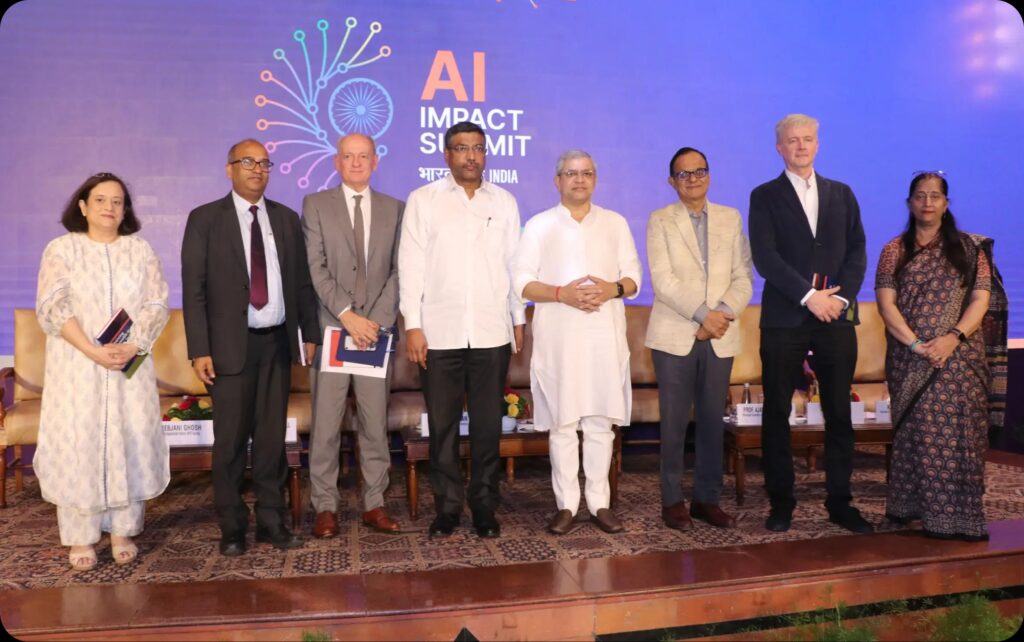
This philosophy underpins India’s approach as it prepares to host what is expected to be the largest AI summit in the Global South. Rather than viewing AI as a purely commercial or geopolitical tool, India is framing it as Digital Public Infrastructure – technology designed as a public good, capable of driving inclusive growth at population scale.
“Our experience with platforms like Aadhaar and UPI has shown us that when technology is built as DPI, it becomes a catalyst for massive, inclusive transformation,” Singh explains. “We are now applying the same thinking to AI.”
Under the IndiaAI Mission, this vision is being executed through three strategic pillars. The first is democratizing the AI stack. “By building a sovereign AI stack – including subsidized compute, open-source foundation models, and curated datasets – we are creating a template for nations to become creators of AI, not just consumers,” Singh says.
The second pillar tackles the language divide. “Through Bhashini, we are making AI conversational, multilingual, and voice-first,” the Singh notes. “When a farmer, a student, a doctor, or an entrepreneur can interact with AI in their own language, that’s when AI truly becomes part of daily life.”
The third pillar brings together people, planet, and progress. The India AI Impact Summit, hosted in the Global South, will convene governments, academics, and startups from over 100 countries. “The objective is not just discussion,” Singh emphasizes. “It is to operationalize pathways – across human capital, skilling, and safe and trusted AI—that translate global ideas into development outcomes.”
India’s role, Singh adds, is fundamentally connective. “We see ourselves as a bridge—translating high-level global conversations into tangible impact. The Intelligence Revolution must reach the last mile, not just the skyscrapers.”
Where India’s AI Focus Goes Next
India’s rapid progress across the AI value chain has drawn global attention. As highlighted by Union Minister Ashwini Vaishnaw, the country now spans talent, data, compute, governance, and deployment.
“That breadth is our strength, but our next phase is about ensuring that value extraction from data is always accompanied by value creation within India,” Singh says. “At the top of the agenda is compute sovereignty, access to scalable, affordable compute is foundational, democratizing compute for startups, researchers, and academia is critical if innovation is to be broad-based.”
Equally important is the development of foundation models rooted in Indian realities. “We need models trained on Indian languages, public-sector use cases, and societal contexts, without that, AI will always remain misaligned with the people it is meant to serve.”
Applied AI for public impact forms the third focus area. “Healthcare, agriculture, education, climate, public services – these are sectors where AI can deliver measurable outcomes at scale” Parallel to this is skilling at scale. “AI literacy cannot be limited to a privileged few. Every citizen must be capable, confident, and AI-augmented.”
India is also emerging as a global voice on responsible AI. “We are shaping norms around safety, fairness, and accountability from a developing-world perspective, that voice matters in global governance.”
India–US Collaboration: Talent as the Bridge
The India–US partnership in AI is both natural and strategic. “It’s an organic collaboration built on complementary strengths,” Singh explains. “India brings scale, depth of talent, and deployment experience. The US brings frontier research, capital, and advanced platforms.”
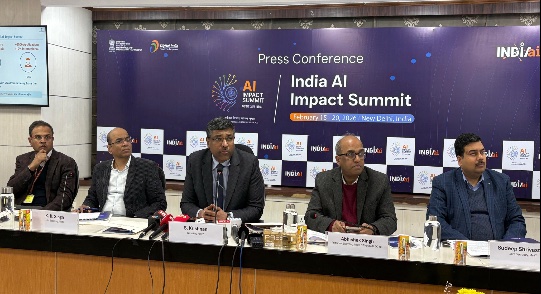
The Initiative on Critical and Emerging Technologies (iCET) provides a framework where AI talent plays a central role. “Indian professionals are already contributing across joint research, co-development of foundational models, enterprise deployment, and public-sector adoption,” Singh says.
Looking ahead, there is scope to expand cooperation through joint fellowships, startup collaboration programmes, cross-border accelerators, and innovation challenges. “India’s experience in deploying AI across languages, geographies, and income levels adds a distinctive dimension,” Singh notes. “This partnership is not about talent migration—it is about talent integration across ecosystems.”
Diaspora, Brain Circulation and Global Influence
India’s AI ambitions are strongly reinforced by its diaspora. From frontier research at OpenAI, Google DeepMind, and Perplexity to enterprise leadership at Microsoft and Adobe, Indian-origin professionals occupy pivotal positions across the global AI ecosystem.
“These success stories are a source of national pride, but they are also instructive – they show the power of strong STEM foundations, global exposure, and close links between academia and industry.”
India is now actively reframing the conversation. “We are moving from the idea of brain drain to brain circulation,” Singh explains. “The diaspora becomes a bridge – investing, mentoring, and collaborating to integrate India’s domestic talent into the global frontier.”
Making India a Magnet for AI Startups
In the AI era, talent retention is no longer dictated by borders but by opportunity density. “People want to work on high-impact problems, with access to world-class infrastructure and data.”
Through the IndiaAI Mission, the government is addressing long-standing bottlenecks, beginning with compute. “We are building sovereign AI compute capacity and providing subsidized GPU access for startups, researchers, and academia,” Singh notes.
AIKosh, the national AI resource platform, complements this effort. “It provides datasets, models, and toolkits that reflect India’s linguistic, demographic, and socio-economic diversity, this allows innovators to build solutions grounded in population-scale realities.”
Beyond infrastructure, India is investing in people. “Targeted fellowships and funding support are helping cutting-edge research move into real-world deployment, our ambition is to harness India’s population density to make it the most compelling place globally for AI founders.”
People, Planet and Progress in Balance
At the heart of India’s AI vision lies a deeper question. “Can progress be intelligent without being inclusive and sustainable?”
From India’s standpoint, AI must enhance human capability rather than merely automate labor. “In education, healthcare, and accessibility, AI should expand what people can do,”
The planetary dimension is equally important. “AI can optimize energy grids, improve climate modelling, and transform agriculture, but AI infrastructure itself must be energy-efficient and sustainable.”
Economic progress, too, must be broad-based. “Growth driven by AI cannot be concentrated in a few sectors or geographies, it must be shared.”
India’s approach, the Singh concludes, positions AI as a development multiplier. “The future of AI leadership will not belong only to those with the most advanced models, it will belong to the nations that show how AI can serve society at scale.”