 Join WhatsApp Channel


Sri Lanka’s fragile post-default recovery is facing its most serious test yet, with Moody’s Ratings warning that the island is now the most credit-exposed economy in South and Southeast Asia to the region’s latest climate disasters. A string of cyclones and violent monsoon surges may have hit several countries, but the rating agency says Sri Lanka alone risks a meaningful setback to its already-strained fiscal consolidation — a sign of how vulnerable the country remains despite two years of IMF-led stabilization.
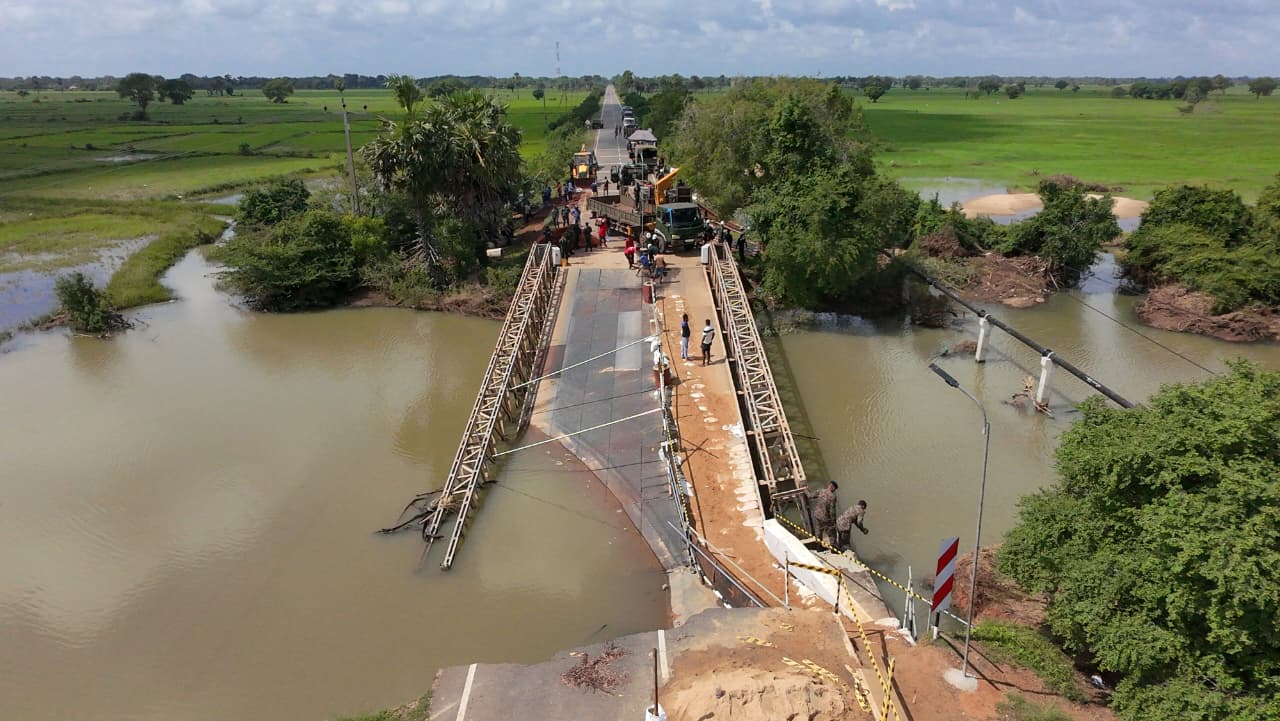
Cyclone Ditwah tore through the island in late 2025, killing more than a hundred people, leaving nearly two hundred missing and causing hundreds of millions of dollars in damage. The destruction cut through every artery of the economy — highways, bridges, rail links, power grids — instantly paralyzing tourism, agriculture and manufacturing. These were not peripheral sectors; they were the government’s own growth engines, the pillars on which the post-default economic plan rested.
Moody’s, in unusually direct language for a sector comment, said Sri Lanka’s fiscal strength was “among the weakest in the region” and its exposure to physical climate risk “among the highest.” In simple terms: the country least able to absorb a shock is being hit by the most shocks.
What makes this moment especially precarious is the context in which the cyclone arrives. After the 2022 meltdown — marked by fuel lines, 70% inflation, mass protests and the country’s first-ever sovereign default — Sri Lanka had begun stitching together an uneasy recovery under its USD 3 billion IMF Extended Fund Facility. Inflation plunged to near zero, reserves climbed above USD 6 billion and growth looked set to stabilize between 3.5% and 4.4%. But these gains rested on an extremely narrow base: harsh tax hikes, sweeping subsidy cuts and public spending levels so tight that 6.3 million people were still skipping meals in 2025.
Economists have long argued that such a delicate recovery could be shattered by any major external shock. Cyclone Ditwah has now provided exactly that shock.
Former IMF chief economist Gita Gopinath has described the debt restructuring as “necessary and stabilizing,” but even she has warned that stability requires “inclusive and accountable reforms” — words that signal lingering concerns about governance risks. The IMF’s own mission chiefs, Peter Breuer and Martha Tesfaye Woldemichael, recently credited Sri Lanka with a “remarkable” fiscal turnaround, citing a dramatic rise in tax revenue. But they cautioned repeatedly that the country is operating on a “narrow path” where any deviation — including climate events — could derail progress.
Those warnings now seem prescient.
More critical voices argue that Sri Lanka’s current crisis is not simply an unfortunate collision of weather and debt — but the predictable outcome of a recovery strategy blind to climate reality. Development economist Jayati Ghosh said the IMF’s debt sustainability framework “underestimates the country’s capacity constraints and overestimates its ability to earn foreign exchange,” calling the program “a setup for re-default by 2028.” According to Ghosh, anchoring debt repayment to GDP growth in dollar terms is unrealistic for a country repeatedly battered by climate shocks.
Political economist Ahilan Kadirgamar has argued that the heavy emphasis on taxation has come at the cost of public investment, weakening resilience precisely when natural disasters are intensifying. “You cannot cut your way to resilience,” he told researchers earlier this year, warning that public health and education have been slashed to levels “that undermine basic social rights.”
Ecological economist Jason Hickel has been even more scathing, stating that “Sri Lanka’s people are being forced to shoulder a crisis not of their making.” He points to the stark mismatch between debt servicing — five times the health budget — and rising hunger. “Six million people skipping meals while creditors are prioritized is not stabilization; it is punishment,” he said.
The climate community has also weighed in forcefully. Former Maldives president Mohamed Nasheed, now a prominent climate economist, said the IMF’s debt sustainability analysis “simply does not account for repeated climate shocks.” After Ditwah, Nasheed repeated his call for automatic debt standstills when climate disasters strike — a mechanism he argues would prevent countries like Sri Lanka from being financially “suffocated” in the aftermath of extreme weather.
What sets Sri Lanka apart from Indonesia, Vietnam or the Philippines — all of which also endured severe flooding this season — is not the scale of the disaster but the absence of fiscal and institutional buffers. Jakarta, for instance, can absorb GDP losses of around 0.3% from damage to Sumatra’s palm-oil belt. Vietnam, despite losing nearly 200,000 acres of coffee and rice crops, retains strong foreign-investor confidence and healthier public finances. Thailand’s USD 16 billion flood losses are substantial, but the most affected provinces represent a sliver of national output. Sri Lanka, by contrast, faces similar-scale destruction on top of a debt overhang, a narrow tax base, weak state capacity and one of the world’s lowest levels of disaster insurance coverage.
Moody’s underscores the long-term danger: climate events are becoming more frequent, more destructive and more expensive. Without fiscal room to invest in adaptation and without governance reforms that improve institutional response, Sri Lanka risks being trapped in a loop — disaster, borrowing, austerity, fragile recovery, and disaster again.
Sri Lanka’s central bank insists that reserves will hit post-crisis highs thanks to upcoming IMF and ADB inflows. But independent analysts warn that maintaining a primary surplus of 2.3% — a key IMF target — will be extremely difficult now that the government must finance repairs, compensation and reconstruction. With commercial borrowing costs still above 10% and growth likely to slow after the cyclone, the fiscal arithmetic becomes even tighter.
The deeper question emerging from Moody’s assessment is whether Sri Lanka’s recovery model is fundamentally misaligned with the climate era. A program designed to stabilize debt but not accommodate climate losses may be mathematically neat but economically unrealistic.
As one analyst put it privately this week: “Sri Lanka is no longer just a debt-distressed country. It is a climate-vulnerable, debt-distressed country. If the recovery framework doesn’t change, the next cyclone could undo everything again.”
Cyclone Ditwah may not have triggered a financial crisis yet. But it has exposed how close Sri Lanka remains to the edge — and how urgently its debt, climate and development strategies need to be rethought if the island hopes to avoid another collapse.
Related posts:
 South Asia’s Debt Crunch Deepens as New World Bank Data Exposes Rising Servicing Burdens, Shrinking Inflows, and Mounting Solvency Risks
 Pakistan Wins Rating Upgrade on Easing Default Risks, Fiscal Gains
 India Intensifies Rescue and Relief Operations in Sri Lanka Under Operation Sagar Bandhu After Cyclone Ditwah
 U.S. Announces $2 Million in Emergency Aid to Sri Lanka After Cyclone Ditwah
