Join WhatsApp Channel


The Committee on Teaching About the United Nations (CTAUN) hosted the first webinar in a new series on Artificial Intelligence, examining the intersections of the United Nations, education, and AI.
Held on January 24, 2026, the webinar marked the International Day of Education 2026, observed under the theme “The Power of Youth in Co-creating Education.”
According to UNESCO, “The International Day of Education 2026 will recognize youth and their role as agents of change in achieving inclusive and equitable quality education and building peaceful, just and inclusive societies.”
Welcoming experts at the webinar, CTAUN Co-Chair Guillermo Reina also introduced the moderator, Ramu Damodaran, First Chief of the United Nations Academic Impact. Reina described Damodaran as someone who “personifies the human aspect,” emphasizing the importance of interpersonal relationships in the current global context.
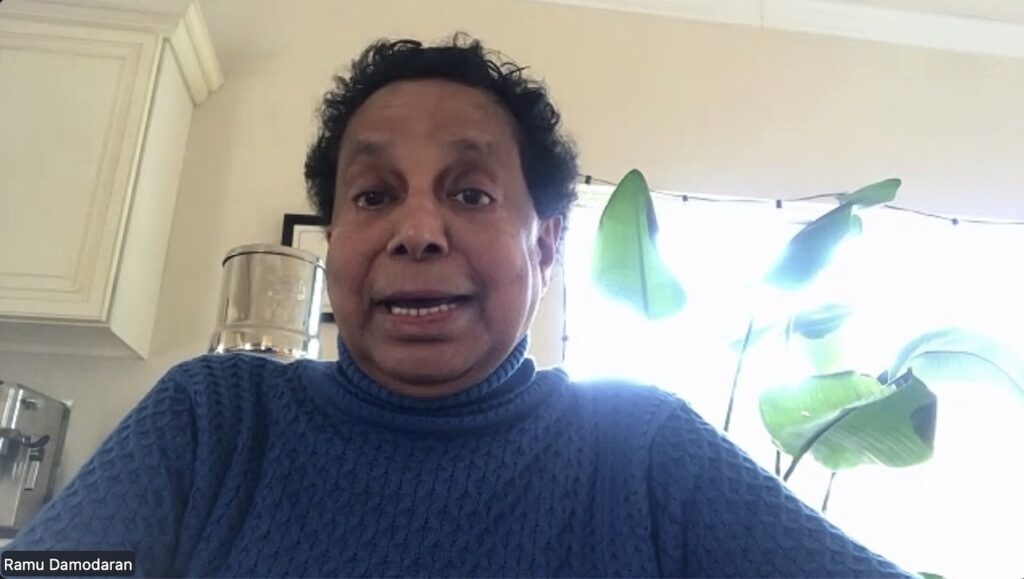
Damodaran began by paying tribute to the late Anne Marie Carlson, Past Chair of CTAUN and Chair of the NGO/DPI Executive Committee. He described her as “a key figure in the organization,” noting that she was, in many ways, the “wind beneath our wings” for many years.
Reflecting on the concept of co-creation, Damodaran called it a “wonderful word,” adding, “Each one of us is a product of co creation in a biological sense, but beyond that, there is co-creation at every level around us…”
He noted that this spirit of collective purpose animated the founding of the United Nations 80 years ago, fostering co-creation between governments and their peoples. Over time, he said, this collaboration has expanded into a broad foundation of scholarship, education, learning, and teaching that reflects CTAUN’s work today.
“And what a wonderful thought that is that we are not here as an organization to educate alone. It’s not we and them, it’s us together, co-creating education, co-creating learning, co-creating understanding,” Damodaran said. “And when we extend that to each one of the disciplines we learn in school or at university, we co-create amongst ourselves a better world for which we have appreciation, respect, and compassion.”
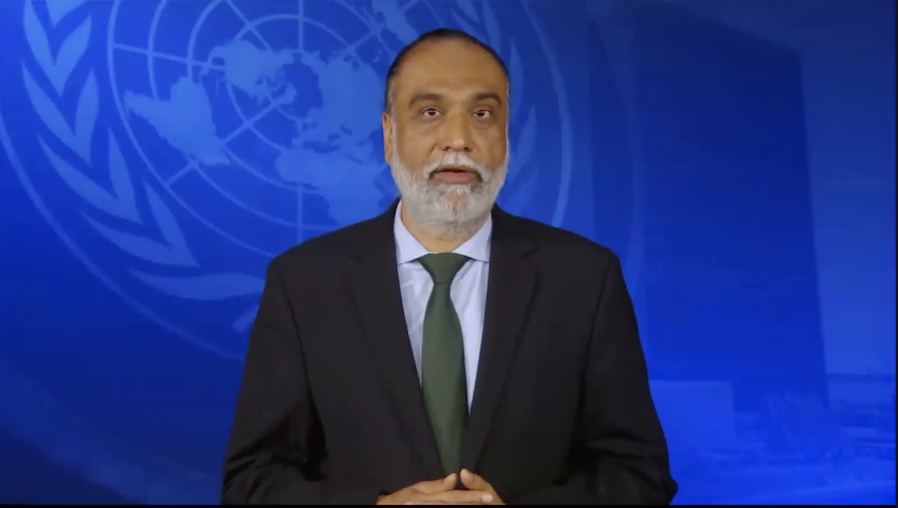
In his special address, UN Under-Secretary-General and Special Envoy for Digital and Emerging Technologies, Amandeep Singh Gill focused on artificial intelligence and education, particularly its implications for young children in schools.
Education, Gill emphasized, is fundamentally about “empowerment.” He said it involves nurturing citizens who are engaged in society, think independently, and contribute positively, especially at a time when democracy, the rule of law, and freedom of expression face increasing pressure.
As such, Gill noted, “It’s more important than ever to focus on education so that we bring up children, and bring up citizens, to act in society in ways that are responsible, that are empowering, not only for themselves, but for those around them.”
Addressing AI specifically, Gill described it as a technology that can both “empower and disempower.” He cautioned, “So we have to be very wise about how we are incorporating AI into education, and how are we transacting learning with the use of AI tools, or transacting learning about AI and data itself.”
Gill also addressed claims about AI’s potential in education, noting that many of them are “serious.” He said there is no avoiding the AI wave, as children are already using AI tools independently. He further observed that one of the largest user demographics for large language models such as ChatGPT consists of students in Asia and countries such as Brazil.
These students, he said, use AI for research, homework, and writing, and when used effectively, such tools can be highly “empowering.”
At the same time, Gill highlighted a gap between students’ use of AI tools and teachers’ adoption of them, a challenge evident even in regions such as Europe.
“So, there is obviously an urgent need for teachers training, for curriculum development and adaptation,” he said adding “so that in the classroom and outside the classroom, students have clear guidance about how they can use AI tools.”
Gill also outlined how the United Nations is responding to the rapidly evolving AI landscape, noting that its impact extends beyond education to many areas associated with the Sustainable Development Goals.
AI, he added, also affects human rights and political freedoms, creating risks linked to the UN’s other two pillars. “I had mentioned sustainable development, but there’s also human rights and there’s peace and security. So, it’s legitimate and it’s urgent for the UN to be engaged on all these implications,” he said.
Emphasizing the UN’s role as the world’s most inclusive multilateral platform, Gill stressed the importance of bringing countries together to discuss AI, build understanding, and develop appropriate policy responses.
Looking at the issue from a longer-term perspective, Gill also pointed to the growing “digital divide,” which he said is now extending into what is increasingly called the “AI divide.”
He noted that the UN Secretary-General has released a report addressing AI capacity-building needs, outlining both demand and supply considerations required to democratize access to artificial intelligence globally.
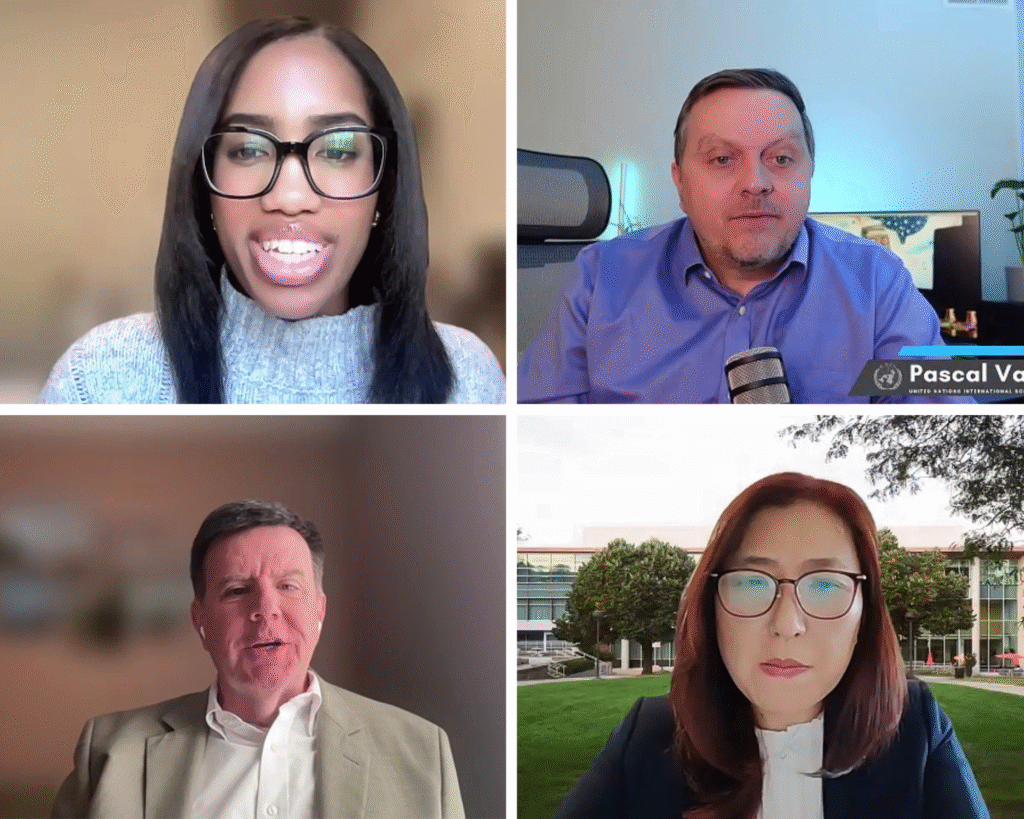
The webinar also featured contributions from Heejung An, Chair of the Department of Educational Leadership and Professional Studies at William Paterson University, New Jersey; Olivia Gauthier, Special Education Teacher at Dream Charter School in New York City; Kevin Merges, Chief Global Impact Officer at Saddle River Day School, New Jersey; and Pascal Vallet, Principal of the Junior High School at the United Nations School in New York City.
An highlighted the challenges faced by countries with limited internet connectivity in effectively using AI tools. Gauthier underscored the need for the UN to act as a referee in AI education by setting clear rules and ensuring equity. Merges emphasized the importance of equity in AI education and called for the UN to facilitate global dialogue on the issue. Vallet reflected on the UN’s role in preserving cultural diversity and stressed the importance of thoughtful and responsible AI implementation.
The webinar also included recorded video messages from students, including Sophie Gutter, Alison Rosensen, Madison, and Maya.
“For over the past four years, I have been fortunate enough to delve into a world that is new or even unfamiliar to many, the world of artificial intelligence. Early on, I realized that this technology is one of the most formative developments in reaching the greatest of human potential,” Rosensen said.
Rosensen noted, however, that disparities in knowledge and access continue to limit progress. This realization, she said, led her to launch an AI app, a research-based education lab designed to teach students about artificial intelligence. The app, she explained, explores topics such as ethics, responsible classroom use of AI, and foundational concepts in coding and data structures.
Gutter shared that she has launched Writing Mastery, an instructional writing software program designed to significantly improve students’ writing skills.
Related posts:
 Representatives of the 3rd World March for Peace and Nonviolence Meet India’s Envoy to the United Nations
 India and France Host United Nations Event to Set Stage for AI Impact Summit 2026 in New Delhi
 Canada to Table New Bill Tightening Bail and Border Laws as Crime Concerns Mount
 South Asian Trailblazer Leads Maryland’s Higher Education: A Journey from India to Impact