Join WhatsApp Channel



China has intensified its illegal meddling in Gilgit-Baltistan after purportedly improving relations with India. It chose to sign a major Gilgit-related economic development project with Pakistan soon after Indian Prime Minister Narendra Modi visited Tianjin for the Shanghai Cooperation Organization (SCO) summit. Chinese media projected the Indian PM’s visit as a “great reset” between the two hostile Asian giants.
Gilgit is a constitutional part of India currently under Pakistan’s occupation. As a matter of policy, India objects to Beijing’s intrusion into Gilgit to exploit mineral-rich land, build dams, or use the region as a transit corridor for China-Pakistan Economic Corridor (CPEC) related projects in Pakistan.
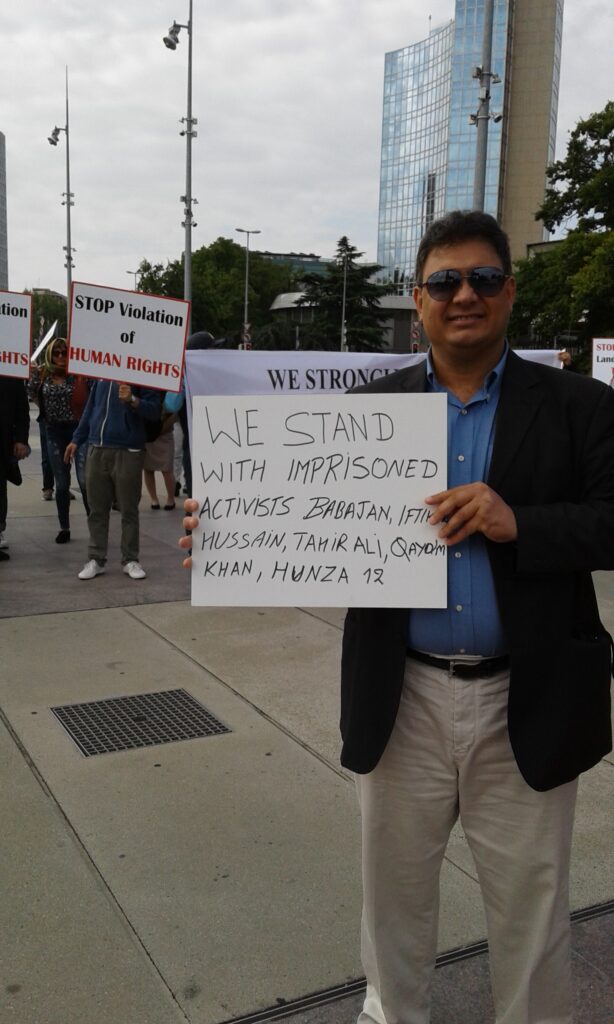
China already occupies Aksai Chin, Shaksgam, Raskam, Aghil, and Dafdar valleys—territories that traditionally belonged to the erstwhile State of Jammu and Kashmir, which acceded to India in October 1947.
Notwithstanding this legal anomaly, Gilgit remains the sole land link between China and its long-standing ally Pakistan, offering uninterrupted access to the Indian Ocean. China’s investments in Pakistan’s Gwadar port would be financially unfeasible without this physical access through Gilgit.
Under the new agreement, a Chinese company, Iron Brothers International, will establish a special economic zone in Gilgit under CPEC 2.0, which is expected to create ten thousand jobs. It is feared, however, that the majority of these jobs will go to Chinese and Pakistani citizens. The zone is located near the strategically important Bonji area, where routes leading to Ladakh, Kashmir, Islamabad, Xinjiang, and Afghanistan converge. Nearby, China is also working on the Bonji and Diamer dams, which, once completed, are expected to collectively generate over eleven thousand megawatts of electricity.
In 2025, two Chinese companies, Xinjiang Commercial Logistics Group and Xinlu Transport, signed agreements with the Gilgit-Baltistan government for logistical cooperation and investment in the Hunza dry port. Several other Chinese companies have since signed deals to initiate projects in Gilgit-Baltistan, including the exploration and exploitation of local lithium deposits, agricultural development through land leases for agro-technology parks and drip-irrigation projects, and commercial real estate and affordable housing schemes. Such projects will inevitably attract large numbers of Pakistani and Chinese citizens to this disputed region, creating competition and potential ethnic tensions with the local population.
The president of the Ghizer Chamber of Commerce and Industry in Gilgit-Baltistan, citing Chinese data, has stated that more than fifty thousand Chinese investors are eager to establish a presence in the region. However, local political groups oppose China’s activities, arguing that these ventures fail to provide adequate benefits to native landowners. To locals, China is turning Gilgit-Baltistan into another Xinjiang or Tibet, with similar economic, cultural, and environmental consequences.
With India-US ties in a difficult phase, New Delhi’s perceived warming toward Beijing only strengthens and emboldens the Communist Party of China to continue its violations in Gilgit-Baltistan.
Disclaimer: The opinions and views expressed in this article/column are those of the author(s) and do not necessarily reflect the views or positions of South Asian Herald.
Related posts:
 Meenakshi Lekhi Calls Science and Technology the Bridge for a Stronger US-India Partnership at FIIDS Roundtable
 The Soybean Gambit: How America’s Golden Bean Lost Its Lustre
 Pakistan’s Ambassador to the U.S. Calls for “Meaningful” Dialogue with India; Highlights Economic Diplomacy and Investment Opportunities
 The AI and Robotics Revolution: Promise and Peril for Emerging Markets Like India