 Join WhatsApp Channel


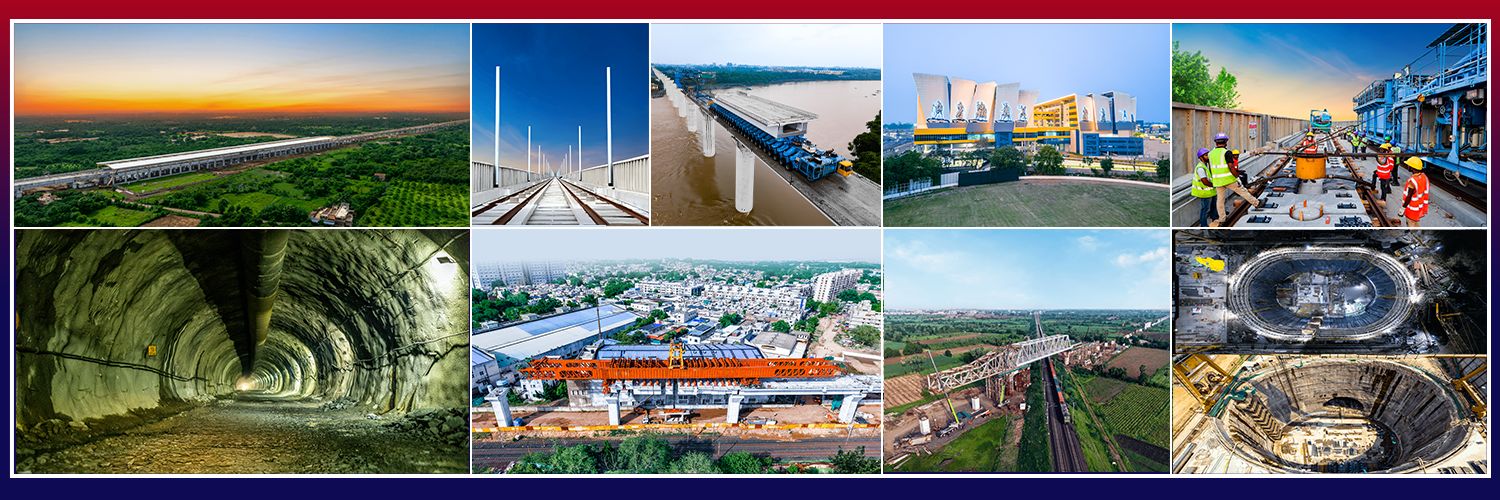
Nearly a decade after it was announced, India’s first high-speed rail project is moving into its execution-heavy phase, with the government targeting the start of bullet train operations from August 15, 2027. The Mumbai–Ahmedabad High-Speed Rail (MAHSR) corridor, officials say, will be commissioned in stages, allowing partial services to begin even as construction continues on the remaining sections.
Union Railways Minister Ashwini Vaishnaw said the first operational stretch will be between Surat and Bilimora in Gujarat, followed by progressive extensions northwards and southwards along the 508-km alignment. The phased rollout is intended to stabilize operations, test systems and build ridership before the full corridor between Mumbai and Ahmedabad becomes functional.
The MAHSR corridor is India’s first experiment with high-speed rail and is being built using Japanese Shinkansen technology. Trains are designed for speeds of up to 320 kmph, which would cut the end-to-end travel time between Mumbai and Ahmedabad to just over two hours, compared with six to seven hours on existing rail services.
Construction data released by the National High-Speed Rail Corporation Limited (NHSRCL) show that work has advanced rapidly over the past year, particularly in Gujarat. More than 85% of the corridor is being constructed on elevated viaducts, a design choice aimed at reducing land acquisition, improving safety and ensuring uninterrupted high-speed operations. Large sections of piers, girders and track beds have already been completed.
One of the most advanced segments is the 47-km Surat–Bilimora stretch, where civil works and track-bed construction are largely finished, positioning it as the natural candidate for the project’s first operational phase. Work on river bridges and stations along this section is also at an advanced stage.
Stations along the corridor are beginning to take shape as architectural landmarks. The Surat bullet train station, reviewed by Prime Minister Narendra Modi during a visit to Gujarat in November, is inspired by the city’s diamond-cutting industry. The multi-level structure has been completed, with interior systems, passenger amenities and services currently being installed.
The corridor will pass through Gujarat, Dadra and Nagar Haveli, and Maharashtra, with 352 km located in Gujarat and Dadra and Nagar Haveli and the remaining 156 km in Maharashtra. Key urban and industrial centers on the route include Ahmedabad, Vadodara, Bharuch, Surat, Vapi, Thane and Mumbai, making the line one of the most economically dense rail corridors in the country.
The project, approved in 2017, was initially scheduled for completion by 2023 but was delayed due to land acquisition hurdles, the pandemic and execution challenges, particularly in Maharashtra. Officials say those bottlenecks have now largely been resolved, allowing construction activity to accelerate across multiple fronts simultaneously.
The bullet train is being developed with financial and technical support from Japan, including technology transfer and safety systems based on the Shinkansen network, which has operated for decades without a fatal accident. Indian Railways sees the project as a template for future high-speed corridors, though officials stress that expansion beyond Mumbai–Ahmedabad will depend on operational experience and financial viability.
Alongside the bullet train, the Railways Ministry points to the growing acceptance of semi-high-speed services such as the Vande Bharat Express as evidence of rising passenger demand for faster and more comfortable rail travel. Officials say this shift in passenger expectations is reshaping how future rail investments are being planned.
With trial runs expected ahead of the 2027 launch and phased commissioning thereafter, the Mumbai–Ahmedabad corridor is set to mark India’s formal entry into the global high-speed rail club, a transition that has been years in the making.
Related posts:
 Bullet Train Push: India Moves Closer to Operational Launch with Tunnel Opening
 Ceasefire and Corridor: Gaza Truce Revives the India–Middle East–Europe Plan
 India Makes History with World’s Tallest Railway Bridge in Kashmir
 Indian American Claims to Have Solved the Mystery Behind 4,500 Years Old Egyptian Pyramids
