Join WhatsApp Channel


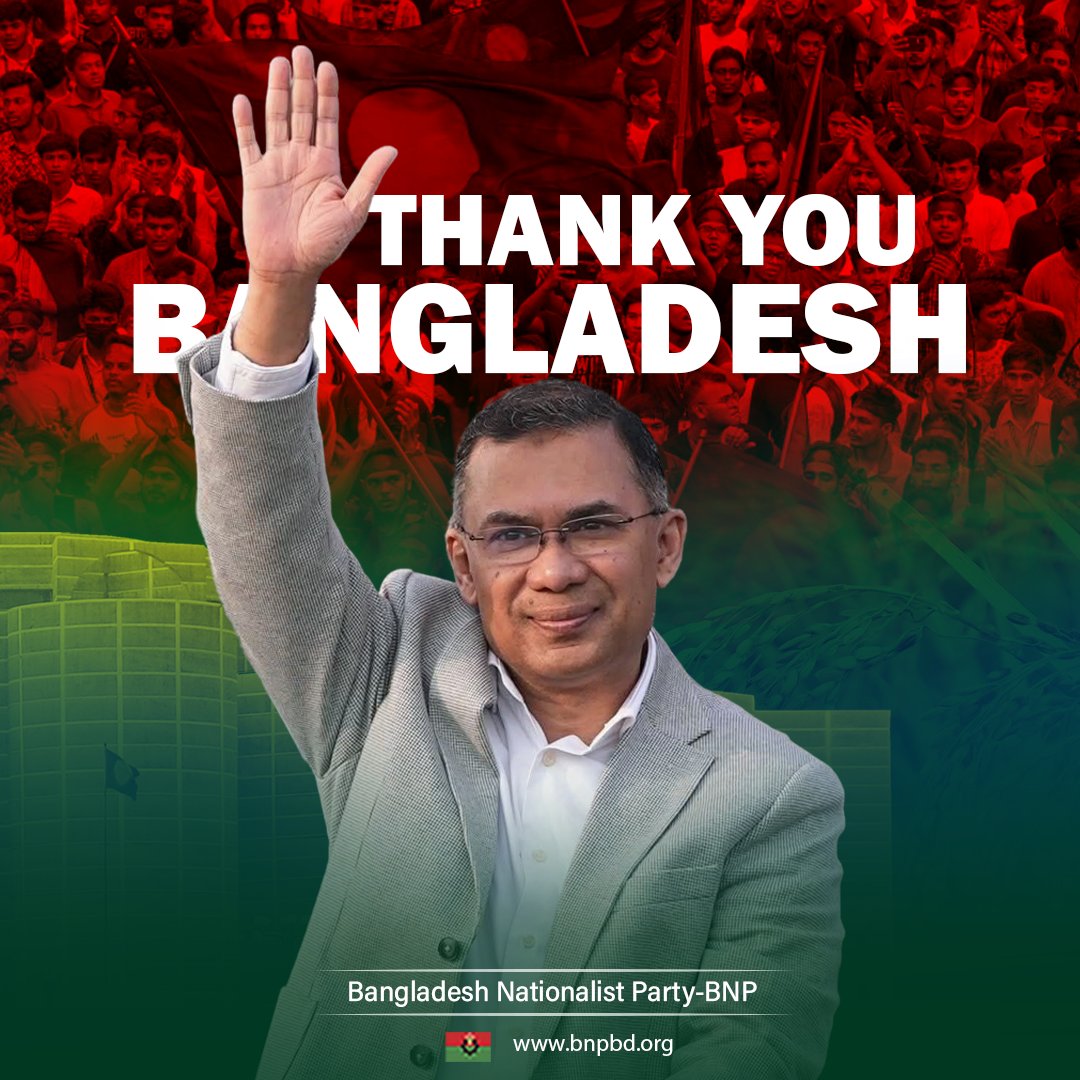
The national election held on 12 February marks a consequential moment in Bangladesh’s political trajectory. More than a transition of power, the vote has prompted a reassessment of long-standing assumptions about the relationship between religion, politics, and communalism. The electorate delivered a clear message: religious values are not synonymous with politics conducted in the name of religion. That distinction often blurred in external analyses was decisively articulated at the ballot box.
With a majority of seats secured, the Bangladesh Nationalist Party (BNP) is poised to form the next government. Some observers may interpret this outcome as a resurgence of religion-based or right-wing politics. Such readings, however, are weakened by the simultaneous rejection of Bangladesh Jamaat-e-Islami, a party that has historically mobilized religion as its primary political instrument. The election was neither a victory nor a defeat of religion; it reflected voter judgments shaped by governance failures, economic pressures, and demands for political accountability.
Jamaat-e-Islami’s defeat stands out as one of the election’s most significant outcomes. This result was not abrupt. The party has faced a prolonged legitimacy crisis rooted in its historical position during Bangladesh’s Liberation War, its association with communal politics, and its persistent instrumentalization of religion for political power. Over time, these factors have distanced Jamaat from the political mainstream. The February vote confirmed that trajectory.
Another notable development was the reconfiguration of the opposition landscape following the collapse and absence of the Awami League, which exited the political arena after losing power. Equally significant was the complete electoral failure of the Jatiya Party, long associated with former military ruler Hussain Muhammad Ershad and widely viewed as an ally of the ousted government. In this context, Jamaat-e-Islami’s emergence as the principal opposition force despite its electoral defeat carries longer-term implications. For a party once banned by the fallen Awami League, institutional survival and parliamentary presence represent a critical, if contested, foothold in future political competition.
The broader social signal, however, is unambiguous. Bangladeshis are religious, but they are not religiously fanatic. Faith remains deeply embedded in social life, yet voters do not seek politics cloaked in religious symbolism when making electoral choices. Jamaat-e-Islami appeared to assume that religious identity would be the primary determinant of voting behavior. The electorate decisively rejected that premise, drawing a clear boundary between personal religious practice and the endorsement of communal politics.
BNP’s electoral success was driven by a different set of priorities. Rising living costs, unemployment, concerns over voting rights, and dissatisfaction with governance dominated the campaign environment. BNP translated these socio-economic pressures into a political narrative centered on citizenship, accountability, and state performance. Religion did not emerge as a decisive issue; governance did. For external observers, this underscores the importance of avoiding reductive interpretations that frame South Asian electoral outcomes primarily through ideological or religious lenses.
The election also reaffirmed the resilience of religious coexistence in Bangladeshi society. The absence of large-scale communal violence during the electoral period suggests that extremism is not an inherent social condition. Rather, it is a politically constructed project one that requires sustained popular endorsement to endure. On 12 February, that endorsement was not forthcoming.
Interpreting Jamaat’s defeat as a rejection of religion would therefore be misleading. Instead, the result represents a rejection of the instrumentalization of religion in politics. The electorate reaffirmed a fundamental principle relevant to plural societies globally: when religion is deployed as a political shield, it ultimately undermines democratic governance and erodes religious credibility itself.
In this context, secularism re-emerges as a governance principle rather than an ideological posture. The election clarified that secularism in Bangladesh does not imply hostility toward religion. It reflects a commitment to equal citizenship by preventing religious dominance in state affairs. Voters aligned with a political vision in which religion remains a matter of personal belief, while the state operates under constitutional authority and the rule of law a distinction of particular relevance to policymakers engaged in democracy support and institutional reform.
Religious extremism also suffered a setback on the question of women’s rights and leadership. Narratives portraying women’s social and political participation as incompatible with religious belief failed to gain electoral traction. The vote effectively affirmed that faith and women’s rights are not mutually exclusive. Attempts to weaponize religion against women proved politically unsuccessful.
The results further indicate that while Bangladeshi society is not uniform in its views on gender equality, it is not regressive. Debate and disagreement persist, but the overall trajectory remains forward-looking. The notion that progress can be halted through the language of religious dogma was rejected by voters.
Responsibility now shifts to the incoming government. Misreading this mandate carries risks. Should religion be redeployed as a tool of political expediency or appeasement, public trust will erode. The lessons of Jamaat’s defeat extend beyond a single party and apply to the broader political system.
Ultimately, the 12 February election constitutes more than an electoral outcome. It is a societal verdict—one that affirms Bangladesh as religious but not communal, politically engaged but not ideologically captive. For policymakers in the US, EU, and across Asia, the message is clear: Bangladesh’s political future will be shaped less by religious polarization than by governance performance, institutional credibility, and inclusive citizenship.
Disclaimer: The opinions and views expressed in this article/column are those of the author(s) and do not necessarily reflect the views or positions of South Asian Herald.
Related posts:
 Why Political Uncertainty in Bangladesh Demands India’s Attention
 Bangladesh’s Post-Uprising Verdict: Reform Mandate or Repackaged Majoritarianism?
 CoHNA, HinduACTion Raise Alarm in Washington Over Human Rights Situation in Bangladesh Ahead of February 12 Vote
 Bangladesh’s 2026 Election and the Geopolitics of a Likely Hung Parliament