Join WhatsApp Channel


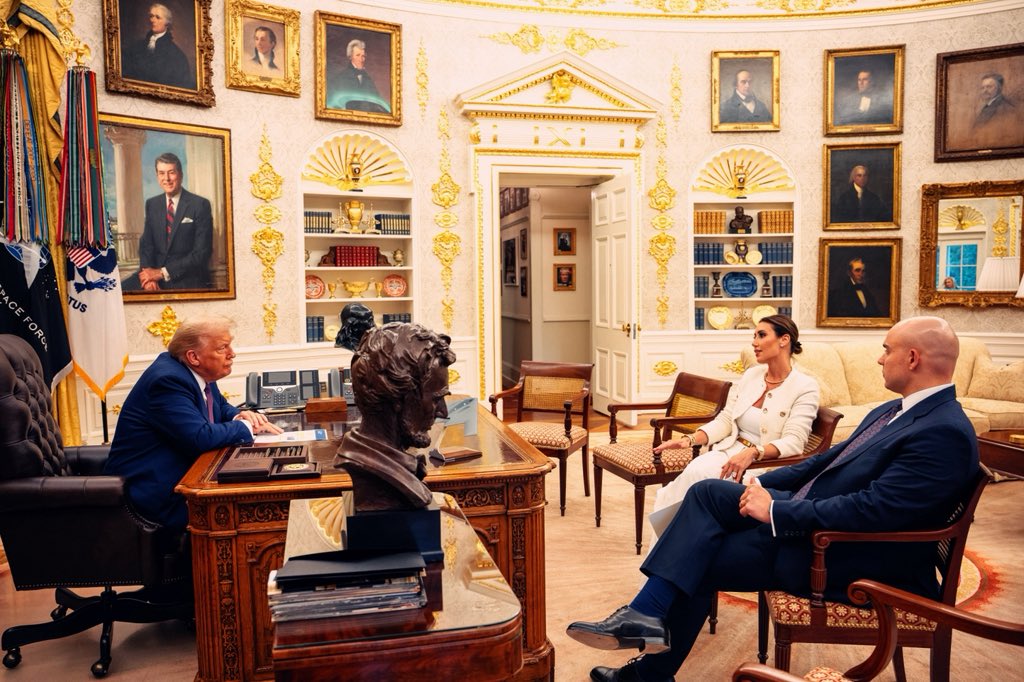
Alina Habba, President Donald Trump’s trusted legal aide, has been unseated as the New Jersey attorney following a sweeping and sharply worded rebuke by a federal appeals court on December 1, 2025. The three judge division bench disqualified Alina Habba — a former personal attorney to Donald J. Trump and one of his most outspoken legal defenders — from serving as the top federal prosecutor in New Jersey, ruling that her appointment violated longstanding federal law.
The unanimous decision, issued by a three-judge panel of the U.S. Court of Appeals for the Third Circuit, not only unseated Habba but also cast a stark spotlight on the Trump administration’s aggressive and legally alleged dubious effort to install loyalists in key U.S. attorney positions nationwide.
It also underscored a broader pattern: several politically freighted prosecutions brought by improperly appointed Trump-aligned prosecutors have now collapsed, including cases against former FBI Director James B. Comey and New York Attorney General Letitia James.
The fallout is expected to ripple across New Jersey’s federal docket, potentially affecting dozens of cases and forcing the Justice Department to scramble for a legally durable replacement.
A Pattern of Unlawful Appointments
The court’s ruling affirmed an August decision from U.S. District Judge Matthew Brann, who found that the administration violated the Federal Vacancies Reform Act and related appointments statutes in its effort to install Habba as acting U.S. attorney for the District of New Jersey.
Judge D. Michael Fisher, writing for the panel, said the administration’s maneuvers reflected “frustration” with the legal constraints on unilateral appointments. “Its efforts to elevate its preferred candidate demonstrate the difficulties it has faced,” he wrote.
At the heart of the dispute was a series of extraordinary workarounds. After New Jersey’s district judges declined to extend Habba’s interim appointment, the court named her deputy, Desiree Grace — a respected career prosecutor — to succeed her. The Justice Department responded by firing Grace and attempting to re-install Habba under a second title: “special attorney,” a designation normally used for narrow, case-specific assignments. Defendants in ongoing criminal cases challenged the arrangement as an end-run around Senate confirmation. The court agreed.
“This decision makes clear that President Trump cannot usurp statutory and constitutional processes to insert whomever he wants,” said Abbe Lowell, Gerry Krovatin and Norm Eisen, lawyers for defendant Cesar Pina, who is facing fraud and money-laundering charges.
Why the Comey and Letitia James Cases Collapsed
The Habba ruling followed closely on the heels of another major judicial setback for the administration. Last week, a federal judge dismissed criminal charges brought against former FBI Director James Comey and New York Attorney General Letitia James, concluding that the prosecutor who filed them — Lindsey Halligan, another Trump loyalist — had also been unlawfully appointed as interim U.S. attorney for the Eastern District of Virginia.
Those cases, both launched amid Trump’s long-running grievances against two of his most visible adversaries, had drawn intense scrutiny from legal experts who questioned their foundations. The charges against Comey, alleging improper handling of classified information, were widely viewed within the Justice Department as legally thin. The case against Letitia James — tied to her civil fraud pursuit of Trump and the Trump Organization — was criticized as overtly retaliatory.
But neither case ultimately collapsed on evidentiary grounds. Instead, they imploded because Halligan lacked lawful authority to bring them at all. The judge’s ruling echoed the Third Circuit’s opinion in the Habba case, finding that the administration had attempted to bypass statutory limits on interim appointments.
The administration has vowed to appeal, arguing that emergency authority allows the attorney general to designate temporary U.S. attorneys during vacancies. But two federal courts have now said those claims stretch the law beyond recognition.
The Fallout in New Jersey
The Third Circuit’s decision leaves New Jersey without a legally recognized U.S. attorney at a time when several high-profile investigations — including public corruption cases, organized-crime prosecutions and a wide-ranging public-housing fraud probe — are midstream.
The Justice Department is expected to name a new interim U.S. attorney, though any candidate will likely undergo heightened scrutiny from both the courts and Congress. Officials have not said whether Trump will nominate a permanent U.S. attorney for Senate confirmation, a process that has stalled repeatedly during his presidency, leaving a patchwork of acting officials in place.
Legal analysts say the government will need to conduct rapid internal reviews to determine whether cases overseen by Habba must be reassigned, re-authorized or, in a worst-case scenario, refiled. While the court did not vacate the underlying prosecutions, defense attorneys across the state are expected to challenge past decisions, citing the illegitimacy of Habba’s tenure.
“This ruling opens the door to a wave of litigation,” said Barbara McQuade, a former U.S. attorney in Michigan. “Every defendant who had a charging decision, plea negotiation or sentencing recommendation made under Habba’s authority will argue that the process was tainted.”
Who Is Alina Habba?
Before her appointment, Habba was best known not as a prosecutor, but as one of Donald Trump’s most visible legal surrogates. A New Jersey-based attorney with no prior prosecutorial experience, she became a fixture on conservative media after representing Trump in several civil and criminal matters following his departure from the White House.
Her most prominent role was in the E. Jean Carroll defamation trial, in which a jury found Trump liable for defamation and awarded Carroll millions in damages. Habba’s courtroom behavior — including repeated objections, tense exchanges with the judge and public statements outside the courthouse — drew both criticism and praise depending on political alignment.
Inside the Justice Department, Habba’s appointment as acting U.S. attorney was widely viewed as a political gesture rather than a merit-based selection. Career prosecutors privately expressed concern about her lack of federal courtroom experience and her vocal political loyalty to the president.
Controversy deepened during her short tenure. In one interview, she said she hoped to use her office to “help Republicans” in New Jersey — a statement former prosecutors called “alarming” and “unprecedented.” She also faced pushback after charging Democratic Representative LaMonica McIver following a confrontation with federal agents at an immigration detention center. Critics said the prosecution appeared politically motivated.
Are New Prosecutions Underway?
Despite the turmoil, several ongoing investigations in New Jersey are expected to continue under career officials until a lawful acting U.S. attorney is named. The Justice Department has not announced new prosecutions emerging directly from Habba’s tenure, and officials stress that decisions made by career line prosecutors remain valid unless courts rule otherwise.
But the department now faces a delicate balancing act: restoring procedural legitimacy without appearing to abandon cases that defendants may argue were tainted.
What Comes Next
With the Third Circuit’s rebuke, pressure is mounting on the administration to return to traditional nomination processes. Trump’s advisers have pushed for a Supreme Court appeal, arguing that the president must have flexibility to fill urgent vacancies. But legal experts say the administration faces an uphill battle.
“The courts are signaling that the administration’s approach to U.S. attorney appointments has crossed legal boundaries,” said Stephen Vladeck, a constitutional law professor at the University of Texas. “This is not a small technical dispute — it goes to the heart of prosecutorial legitimacy.”
For now, New Jersey’s federal courthouse remains in limbo. And Alina Habba, once a rising figure in Trump’s inner legal circle, exits the role that elevated her — not with a promotion, but with a court-ordered disqualification that has come to symbolize a broader crisis of legality inside the Trump-era Justice Department.
Disclaimer: The opinions and views expressed in this article/column are those of the author(s) and do not necessarily reflect the views or positions of South Asian Herald.
Related posts:
 Federal Judge Rebukes DOJ as Comey Case Revives Long-Running Feud with Trump
 Global Traders See Flicker of Hope as Trump’s Tariffs Head to Supreme Court
 India Reassesses Trade Strategy as U.S. Tariff Ruling Alters Negotiation Dynamics
 Supreme Court Showdown to Decide Fate of President Trump’s Global Tariffs