Join WhatsApp Channel

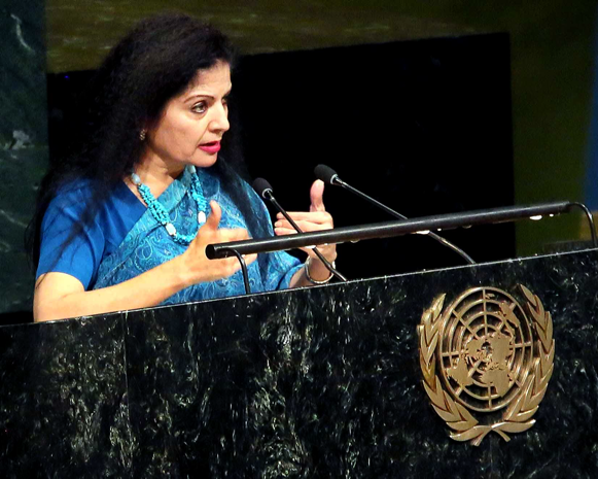
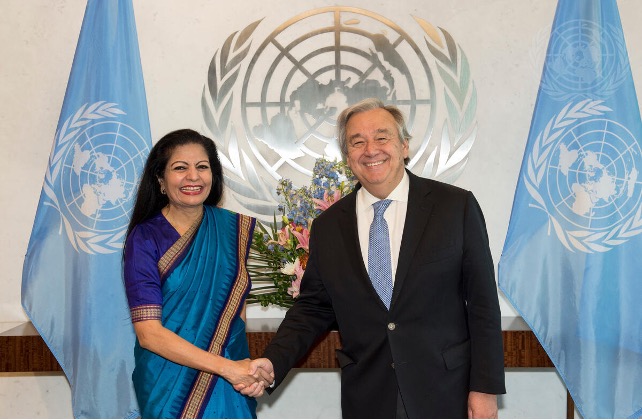
Ambassador Lakshmi Murdeshwar Puri is a distinguished Indian diplomat, former UN Assistant Secretary-General and author, known for her extensive work in international development, human rights and women’s economic empowerment. She served for 28 years in the Indian Foreign Service and 15 years at the United Nations, including as Deputy Executive Director of UN Women. She was India’s Ambassador to Hungary and held senior roles at UNCTAD before her UN leadership and is the recipient of several international honours. Her debut novel, Swallowing the Sun, has emerged as a national bestseller.
In this conversation with South Asian Herald, Ambassador Lakshmi Puri reflects on global governance in crisis, India’s women-led transformation, and the deeply personal journey behind her critically acclaimed novel Swallowing the Sun. Moving seamlessly between diplomacy, political philosophy and literature, she offers a rare synthesis of public life and private memory.
Multilateralism at 80: A System in Crisis
As the United Nations marks its 80th anniversary, Lakshmi Puri does not mince words. “Multilateralism — and the UN itself — has been rendered dysfunctional,” she says. “Unilateralism is the reigning impulse, while global solidarity and cooperation are evaporating from the consciousness of governments and ‘we the peoples’ alike.”
She argues that this erosion could not come at a more dangerous moment. “The world has perhaps never been more at risk — from devastating global conflicts and even nuclear Armageddon, to a renewed arms race and the normalisation of terrorism and violent extremism.” The failure of global institutions to prevent or de-escalate conflicts such as Ukraine and Gaza, she notes, reflects “a deeper structural failure in the multilateral system, particularly in institutions mandated to deliver peace and security as a Global Public Good.”
At the heart of the crisis lies an outdated power structure. “The UN’s peace and security architecture remains shaped by a post-war victors’ order,” she says, “and it urgently needs reform, if not reinvention.” The Security Council, she adds, is “impaired by P5 dominance and veto-driven paralysis,” while the under-representation of the Global South has steadily eroded its legitimacy.
Her prescription is firm and clear: “We must expand the Security Council, discipline the veto in situations of mass violence, rebalance authority towards the General Assembly, and empower regional organisations as force multipliers.” Without such reforms, she warns, “the UN risks losing relevance precisely when the world most needs it.”
India’s Next Leap: Why It Will Be Women-Led
India’s rise as a major pole in the multipolar world, Puri insists, will be inseparable from women’s leadership. “Gender equality is no longer a social add-on,” she says. “It is the organising principle of national transformation.”
Invoking the civilisational idea of nari shakti, she explains, “Women must be seen as sources of power, not just reverence.” The economic case is equally compelling. “Closing gender gaps could add 20–30 per cent to GDP,” she notes, “and India’s demographic dividend will succeed only if it becomes a female dividend.”
The transition is already underway, she believes. Near parity in higher education, strong participation of women in STEM, and rising labour force participation all point to structural change. “The real challenge now,” she says, “is to move women from labharthi to adhikar pati — from beneficiaries to decision-makers.”
Political empowerment has been particularly transformative. “Local body reservations have produced over 1.5 million women leaders,” she notes, while the Nari Shakti Vandan Adhiniyam marks “a historic step towards parity in legislatures.” For India’s rise to be credible globally, she argues, it must be “powered, sustained and led by women.”
Swallowing the Sun: A Novel About Freedom and Agency
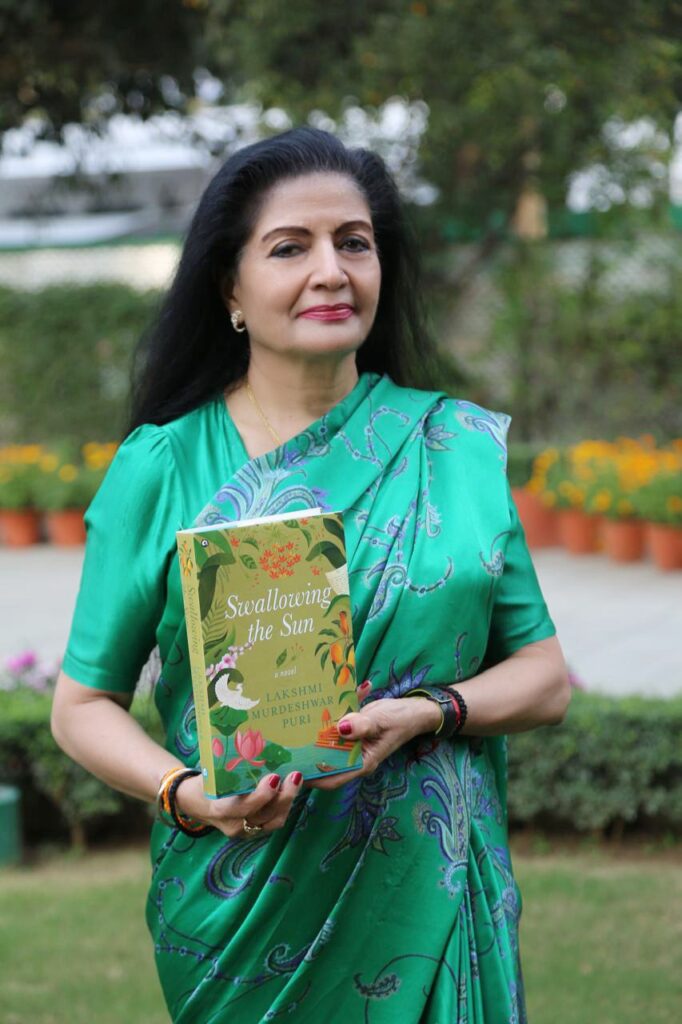
Turning to Swallowing the Sun, Puri describes it as “a novel about women claiming agency at moments when history itself is in flux — and also about the men who stood beside them.” Set during India’s transition from colonial rule to independence, the book explores how “personal courage, political awakening and creative freedom intersect in lives that history often overlooks.”
“It is not a historical chronicle,” she explains. “It is a love story, a family saga, a coming-of-age novel, and historical fiction that speaks directly to the present — about choice, voice and responsibility.”
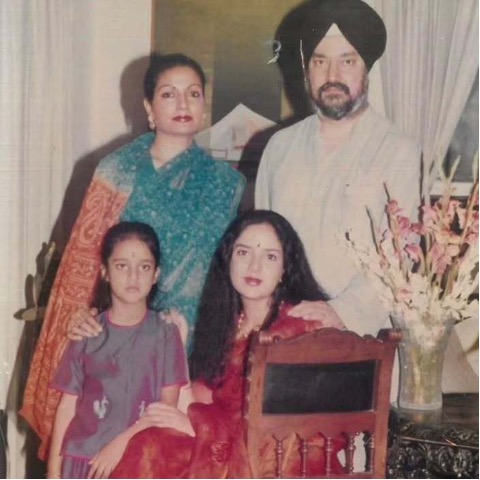
The book, she says, is a tribute. “To my ancestors, to my parents, and to a generation that overcame self-doubt under colonial rule and contributed to India’s civilisational reawakening.” Born to her parents when they were 45, she grew up “inhabiting an older world — its values, silences and emotional discipline — which shaped my understanding of freedom very early on.”
Writing the novel was a long, delayed inevitability. “I began it while posted in Hungary as Ambassador, but the story had been living within me for decades,” she recalls. “There was an ache — almost an agony — of wanting to tell it.” She returned to it during the COVID period, “a now-or-never moment when life paused and priorities clarified.” Encouraged by her husband, Hardeep Singh Puri, she completed the novel — written entirely on her iPhone — drawing on archival research, trial records, political writings, music and theatre.
Faith, Fate and Will
The philosophical core of the novel lies in its title and epigraph, drawn from Muktabai’s abhang. “Images like ‘the ant flies into the sky’ or ‘she swallows the sun’ overturn the logic of the given world,” Puri explains. “They speak to a Bhakti vision where the smallest can transcend the greatest limits.”
For women in the novel, fate is often inherited — through gender, caste and colonial power. Faith allows them to imagine alternatives; will enables them to act. Characters such as Malati, Kamala and Veena transform their lives through sustained moral courage rather than spectacle.
Men, too, undergo transformation. “Freedom requires not only women’s awakening, but men’s willingness to unlearn inherited power,” she says, pointing to figures who learn restraint, trust and belief in women’s autonomy. Even national figures such as Mahatma Gandhi, Madan Mohan Malaviya and Annie Besant embody the same triad. “India’s independence was not inevitable — it was consciously willed into being.”
Love Letters and the Emotional Seed
The novel’s emotional origin lies in a discovery. “I found 148 love letters in a tin trunk just as I was preparing to leave for a posting to Budapest,” she recalls. Mostly written by her father, the letters revealed “an era of emotional restraint, intellectual seriousness and moral clarity.”
“They were hidden not because they were secret, but because they were private,” she says. “This was a generation that did not curate its emotions for posterity.” With the help of her sister, Indira Bhargava, she deciphered the letters, which became “the emotional compass of the novel.”
From India to the World
Reflecting on the book’s journey, Puri calls it “deeply humbling.” Within a month of publication, Swallowing the Sun became a national bestseller, followed by more than twenty-five launches across India for the Indian edition.
Internationally, that provoked initial discussions at the UN Headquarters in New York, at Harvard University in Boston, at the National Liberal Club in London, and in Kathmandu.
The novel’s international edition will be launched in Edinburgh, London and New York in 2026 by Pippa Rann Books & Media. “Prabhu Guptara has played a thoughtful and committed role in taking the book to a global readership,” she notes.
Translations are underway across Indian and global languages, and Abundantia Entertainment also already has in development a multi-season adaptation for a film series on the web.
The novel has already received multiple honours, including the REC–Valley of Words Book Award 2025 for English Fiction and the Delhi Literature Festival Best Fiction Award.
“It has been deeply moving,” she reflects, “to see a story that began as a private act of remembrance travel across languages, geographies and mediums — reaffirming that intimate histories often carry universal truths.”
Related posts:
 In Conversation with Rajesh Mehta: Ambassador Ajay Bisaria
 Hardeep Singh Puri Seeks Central Intervention for Safekeeping of Guru Gobind Singh’s ‘Holy Jore Sahib’
 In Conversation with Rajesh Mehta: Anand Deshpande, Founder, Persistent Systems
 In Conversation with Rajesh Mehta: Abhishek Singh, CEO, IndiaAI Mission on India’s Global AI Vision