Join WhatsApp Channel


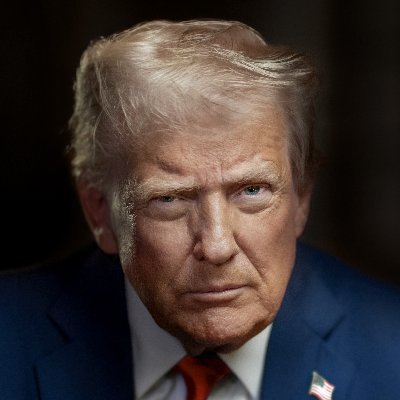
U.S. President Donald Trump has launched sharp attacks on several prominent figures – including former President Bill Clinton, LinkedIn co-founder Reid Hoffman, and leading bank JPMorgan Chase – as he pushes back against critics amid renewed scrutiny over the Epstein files and the controversy surrounding his doodles.
Facing deepened fissures within his own political coalition and MAGA base, President Trump on November 14, demanded that the Justice Department and FBI launch a fresh investigation into the late financier Jeffrey Epstein’s ties to an array of prominent Democrats and major financial institutions.
The order, issued in a blistering Truth Social post, thrusts the long-shadowed Epstein saga back into the center of Washington’s political battlefield — and raises concerns among legal scholars about the boundaries of presidential authority.
The move comes at a moment of visible tension inside the MAGA movement. While Trump continues to position himself as the political warrior waging crusades against Democratic elites, a faction of his most ardent supporters has turned against him over his refusal to release sealed Epstein files — a push that House Republicans themselves have championed. The divide underscores a rare moment of ideological whiplash: Trump is simultaneously amplifying allegations against Democrats while resisting demands from his own base for transparency.
It is a balancing act that evokes Trump’s earlier political playbook, particularly his years-long campaign against President Barack Obama. Then, Trump used the birther conspiracy to galvanize supporters while deflecting from other controversies. Today, the Epstein investigations appear calibrated to achieve a similar purpose — a diversionary and offensive tactic designed to refocus public attention amid the fallout of the recently ended government shutdown.
A Familiar Playbook: Attack, Divert, Repeat
Trump’s post accuses Democrats of weaponizing what he calls the “Epstein hoax” to distract from their culpability in the shutdown, which ended Wednesday as the longest such closure in U.S. history. The president’s rhetoric — invoking “Russia, Russia, Russia,” and comparing the renewed scrutiny of Epstein’s connections to earlier probes into his own conduct — reflects a practiced strategy: reframe the narrative, cast himself as the aggrieved party, and redirect scrutiny toward political rivals.
But what distinguishes this episode from past iterations of Trump’s diversionary tactics is its timing and its targets. By tying Epstein to figures like former President Bill Clinton, former Treasury Secretary Larry Summers, LinkedIn co-founder Reid Hoffman, and banks including JPMorgan Chase, Trump is zeroing in on political, financial, and cultural elites simultaneously — an aggressive triangulation designed to inflame populist sentiment.
Yet, beneath the combative posture lies political vulnerability. House Republicans, including some of Trump’s most loyal defenders, have pushed for the release of sealed Epstein-related files, framing transparency as a moral imperative.
Trump’s opposition to such disclosure prompted Rep. Marjorie Taylor Greene — one of the most prominent voices of the MAGA right — to label his stance a “huge miscalculation.” The public rupture highlights rare internal dissent and reveals the difficulty Trump faces in controlling a movement that now has multiple centers of gravity.
A DOJ Caught Between Presidential Pressure and Legal Limits
Attorney General Pam Bondi quickly echoed Trump’s call, announcing that she had directed Jay Clayton, the U.S. attorney for the Southern District of New York, to lead the requested investigation. But the legal footing remains tenuous. Only four months ago, the Justice Department and FBI concluded a sweeping review of Epstein-related material and found no evidence supporting the predicate for opening cases against uncharged third parties.
The memo explicitly stated there was no “client list” and no credible indication that Epstein blackmailed powerful individuals.
That finding places Trump’s directive in uneasy territory. While the president holds broad authority to set investigative priorities, legal experts note that ordering probes overtly targeting political opponents’ risks crossing into prohibited territory — particularly if the action lacks new evidence or compelling legal justification.
The question, then, is whether the Justice Department can reconcile the political imperative issued by the White House with the evidentiary constraints identified in its own report. History suggests the answer is fraught.
Attempts by presidents to direct law enforcement against opponents — whether Richard Nixon’s “enemies list” or Trump’s past calls to prosecute Hillary Clinton and James Comey — typically collapse under legal scrutiny and institutional resistance.
Already, the latest push is prompting unease among former prosecutors who warn that revisiting an exhausted investigative trail without new leads risks undermining the department’s credibility. Even among some Republicans, there is concern that Trump’s intervention may hand Democrats renewed arguments about political interference in justice.
Celebrity Fallout and the Politics of Proximity
The new allegations have also resurrected old tensions in Hollywood and the financial sector. In the years since Epstein’s death in federal custody in 2019, celebrity reactions to being linked — even tangentially — to the disgraced financier have been swift and severe. Those named in the Oversight Committee’s ongoing document releases have responded with defiance or distancing statements, seeking to inoculate themselves against the public and political fallout.
Clinton spokesperson Angel Ureña dismissed the newly surfaced emails involving the former president as evidence of nothing. A spokesperson for JPMorgan Chase blamed federal authorities for withholding critical information about Epstein’s past crimes, asserting the bank “regrets any association” with him.
And prominent Democratic donor Reid Hoffman, co-founder of the popular corporate sector audience LinkedIn, reiterated that he ceased contact with Epstein years before the financier’s final arrest.
But the backlash extends beyond political figures. The entertainment industry — long wary of renewed scrutiny after earlier revelations that Epstein courted Hollywood celebrities and producers — reacted with characteristic defensiveness, framing Trump’s latest moves as politically motivated character assassination rather than genuine pursuit of justice.
This intersection of politics, finance, and celebrity culture complicates the president’s gambit. Each disclosure produces not only political tremors but a cascade of public relations shockwaves that make it harder to sustain a coherent narrative.
For Trump, that volatility may be the point: chaos that destabilizes the opposition often serves his campaign-style approach to governance.
Oversight’s Expanding Role and the Question of Evidence
While the Justice Department reevaluates its options, the House Oversight Committee continues to release tens of thousands of pages of documents drawn from Epstein’s estate — emails, messages, flight logs, and unearthed memorabilia. Among them are references to both Trump and Clinton, handwritten notes, and even a birthday book that included a letter appearing to bear Trump’s signature — an assertion the president swiftly denied.
Yet none of these records, nor the earlier DOJ review, has produced a smoking gun linking any political figure to Epstein’s crimes. That gap between allegation and evidence is precisely where the legal test for Trump’s new investigative demands is likely to fail.
Ordering the DOJ to investigate is one thing; finding credible evidence that withstands prosecutorial standards is something else entirely.
A High-Stakes Political Gambit With Uncertain Payoff
In the end, Trump’s latest offensive may achieve its immediate purpose: redirecting the national conversation, energizing segments of his base, and putting Democrats on the defensive. But the divisions within his movement over the release of Epstein files, combined with the legal fragility of his demands, suggest the maneuver carries real risk.
If the Justice Department finds nothing new — or worse, if the investigation appears politically tainted — Trump may find himself confronting not only Democratic criticism but a disillusioned faction of his own supporters.
The Epstein saga, long synonymous with institutional failure, could become yet another stage for the unresolved tensions inside the MAGA universe.
For Trump, hitting the Democrats’ jugular has always been the objective. But this time, the blade may be double-edged.
Disclaimer: The opinions and views expressed in this article/column are those of the author(s) and do not necessarily reflect the views or positions of South Asian Herald.