 Join WhatsApp Channel


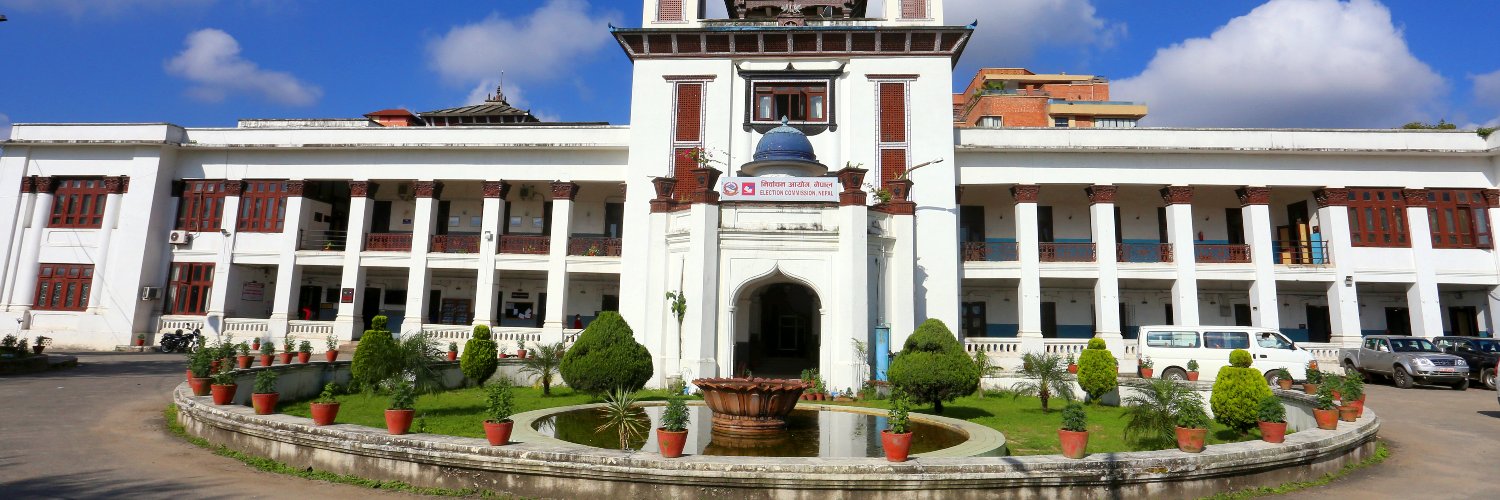
Nepal goes to the polls on March 5 under conditions that would test even a settled democracy: a snap election forced by bloodshed, a youth-heavy electorate impatient for change, and a political class still bruised from being pushed out by the streets.
This is not a routine electoral exercise. It is a referendum on legitimacy.
Nearly 18.9 million voters are registered to elect all 275 members of the House of Representatives — 165 through first-past-the-post (FPTP) contests and 110 through proportional representation (PR). More than 800,000 are first-time voters. In a country where 56% of the population is under 30, that number alone alters the arithmetic.
But demographics do not automatically translate into power. Organization does. Narrative does. And coalition math, in Nepal, almost always does.
The Election That Was Not Supposed to Happen
This vote comes two years ahead of schedule. It was triggered by the September 2025 uprising that toppled the government of K. P. Sharma Oli. What began as protests over a social media ban spiraled into a broader revolt against what demonstrators described as a disconnected and entrenched elite.
Clashes left dozens dead. Parliament and key state buildings were torched. Oli resigned. President Ram Chandra Poudel appointed former chief justice Sushila Karki as interim prime minister, dissolved parliament, and reset the political clock.
The grievances that fueled the unrest have not disappeared. Youth unemployment hovers near 20%. An estimated 1,500 Nepalis leave daily for foreign employment. Patronage networks remain entrenched. Since the monarchy was abolished in 2008, the country has seen 16 governments.
The ballot is now a pressure valve. Whether it produces structural change is another matter.
Fragmentation as the Default
A total of 68 parties are in the fray; 22 of them did not exist in the last general election. More than 3,400 candidates are contesting.
Fragmentation is not accidental. Nepal’s mixed electoral system encourages coalition politics and broad representation. No serious observer expects a single-party majority.
The traditional pillars remain:
- Nepali Congress (NC), attempting to recast itself under relatively younger leadership.
- Communist Party of Nepal (Unified Marxist-Leninist) (UML), led by Oli and still organizationally formidable.
- Nepal Communist Party formations linked to Maoist currents.
- Rastriya Prajatantra Party (RPP), advocating conservative nationalism.
Yet the most disruptive force is the Rastriya Swatantra Party (RSP), founded just four years ago and now positioning itself as the institutional heir to last year’s protests.
Its most recognizable face is Balendra Shah — Balen — who resigned as Kathmandu mayor to challenge Oli in Jhapa-5. That contest has become the psychological center of the election: 35 versus 74, insurgent versus incumbent, performance politics versus party machinery.
Symbolism, however, is not governance.
Populism Meets Fiscal Math
Nearly every major party has pivoted toward youth-friendly promises: free data packages, start-up grants, subsidized loans, anti-corruption probes, term limits.
The RSP promises 1.2 million jobs and a $100 billion economy. The Nepali Congress speaks of 1.5 million jobs and sustained 7% growth. UML outlines a 10 trillion-rupee economy within five years and half a million jobs annually.
The arithmetic is tight.
Growth is projected at roughly 4–5% this fiscal year. Remittances remain the backbone of foreign exchange reserves, now around $22 billion. Inflation is manageable. These are stabilizers, not accelerators. The industrial base is thin. Bureaucratic processes are slow. Hydropower expansion — often touted as the growth engine — requires time, capital and cross-border agreements.
Creating over a million domestic jobs would require sustained high growth and a shift from remittance-led consumption to investment-driven expansion. That, in turn, requires political stability — Nepal’s rarest commodity.
The Youth Vote: Energized, Not Monolithic
Labeling this a “Gen Z election” captures part of the story. The September protests were youth-driven. RSP rallies are visibly younger. More than 800,000 first-time voters could tilt close races.
But Nepal’s youth are not a single bloc. Urban Kathmandu’s digitally connected middle class has different priorities from migrant-worker households in rural Karnali dependent on remittances.
What is changing is behavior. Young voters increasingly describe themselves as political consumers. Loyalty is conditional. Performance matters.
That creates volatility. It may also create accountability.
Coalition Arithmetic and the Risk of Déjà Vu
A coalition is inevitable.
An RSP–Nepali Congress alignment is widely discussed. So is a broader anti-UML front. UML retains deep organizational networks in rural constituencies that should not be underestimated.
Each scenario carries risks:
- An RSP-led coalition may struggle with administrative experience.
- An old-guard-heavy alliance risks being seen as cosmetic change.
- A fractured parliament could recreate the short-lived cabinets of the past decade.
Investors and markets are watching not just who wins, but how quickly a government is formed. Policy continuity matters more than personality.
Election Machinery and Immediate Timelines
Acting Chief Election Commissioner Ram Prasad Bhandari has said results under the FPTP system will be announced within 24 hours of ballot collection, with proportional representation outcomes likely within one to two days.
The PR system allocates 110 seats based on each party’s nationwide vote share. Voters cast a separate ballot for a party list, and parties are required to ensure inclusion of women and marginalized groups — including Dalits, Janajatis, Madhesis and minorities — in line with constitutional mandates.
Polling will run from 7 am to 5 pm. Campaigning ended on March 2, marking the start of a legally mandated silence period. The Nepal–India border has been sealed 72 hours before voting.
The Real Test Begins After the Count
Foreign policy is unlikely to see dramatic shifts. Nepal’s balancing between India and China is structural. No major party advocates a radical pivot.
The deeper question is domestic: has the social contract been recalibrated?
The September uprising exposed a generational and economic fault line between rulers and ruled. Political language has shifted. Whether political behavior follows is uncertain.
If the next government survives a full term and delivers incremental but visible reforms, this election could mark the maturation of Nepal’s republican experiment.
If it collapses into familiar bargaining and unmet promises, the lesson absorbed by young voters may not be faith in democracy — but faith in disruption.
On March 5, Nepal votes. On March 6, expectation collides with governing reality.
Related posts:
 Nepal’s Election as a Geopolitical Test
 Nepal and China: Aiding Ambiguity on BRI
 Nepal’s Prime Minister emphasizes the concept of ‘The whole world is one family’ during his address at the United Nations General Assembly
 How the Modi-Nitish Alliance Crushed Bihar: A Lesson in Coalition, Caste, and Confidence
