Join WhatsApp Channel


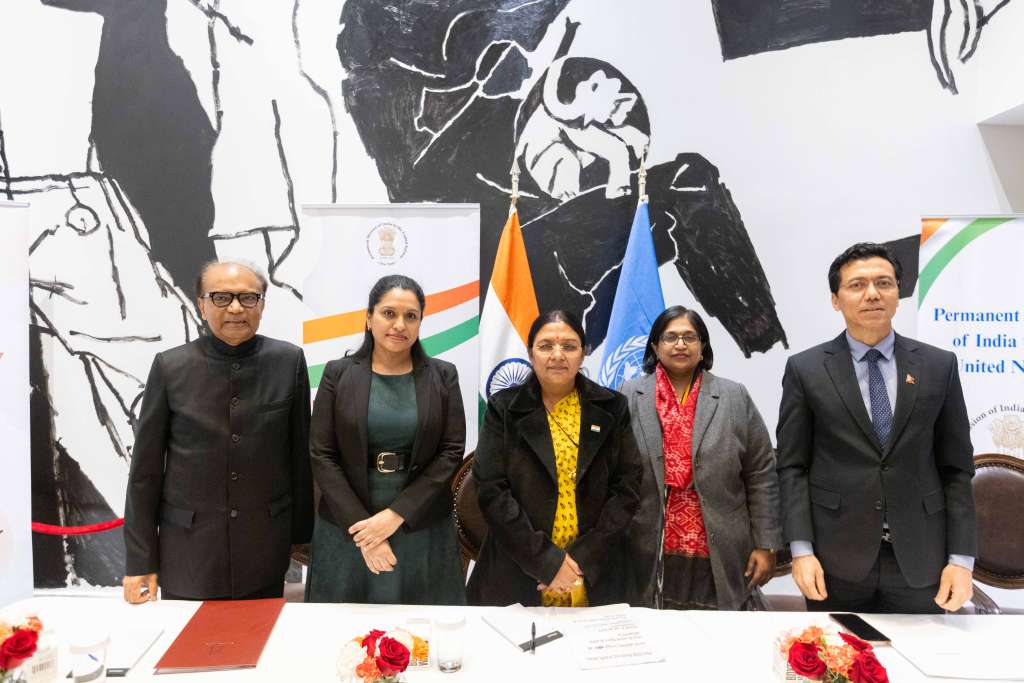
The Permanent Mission of India (PMI) to the United Nations hosted a commemorative event on February 2, 2026, to mark World Hindi Day at its premises in New York.
India’s Minister of State for Women and Child Development, Savitri Thakur, attended the event as the Chief Guest. In her address, the Minister spoke about the “popular appeal” of Hindi in India and abroad.
She highlighted various initiatives undertaken by the Government of India (GoI) to further popularize the language and emphasized the need to integrate new technologies to make learning Hindi easier. She also underscored the “strong linkages” between the Indian Diaspora and Hindi.
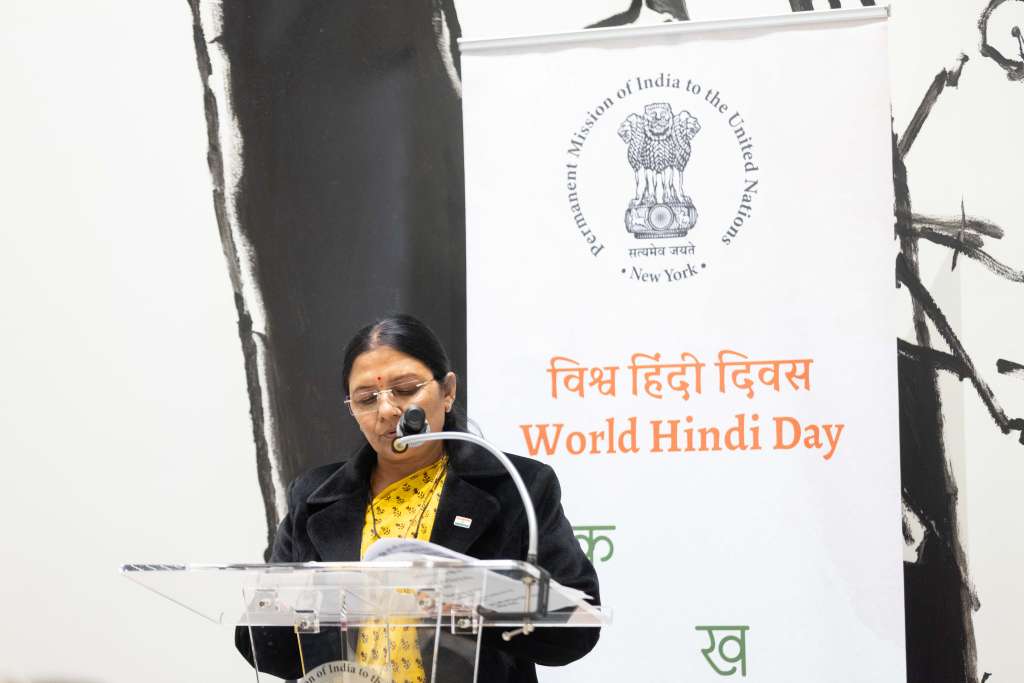
Deputy Permanent Representative of India, Ambassador Yojna Patel, noted that through the efforts of the Permanent Mission of India, Hindi has been included in the list of non-official languages at the United Nations.
Ambassador Patel described Hindi as “synonymous” with India’s vibrant cultural landscape. She also highlighted the webcast of UN News in Hindi, an initiative of the Government of India in partnership with the UN Department of Global Communications. The Government of India has contributed over USD 8 million to this initiative to date.
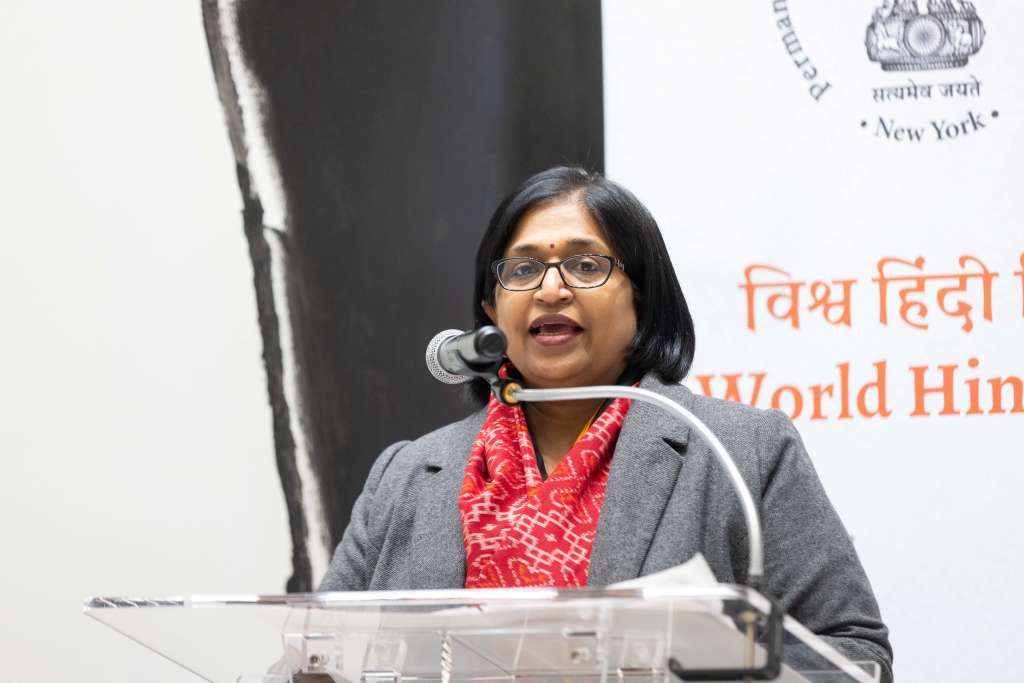
Other speakers included Permanent Representative of Nepal, Ambassador Lok Bahadur Thapa; Permanent Representative of Mauritius, Ambassador Milan Jaya Meetarbhan; and Deputy Permanent Representative of Guyana, Ambassador Trishala Simantini Persaud.
They spoke about the role of Hindi in shaping the socio-cultural fabric of their countries and warmly recalled the special place the language holds in their lives.
“For a country as richly diverse in ethnicity, culture, and language as ours, this occasion stands not merely as an observance but as a profound affirmation of our shared heritage, our identity, and our deep respect for multiculturalism,” Ambassador Thapa said in his address.
He noted that Hindi today stands not only as a language of “expression” but also as a “connecting thread” across borders and generations. As India’s close neighbor with “deeper historical, cultural, and people-to-people connections,” Hindi is “intricately” woven into Nepal’s socio-cultural mosaic, he said.
According to Ambassador Thapa, about 100,000 people in Nepal speak Hindi as their mother tongue, while around 225,000 speak it as a second language.
“Hindi is one of Nepal’s top 20 national languages among the 140 spoken in the country,” he said. “Hindi remains an indispensable part of a multicultural Nepali society through cinema, music, festivals, literature, and everyday conversations that speak directly to our shared emotions and collective experiences.”
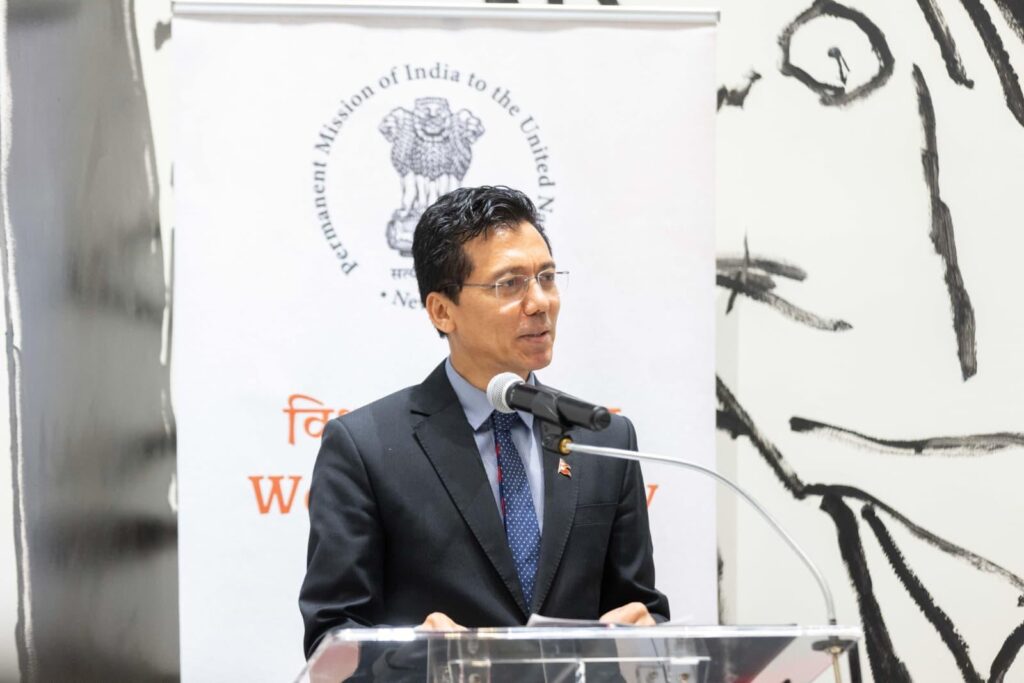
He added that Hindi also serves as an “enabler” of economic opportunities between the two countries, noting that it has eased communication, facilitated trade, promoted tourism, and strengthened social cohesion.
“Sanskrit, as our shared linguistic root, and Devanagari, as the common script of both Hindi and Nepali, have helped forge a deep and enduring bond between our languages and our peoples,” he said, adding that as the third most widely spoken language globally, Hindi’s relevance and reach are expanding at an unprecedented pace.
Language, he said, is more than a means of communication. “It is the memory we inherit. It is the identity of who we are; It is the belonging we feel. And it is the wisdom we pass forward.”
Ambassador Thapa also commended the declaration of January 10 as World Hindi Day, noting that it reflects India’s commitment to promoting Hindi and preserving its cultural heritage globally.
“We recognize India’s contribution to Hindi@UN Project as a commendable initiative toward global multilingualism bringing the voice of the United Nations closer to people, in their own language,” he added.
Senior UN officials, members of the diplomatic corps, language enthusiasts, and members of the Indian Diaspora attended the event.
The Government of India initiated World Hindi Day, also known as Vishwa Hindi Diwas, on January 10, 2006, to “strengthen efforts to promote and popularize Hindi” globally. Since then, the day has been commemorated annually across the world.
Related posts:
 Permanent Mission of India to the United Nations Observes “Hindi Diwas 2024” at the United Nations
 India Leads Global Celebration of Hindi Diwas at the United Nations, Showcasing Language’s Cultural and Diplomatic Reach
 Nepal’s Envoy to UN Highlights Democratic Transition, Gen Z Protests, and Global Crises at UNGA 80
 Nepal’s Ambassador to United Nations Lok Thapa Elected ECOSOC President for 2026