Join WhatsApp Channel


Fear linked to extortion rackets is intensifying across Canada as local, provincial, and federal authorities struggle to contain a problem that has spread into multiple communities, particularly those with large Indian immigrant populations.
Affluent members of the Indian community, including Sikh families and business owners, have been among the most affected. Extortion has been a growing concern for several years and continues to dominate discussions at city councils, provincial legislatures, and in the House of Commons.
Despite town halls, debates, and policy discussions, those allegedly behind the crimes have escalated intimidation tactics. Videos of shootings and threats have circulated widely, amplifying fear. One such video, reportedly showing a man firing shots at a home in Brampton while holding two pistols, went viral recently and sent shockwaves through the Indian community.
A recent report by a major Toronto tabloid described extortion as a “story of people being threatened with violence, like the shooting, or arson to the business or home, if they do not pay up.” The report noted that while shootings and other acts of violence are often carried out by local criminals, the money is frequently sent to organized crime groups in India. It added that although the Bishnoi gang has claimed responsibility for some extortion schemes, other groups and copycat networks are also involved.
“In the Brampton incident earlier this month, the shooting was recorded by an accomplice of the gunman and then sent to the homeowner the next day with a demand for $500,000. While Brampton and the surrounding area are a hotspot for this activity, it’s also been a problem in Winnipeg, Edmonton, and British Columbia’s Lower Mainland,” the report said.
Following calls by Brampton City Council and the city’s mayor for the federal government to declare extortion a national crisis, Surrey City Council in British Columbia passed a unanimous motion seeking a national state of emergency. The motion came after 35 extortion incidents were reported in the city since the beginning of the year.
“Surrey is facing a serious and growing crisis of organized extortion, intimidation, and targeted shootings,” Mayor Brenda Locke said. “Residents and business owners are living in constant fear. Public safety is at risk, and the social and economic impact is real.”
Locke called for additional police resources, including a joint federal, provincial, and municipal task force, and for expedited deportation of “non-citizens charged or convicted of extortion, firearms offences, or participation in extortion-related criminal activity.”
After returning from a visit to India, British Columbia Premier David Eby publicly criticized the leadership of the police anti-extortion task force. His remarks followed comments by RCMP Assistant Commissioner John Brewer, who declined to describe the surge in extortion-related shootings in the Lower Mainland as a crisis.
Eby said Brewer’s remarks undermined public confidence. “If Mr. Brewer does not feel that urgency, does not feel this is a crisis, perhaps he’s not the right person to head up this task force,” the premier said. He added that the task force was created “to respond to a crisis” and must act “quickly and effectively for the people of Surrey and the people south of the Fraser.”
Days earlier, Brewer had said the task force was “actively hunting” suspects linked to 32 extortion-related files across the Lower Mainland but resisted using the term “crisis” during a news conference. He urged residents not to take matters into their own hands following another shooting in Surrey believed to be connected to extortion. Brewer later apologized for not using the word “crisis,” saying the omission had affected public confidence.
The issue has since intensified debate in the House of Commons following Parliament’s return from the holiday recess.
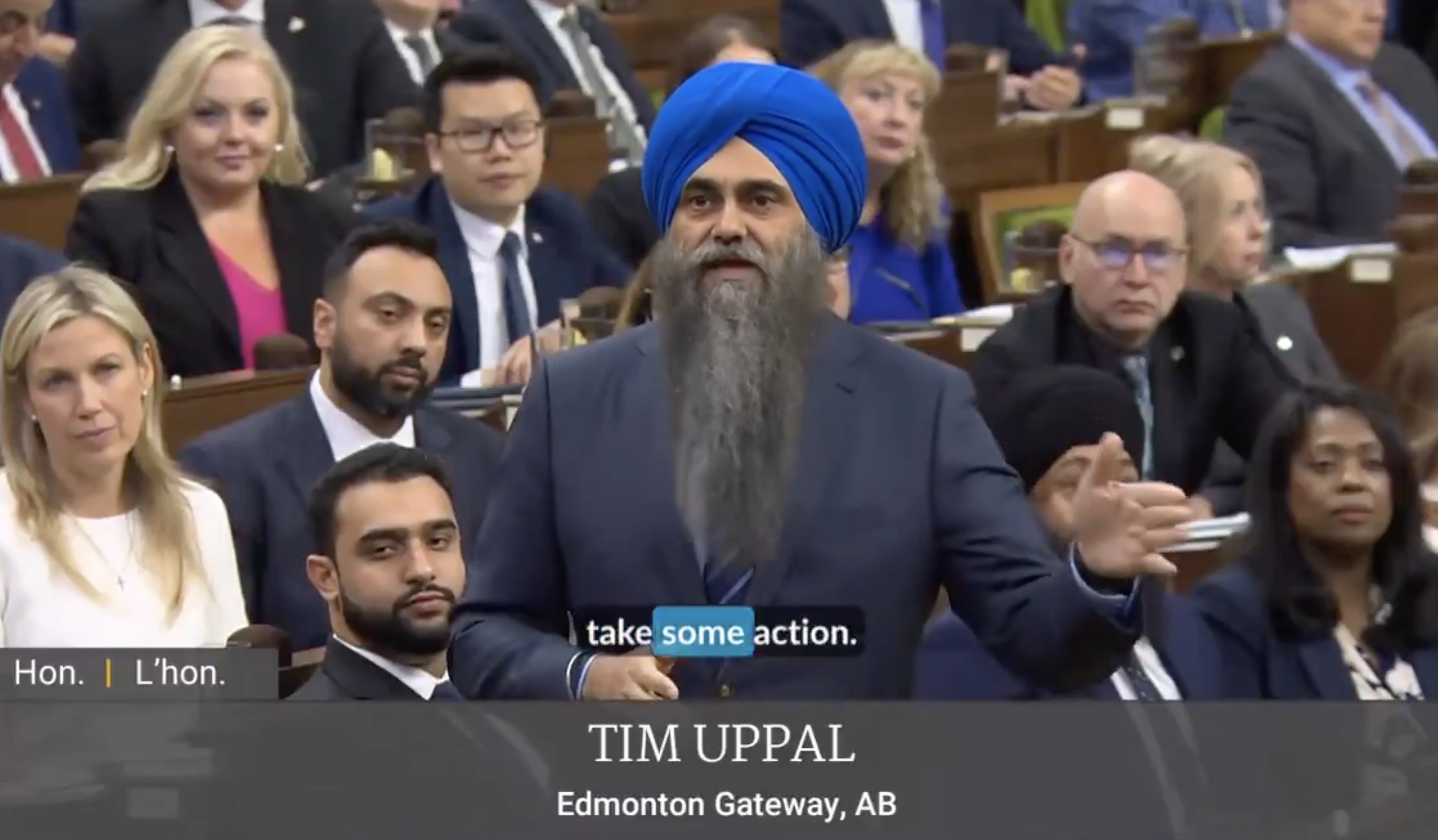
Conservative Deputy Leader Tim Uppal said Canadians were living in fear as extortion escalated nationwide. He cited a nearly 500 percent increase in extortion cases in British Columbia and accused the Liberal government of failing to act. Uppal called for mandatory minimum sentences for extortion and questioned why the government was not prioritizing public safety.
In response, Justice Minister and Attorney General Sean Fraser acknowledged that extortion is “a real and pressing problem.” He said legislation under debate would make it harder for individuals charged with extortion-related offences to obtain bail, increase sentences for convictions, and provide law enforcement with additional investigative tools.
“The thing that these different measures have in common is that the Conservative Party of Canada has been obstructing them for months,” Fraser said. “I ask them to get with the program, support these important bills, and bring extortion to an end in Canada.”
Conservative MP Harb Gill of Windsor West said that, as a former police officer, “I know a crisis when I see one. Extortion is out of control.” He accused the government of delaying action while communities face daily threats and shootings.
Secretary of State for Combatting Crime Ruby Sahota said Canada already has life sentences for extortion and mandatory minimums when crimes involve organized crime or firearms. She emphasized that the government was taking the issue seriously and said law enforcement agencies across the country had requested expanded lawful access powers to pursue extortion cases.
Another Conservative MP, Amarjeet Gill of Brampton West, warned that extortion was “exploding and terrorizing communities across Canada.” He said some residents had fled the country out of fear and urged the government to take decisive action against organized crime.
Veterans Affairs Minister Jill McKnight said the rise in “extortion-related threats, shootings, and intimidation across Ontario and the Lower Mainland is a grave concern.” She said the government was advancing legislation to strengthen law enforcement’s ability to combat organized criminal networks and called on opposition parties to support those measures.
“Our communities need to feel safe at home,” she said.
Related posts:
 Brampton Seeks Federal Action as Extortion and Transnational Crime Target Punjabi Community in Canada
 Canadian Leaders Urge Terrorist Designation for Lawrence Bishnoi Gang Amid Threats to South Asian Community
 City of Brampton Breaks Ground on Cassie Campbell Field Hockey and Multisport Training Dome
 OFIC Urges Canada to Fast-Track CEPA Talks as British Columbia Trade Mission Arrives in India