Join WhatsApp Channel


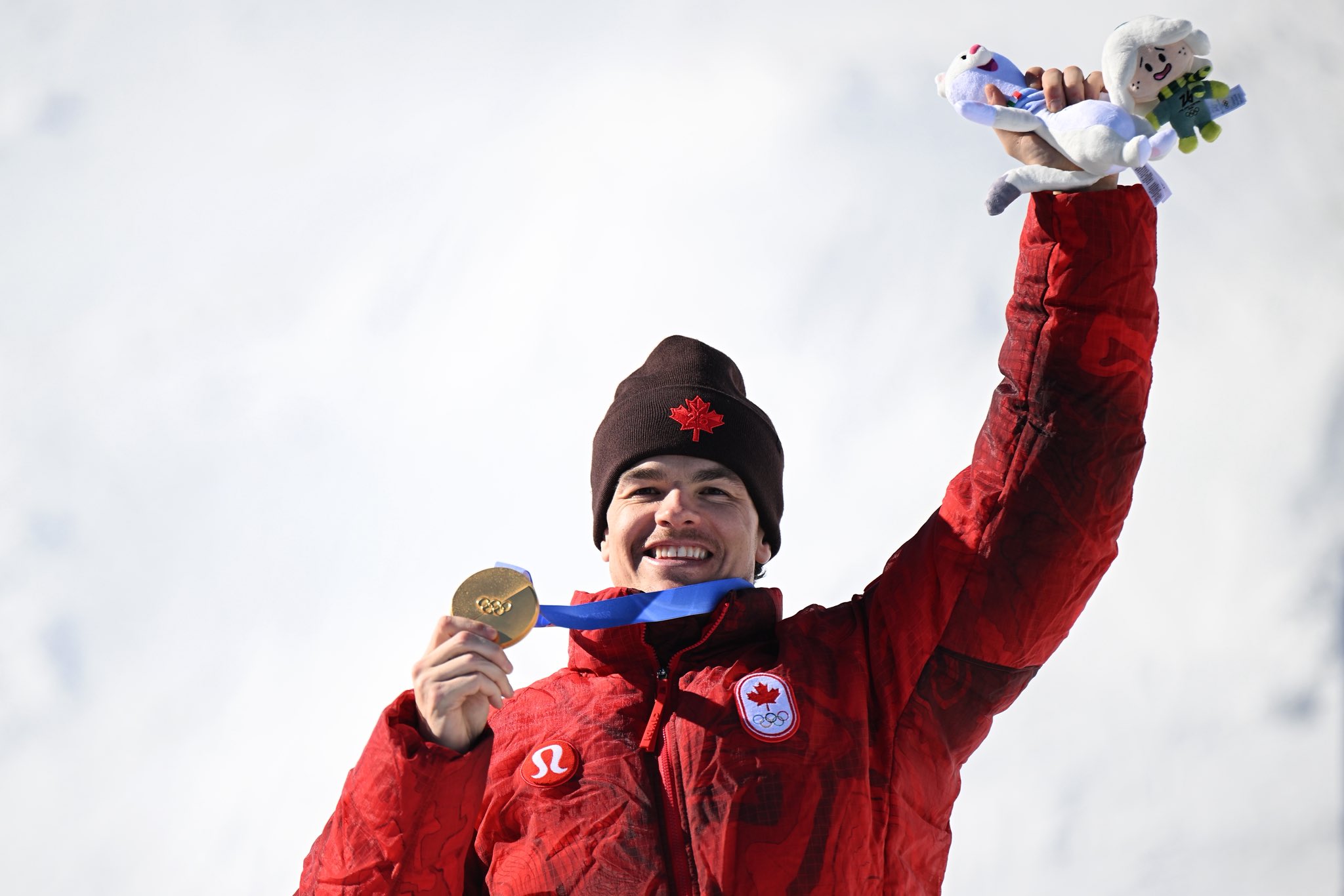
Canada celebrated a breakthrough moment at the Milano Cortina 2026 Winter Olympic Games as Mikael Kingsbury delivered the country’s first gold medal of the competition, pushing Canada onto the top step of the podium list beyond the halfway mark.
With the Games entering a decisive phase, nine medal events were settled on Sunday, including the inaugural skeleton mixed team and women’s ski jumping large hill competitions. The action continues to produce standout performances across ice and snow, with new milestones shaping this edition of the Winter Games.
Norwegian cross-country skier Johannes Hoesflot Klaebo further cemented his legacy, becoming the most decorated Winter Olympian in history. Anchoring Norway to victory in the men’s 4 × 7.5 km relay, Klaebo secured his ninth career Olympic gold medal.
Teaming up with Emil Iversen, Martin Løwstrøm Nyenget, and Einar Hedegart, Klaebo helped Norway finish 22.2 seconds ahead of France, which took silver, while host nation Italy earned bronze.
The 29-year-old claimed his fourth gold medal of Milano Cortina 2026, surpassing Norwegian greats Bjørn Dæhlie, Marit Bjørgen, and Ole Einar Bjørndalen for the most Winter Olympic gold medals by any athlete. His total Olympic medal haul now stands at nine golds.
Norway continued to dominate the medal standings with 12 gold, seven silver, and seven bronze medals. Italy sits second with eight gold, four silver, and 10 bronze medals, marking its most successful Winter Games performance in terms of both gold and total medals. The United States holds third place with five gold, eight silver, and four bronze medals.
Sweden and the Netherlands are tied for fourth with five gold medals each. France, Germany, Austria, and Switzerland have four gold medals apiece. Japan leads Asian nations with three gold medals among its 17 total medals.
Canadian freestyle skiing star Kingsbury claimed gold in the men’s dual moguls, becoming the first Olympic champion in the event. He defeated Japan’s Horishima Ikuma in the final, while Australia’s Matt Graham secured bronze.
The 33-year-old now owns five Olympic medals: gold in PyeongChang 2018, three silvers from Sochi 2014, Beijing 2022, and Milano Cortina 2026, and his latest gold in Italy.
Following Kingsbury’s victory, Canada moved to 15th in the medal standings with one gold, three silver, and five bronze medals.
Sweden’s Martin Ponsiluoma captured his first Olympic medal in the men’s 12.5 km pursuit. Trailing France’s Émilien Jacquelin entering the final shooting stage, Ponsiluoma capitalized on Jacquelin’s two penalties to claim gold. Norway’s Sturla Holm Laegreid took silver, while Jacquelin settled for bronze.
In the women’s 10 km pursuit, Italy’s Lisa Vittozzi secured gold after overtaking Norway’s Maren Kirkeeide following the final standing stage. Vittozzi shot clean and finished in 30:11.8, becoming Italy’s first Olympic biathlon champion. Kirkeeide earned silver despite three penalties, and Finland’s Suvi Minkkinen claimed bronze.
Vittozzi’s triumph marked Italy’s eighth gold medal of the Games, its highest gold tally in Winter Olympic history.
Dutch skater Femke Kok won the women’s 500 m in an Olympic record time of 36.49 seconds, earning the Netherlands its first Olympic gold in the event. Jutta Leerdam of the Netherlands took silver in 37.15 seconds, while Japan’s Takagi Miho claimed bronze in 37.27 seconds.
In skeleton, Britain’s Matt Weston and Tabitha Stoecker won the inaugural mixed team event. Weston, recently crowned Britain’s first male Olympic skeleton champion, sealed victory with a combined time of 1:59.36. Germany’s Susanne Kreher and Axel Jungk took silver, with compatriots Jacqueline Pfeifer and Christopher Grotheer finishing third.
Team GB added another milestone as Charlotte Bankes and Huw Nightingale captured gold in the mixed team snowboard cross, marking Britain’s first Olympic gold on snow.
Norway’s Anna Odine Stroem claimed gold in the first women’s large hill Olympic event, adding to her normal hill title and mixed team silver. Stroem produced a decisive 132.0-meter jump in the final round to secure victory with 148.1 points. Slovenia’s Nika Prevc won silver, while Norway’s Eirin Maria Kvandal took bronze.
On the Alpine slopes, Italy’s Federica Brignone secured her second gold medal of the Games by winning the giant slalom. The 35-year-old followed up her Super-G victory with a combined time of 2:13.50, finishing 0.62 seconds ahead of Sweden’s Sara Hector and Norway’s Thea Louise Stjernesund, who shared silver after identical times.
Brignone became the first Italian woman to win Olympic giant slalom gold since Nagano 1998 and the first female Alpine skier from any nation to win two gold medals at a single Winter Games since Slovenia’s Tina Maze at Sochi 2014.
As Milano Cortina 2026 heads into its final stretch, Canada’s long-awaited gold has added fresh momentum to the competition, while record-breaking performances continue to define the Games.
Related posts:
 Milano-Cortina 2026 Opens with Dual Cauldrons, Historic Venues, and a Global Call for Respect
 Milano Cortina 2026 Day 7: Klaebo Ties Winter Olympic Gold Record, Kazakhstan’s Mikhail Shaidorov Wins Gold
 Norway Leads Medal Table as Seoul Sister Choi Gaon, and Lollobrigida Headline Day 6 at Milano Cortina 2026
 Brazil Makes Winter Olympics History at Milano Cortina 2026 as Lucas Pinheiro Braathen Wins Gold