Join WhatsApp Channel


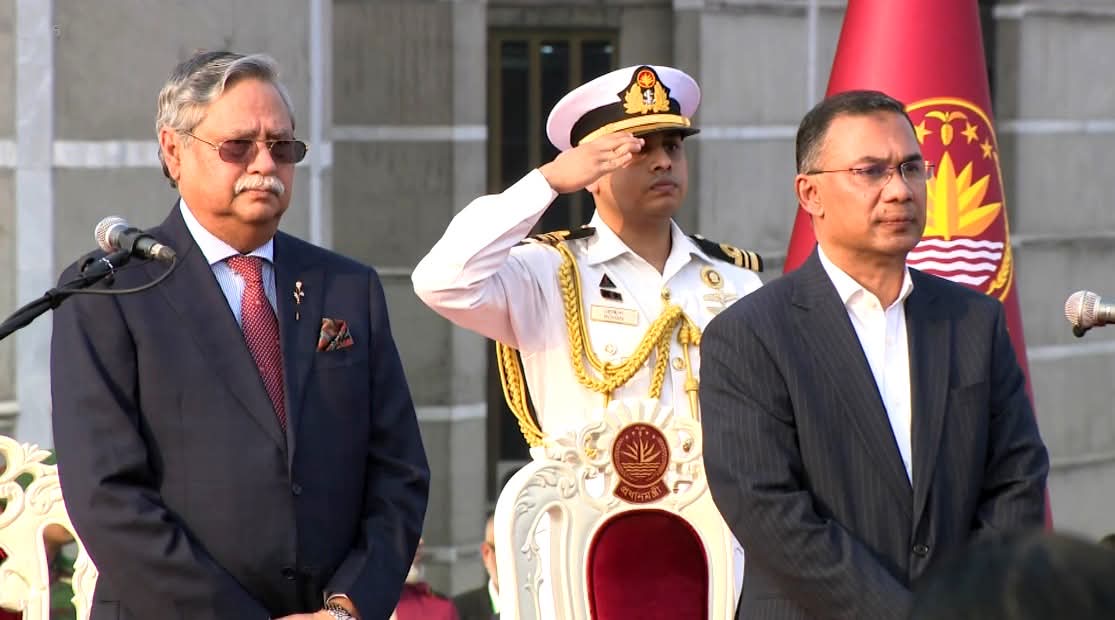
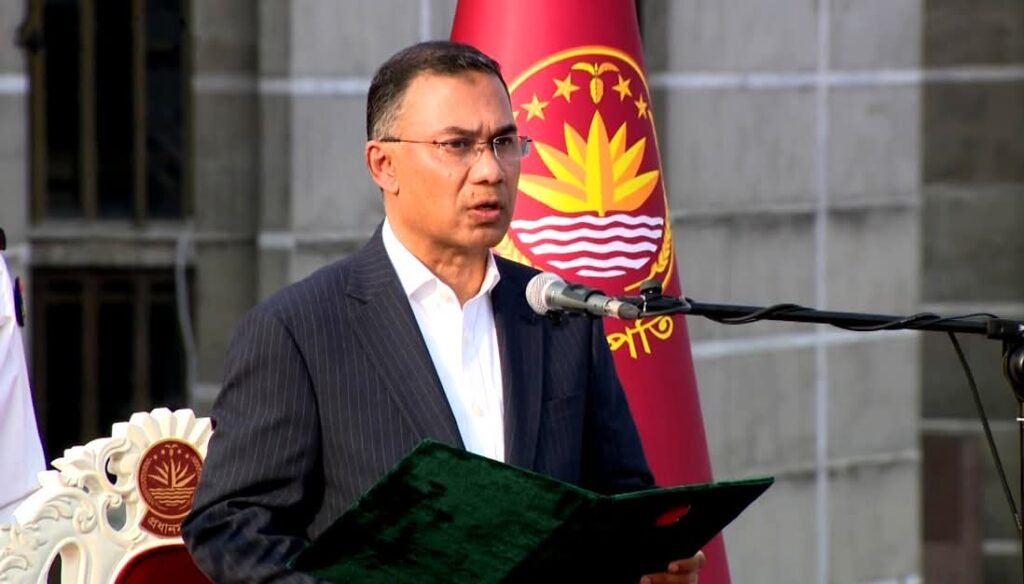
The swearing-in of Tarique Rahman as prime minister on February 17 marks far more than a routine transfer of power in Bangladesh. It closes a turbulent chapter opened by the 2024 student-led uprising that ended the long rule of Sheikh Hasina, and it begins a far more uncertain one—defined by economic fragility, polarized politics, and shifting regional geopolitics.
Rahman’s Bangladesh Nationalist Party (BNP) enters office with a commanding mandate, securing more than two-thirds of the 300 parliamentary seats. That scale of victory has reduced immediate political uncertainty and raised expectations of decisive governance. Yet it also concentrates responsibility at a moment when the country’s economic buffers are thin, and its institutions weakened by years of politicization.
An economy running out of slack
The most urgent challenge is macroeconomic. Growth slowed to 3.97% in FY2024–25, down from an average of over 6% in the previous decade, while inflation has hovered near 9%, eroding real incomes. Exports—dominated by the ready-made garments (RMG) sector, which accounts for roughly 80% of export earnings—fell sharply, with shipments down 14.2% year-on-year in December 2025 amid global demand weakness and labor unrest.
According to a February 2026 sovereign assessment by Moody’s Ratings, the election outcome has eased political risk, but left Bangladesh’s credit profile constrained by weak banking governance, stressed assets, subdued investment, and elevated youth unemployment. Business confidence remains fragile after nearly two years of disruption, and private investment has yet to recover to pre-2024 levels.
Debt dynamics add pressure. Public debt remains moderate by regional standards, but **low tax revenues—around 9% of GDP—**limit fiscal space just as spending demands rise ahead of Bangladesh’s planned graduation from least-developed-country status in November 2026, which will gradually erode trade preferences in Western markets.
Governance, reform, and the Islamist question
Politically, Rahman inherits a system described by local analysts as “deeply politicized from top to bottom.” Restoring the neutrality of the civil service, police, and judiciary will test both his authority and his willingness to confront entrenched interests within his own party.
Complicating that task is the expanded parliamentary presence of Jamaat-e-Islami, reinstated after years of prohibition. While the BNP leadership has emphasized inclusivity, critics warn that greater Islamist leverage could dilute Bangladesh’s secular foundations and intensify anxieties among minorities—particularly Hindus—at a time when communal tensions have already risen.
Yet there is also an opening. A constitutional referendum held alongside the election approved proposals for prime ministerial term limits, stronger judicial independence, and a bicameral parliament. If implemented, these reforms could gradually rebalance executive power and address the winner-takes-all politics that have defined Bangladesh for decades.
Regional stakes: why South Asia is watching
Bangladesh’s transition matters well beyond its borders. Straddling the Bay of Bengal and sharing long frontiers with India and Myanmar, it is central to regional trade, counterterrorism cooperation, and the management of the Rohingya refugee crisis.
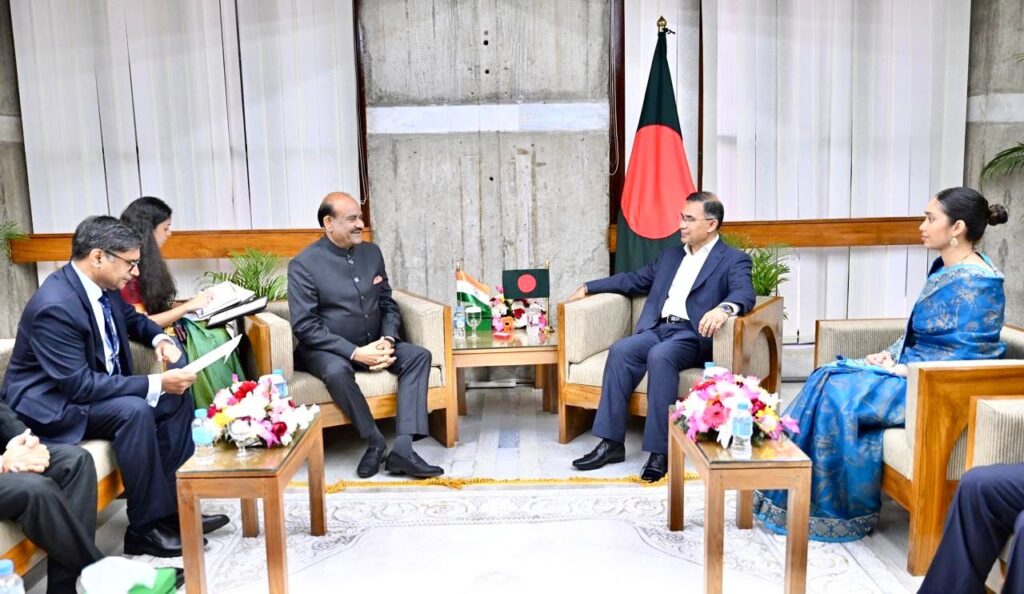
A BNP-led government is expected to pursue a more multipolar foreign policy, recalibrating ties with India while deepening engagement with China, Gulf states, Turkey, and Western partners. For New Delhi, which enjoyed close relations with the previous Awami League government, the shift introduces uncertainty—but also the prospect of a reset if trade barriers ease and security cooperation continues.
For Washington and its partners, stability in Dhaka intersects with Indo-Pacific strategy, supply-chain resilience, and concerns over democratic backsliding. Bangladesh’s choices will influence whether the Bay of Bengal becomes a zone of cooperation or competition.
Hope tempered by hard arithmetic
Rahman’s return from 17 years in exile has symbolic weight, particularly for a youthful electorate that drove the 2024 uprising and now demands jobs, accountability, and relief from inflation. His overwhelming mandate provides a narrow but real window to move quickly: stabilizing law and order, signaling zero tolerance for graft, recapitalizing banks, and protecting export competitiveness.
The risk is that high expectations collide with slow delivery. Bangladesh’s recent history suggests that unmet promises can rapidly spill back onto the streets. Whether this moment becomes a genuine “second liberation” or merely another turn in a cycle of elite replacement will depend on what happens next—not in rhetoric, but in data: inflation that falls, exports that recover, institutions that outlast personalities. For Bangladesh, and for South Asia, the stakes could scarcely be higher.