Join WhatsApp Channel

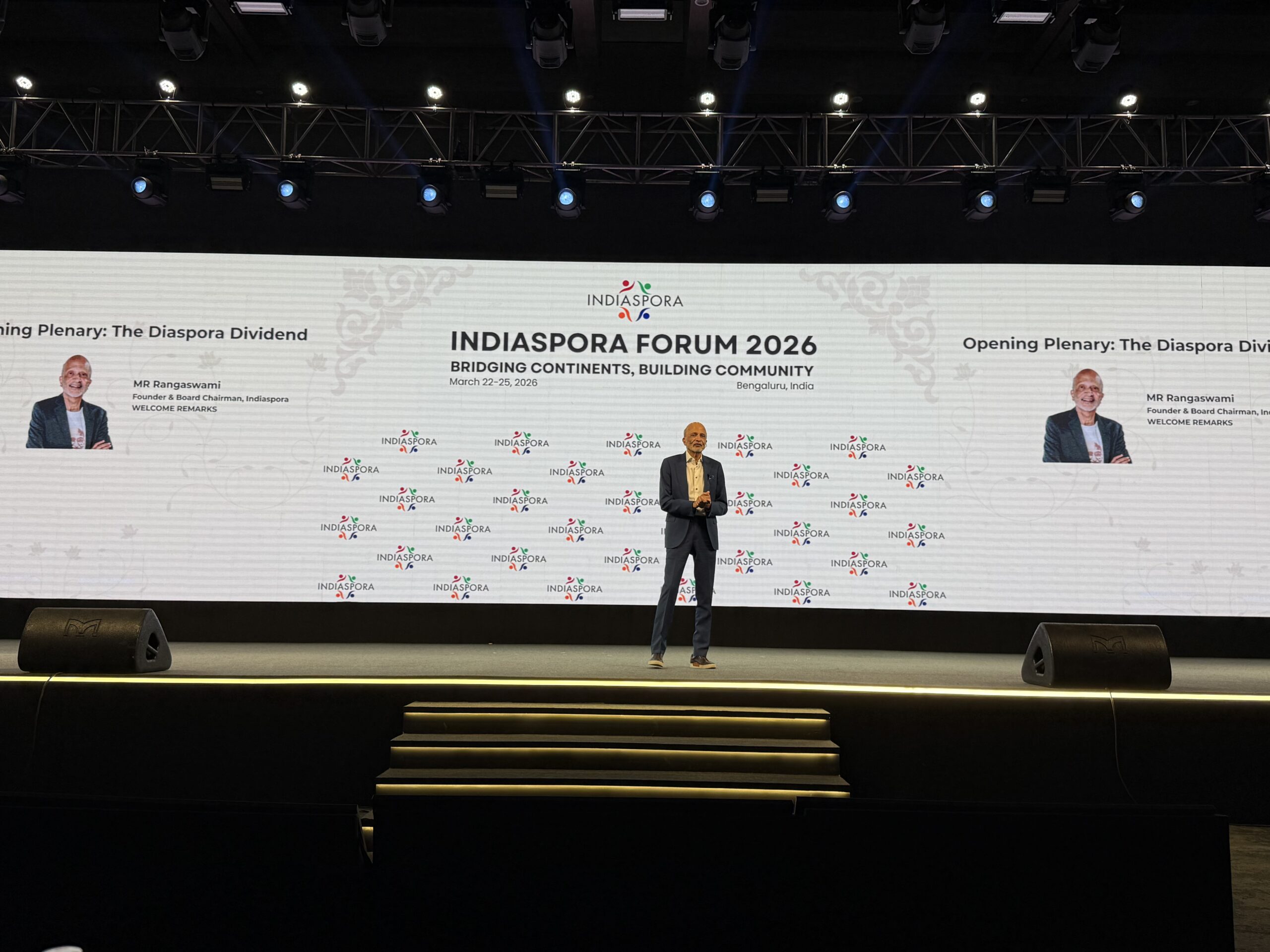
Founder and Chairman of Indiaspora, MR Rangaswami, said the organization was established to unite the global Indian diaspora as a “Force for Good,” during the opening plenary of the Indiaspora Forum 2026 held on March 23 at the JW Marriott Hotel and Convention Centre in Bengaluru.
“So, in 2011, I was trying to think we should bring our community together to be a force for good. And then I worked for over a year to meet with community leaders and people from different professions,” he said, noting that more than 100 leaders were invited to discuss the formation of the organization.
Rangaswami reflected on early milestones, including Indiaspora’s role in organizing a Presidential inaugural ball in Washington, DC, following President Barack Obama’s re-election in 2013.
“So, in 2013 when President Obama got reelected, we decided that we would convene in Washington to show that we can be a force, an influential force and a force in politics,” he said, recalling that about 1,300 members of the Indian diaspora attended the event in traditional attire. He added that the gathering drew attention from the political establishment, which began to view the community as economically influential.
He also highlighted a 2017 Indiaspora Gala that underscored the representation of Indian Americans in U.S. politics. “So that was a big milestone event for the diaspora community in the US,” he said, adding that in a recent U.S. election cycle, more than 350 Indian-origin candidates ran for public office. According to Rangaswami, the approximately five million-strong Indian diaspora in the United States is increasingly emerging as a political force.
Rangaswami pointed to advocacy efforts such as securing a Diwali-themed U.S. postal stamp, which contributed to broader recognition of the festival in public institutions. He noted that such efforts helped advance initiatives to make Diwali an optional school holiday in New York City and subsequently in states including Connecticut, Pennsylvania, and California.
He also cited Indiaspora’s response during the COVID-19 Delta wave, when the organization, along with its members and partners, raised $15 million within a month for relief efforts in India.
Outlining the organization’s evolution, Rangaswami said Indiaspora’s work has expanded from community building and political engagement to philanthropy, climate action, and healthcare initiatives, both virtual and in person. He added that the organization now operates globally, with chapters in Canada, the United Kingdom, Singapore, the United Arab Emirates, India, and Australia.
Referring to last year’s Indiaspora Forum in Abu Dhabi, which convened over 500 participants, Rangaswami said the organization released a report examining the contributions of the Indian diaspora to the UAE’s economy and society. He also announced the release of a new report documenting the impact of the 35 million-strong global Indian diaspora on India, along with a roadmap for future collaboration.
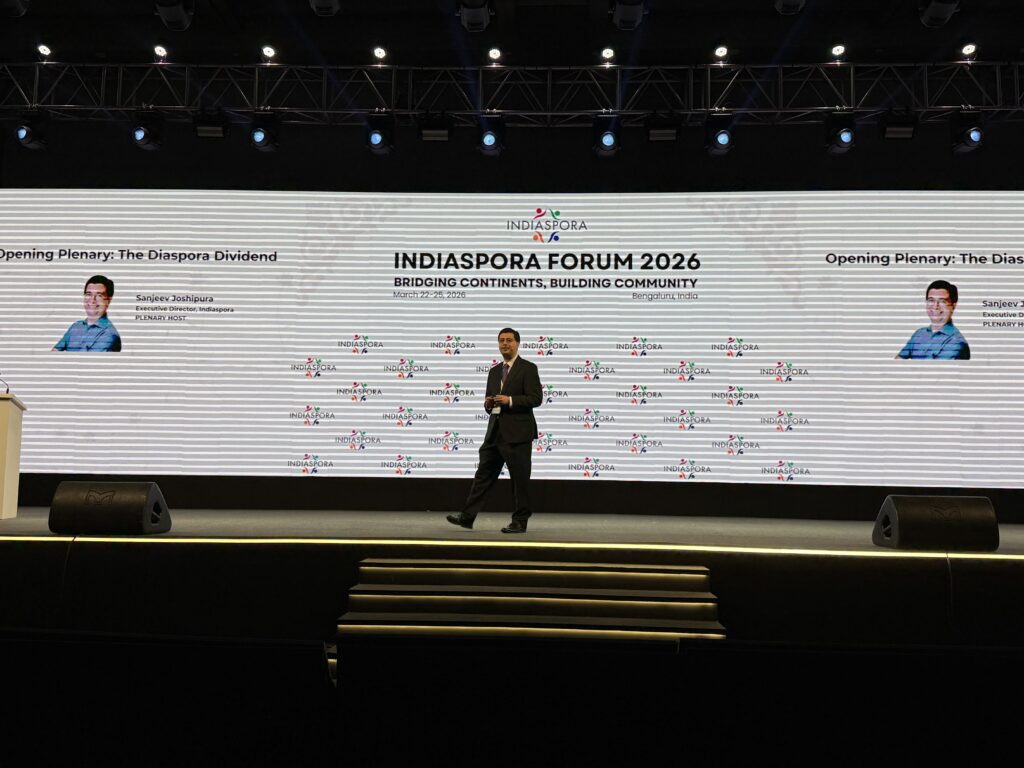
Indiaspora’s Executive Director, Sanjeev Joshipura, welcomed delegates from across professions and geographies, noting the presence of more than 20 national flags representing participating countries.
“We do want this event to be a non-transactional event. This is not about selling to each other. This is not about pitching,” he added. “It’s really about getting to know and understand and enhance your field of knowledge and enhance more of what you know about other things going on in the world, so please approach it in that spirit.”
He emphasized the importance of inclusivity, stating, “We do also want to be an inclusive force for good…”
Joshipura also outlined the structure of the 2026 Forum, which spans two days and includes six plenary sessions and 24 breakout discussions covering a range of topics.
Related posts:
 ‘Indiaspora Forum for Good’ to Unite Global Indian Leaders for Actionable Solutions, Collaboration, and Innovation
 At Indiaspora Forum 2026, Prominent Voices Emphasize Collaboration, Innovation, and the Power of Giving
 Indiaspora Forum 2026 Opens in Bengaluru with Focus on Philanthropy, Community Impact, and Cultural Celebration
 Indiaspora Forum 2026 in Bengaluru to Convene Global Leaders on AI, Climate, Geopolitics and Diaspora Impact